What is sleep debt, and why does it matter?
Sleep debt is the running total of sleep your body needed but didn’t get. If you need 8 hours and consistently sleep 6, you’re accumulating 2 hours of debt every single night. After a week, that’s 14 hours your brain and body are still waiting to collect.
The National Heart, Lung, and Blood Institute puts it plainly: the total sleep lost is your sleep debt, and it compounds the longer you ignore it. Even losing 20–40 minutes nightly for a few days builds debt quickly, often before you notice anything feels off.
Common causes include:
- Work schedules and long commutes that cut into sleep time
- Evening screen time that delays the body’s wind-down process
- Social commitments that push bedtime later
- Irregular sleep schedules that disrupt your body’s internal clock
Understanding sleep debt also means understanding sleep pressure, the biological force that builds the longer you stay awake. Sleep pressure is dynamic, not a fixed meter. Your body adapts, which is part of why chronic debt sneaks up on people.
How sleep debt affects your health and daily function
The short-term effects are familiar: fatigue, poor concentration, irritability, and slower reaction times. But chronic sleep debt does considerably more damage than a rough morning.

A 2022 study published in Scientific Reports found that middle-aged adults who slept fewer than 6 hours per night may have nearly three times the risk of heart disease. People with moderate to severe sleep apnea face three times the risk of stroke. Sleeping just 5–6 hours daily doubles the risk of prediabetes and type 2 diabetes compared to sleeping 7–8 hours.
The cognitive toll is just as serious:
- Impaired memory consolidation and slower processing speed
- Reduced ability to regulate emotions under stress
- Higher error rates, particularly in high-stakes occupations like healthcare and transportation
- Increased accident risk in both occupational and driving contexts
Chronic sleep loss among shift workers and healthcare professionals is linked to burnout and increased errors, with consequences that extend well beyond the individual.
The difference between acute and chronic sleep debt matters here. Losing one night of sleep is recoverable. Months of restricted sleep rewire how your body handles stress hormones, blood pressure, and appetite regulation, making the damage harder to reverse.
How can you avoid building up sleep debt?
Prevention beats recovery every time. The most effective approach is treating sleep the way you treat diet or exercise: as a non-negotiable part of your health routine, not something to squeeze in around everything else.
Practical steps that work:
- Set a consistent bedtime and wake time, even on weekends
- Limit screens for at least 30 minutes before bed
- Keep your bedroom cool, dark, and quiet
- Avoid caffeine after early afternoon
- Build a wind-down routine your body learns to recognize
Pro Tip: Keep a simple sleep diary for two weeks. Write down when you went to bed, when you woke up, and how you felt. Patterns emerge fast, and they’re often surprising.
How stress impacts sleep is another factor worth tracking. Stress is one of the most common reasons people lie awake despite being exhausted, and it accelerates debt accumulation faster than most people realize.

Viewing sleep as preventative medicine shifts the mindset from reactive to proactive. You’re not trying to fix a problem; you’re stopping one from forming.
Recovering from sleep debt is harder than it sounds
One long weekend of sleep will not undo weeks of restriction. Research is clear: recovery from chronic sleep restriction requires multiple days, and one hour of lost sleep can take up to 4 days to fully recover. Weekend catch-up sleep doesn’t restore cognitive or metabolic function completely, and it offers no protection when sleep restriction resumes.
Recovery tips that actually help:
- Add 30–60 minutes of extra sleep per night over several consecutive nights rather than sleeping 12 hours once
- Include strategic naps of 20–30 minutes when nighttime sleep is limited
- Prioritize sleep consistency over total hours during recovery
Pro Tip: Total sleep across a full 24-hour period matters more than one long block. A 20-minute nap combined with a full night’s sleep often outperforms a single extended sleep session.
Recovery is also shaped by how long the debt has been building. Acute debt from one late night clears faster than chronic debt accumulated over months. Prior sleep history affects how your body responds to restriction going forward, so the longer debt goes unaddressed, the more vulnerable you become to its effects.
What experts say about managing sleep debt effectively
The sleep debt metaphor is useful but imperfect. Sleep regulation is dynamic and adaptive, not a simple ledger where you owe exact hours and repay them one-for-one. Experts recommend focusing on neurobehavioral recovery rather than trying to calculate a precise repayment schedule.
Key insights from the research:
- Mood, sleepiness, and cognitive performance recover at different rates, so feeling less tired doesn’t mean you’re fully recovered
- Sleep quality matters alongside quantity; fragmented sleep doesn’t deliver the same restoration as consolidated rest
- Tracking trends over time is more useful than obsessing over a single night’s numbers
- Wearable sleep trackers offer helpful trend data but can’t precisely measure individual sleep needs
The goal is sustainable sleep health, not a one-time fix. Combining consistent prevention habits with a realistic recovery approach gives you the best long-term outcome.
How sleep debt damages mental and cognitive function
The brain takes the hardest hit from sleep debt. Cognitive adaptation is one of the most dangerous effects: people stop feeling as tired as they actually are, even while their performance continues to decline. You think you’ve adjusted. You haven’t.
Sleep deprivation impairs the prefrontal cortex, the part of the brain responsible for decision-making, impulse control, and emotional regulation. Research links chronic sleep loss to a fourfold increase in the risk of developing major depression within three years. Sleep problems preceded depression 69% of the time and anxiety disorders 27% of the time in studies of young adults, according to Harvard Health.
REM sleep is especially critical here. Cutting sleep short consistently reduces REM, which is the stage most tied to emotional processing and memory consolidation.
How do you measure or assess your sleep debt?
There’s no single clinical test that spits out your exact sleep debt number. The most practical methods combine subjective tracking with objective data.
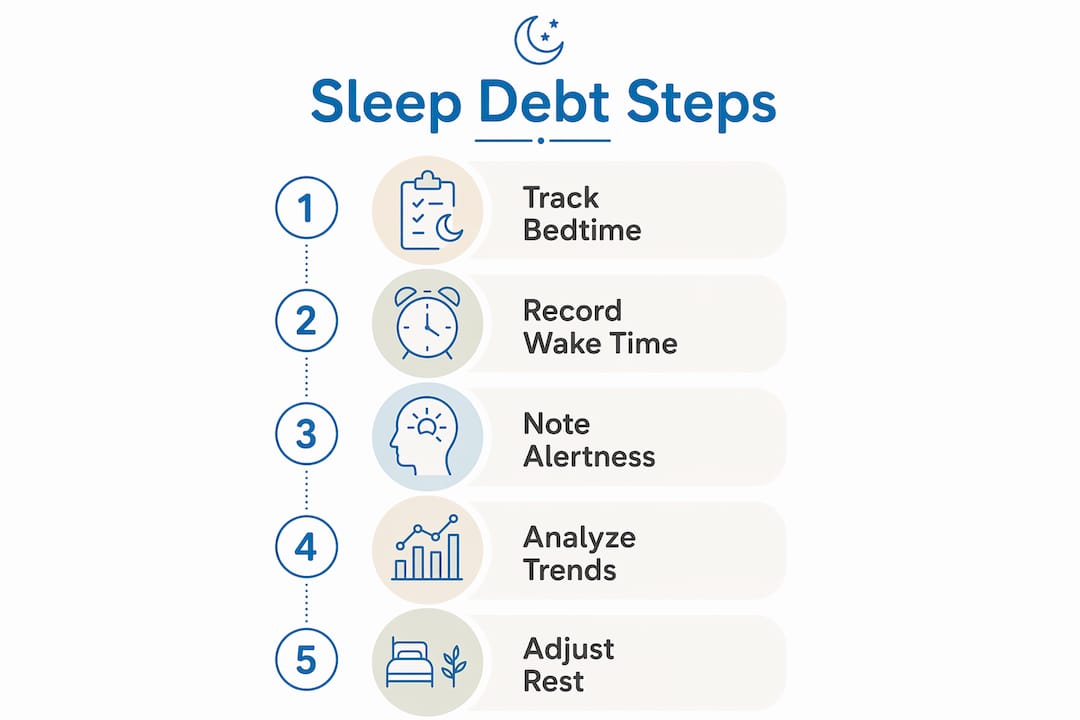
A sleep diary remains one of the most reliable tools. Recording bedtime, wake time, and daytime alertness over 1–2 weeks reveals patterns that a single night’s data never could. You can also track sleep cycles without a wearable using behavioral cues like how quickly you fall asleep and whether you wake before your alarm.
Wearable devices like Fitbit, Oura Ring, and Apple Watch provide trend data on sleep duration and stages, but their accuracy in measuring individual sleep stages has real limits. Use them for patterns, not precision. The Epworth Sleepiness Scale is a validated questionnaire clinicians use to assess daytime sleepiness, which often correlates with accumulated sleep debt.
Long-term health risks tied to chronic sleep debt
The long-term picture is sobering. Chronic sleep debt raises blood pressure, disrupts cholesterol and triglyceride levels, and elevates inflammatory markers tied to cardiovascular disease. People sleeping fewer than 7 hours per night show higher rates of hypertension, with the risk doubling for those sleeping 4 hours or fewer, based on data from over 700,000 people in two national health surveys.
Beyond the heart, chronic sleep loss accelerates amyloid buildup in the brain, the protein associated with Alzheimer’s disease. Weight gain, metabolic dysfunction, and weakened immune response round out a picture that makes improving sleep quality one of the highest-leverage health decisions you can make.
Support your sleep recovery with the right tools

Addressing sleep debt takes more than good intentions. Evergreenbliss offers a curated range of sleep and relaxation aids designed to support deeper, more consistent rest, from sleep supplements to acupressure mats and stress-relief tools. If chronic pain is disrupting your sleep, a daily pain management routine can also make a real difference. Browse the full wellness collection to find what fits your recovery plan.
Key Takeaways
Sleep debt accumulates when you consistently get less sleep than your body needs, and recovery requires days of consistent effort, not a single long night.
| Point | Details |
|---|---|
| Sleep debt definition | It’s the cumulative gap between sleep needed and sleep obtained, compounding nightly. |
| Health consequences | Adults sleeping under 6 hours may face nearly three times the risk of heart disease. |
| Recovery timeline | One hour of lost sleep can take up to 4 days to fully recover; weekends alone aren’t enough. |
| Cognitive masking risk | Cognitive adaptation means you may feel fine while your performance continues to decline. |
| Best prevention strategy | A consistent sleep schedule and a simple sleep diary are the most effective long-term tools. |