Your body starts cooling itself roughly two hours before you feel sleepy, and that cooling process is what actually triggers sleep onset. Core body temperature drops, blood vessels in your hands and feet dilate to release heat, and your brain interprets that thermal shift as a signal to transition into non-rapid eye movement (NREM) sleep. Disrupt that pattern, whether through a hot bedroom, cold extremities, or poor bedding choices, and you delay sleep onset or fragment the deep, restorative stages you need most.
The physiology here is well established. Warming the body 1–8 hours before bedtime increases slow-wave sleep and NREM consolidation while decreasing REM sleep, a finding from Horne and Reid that has been replicated across multiple sleep labs. The key mechanisms at work:
- Core temperature decline begins about two hours before sleep onset and reaches its lowest point roughly two hours after lights out.
- Peripheral vasodilation in the hands and feet acts as the body’s heat-dumping mechanism, redirecting warmth away from the core.
- Melatonin secretion rises in parallel with falling core temperature, reinforcing the circadian signal to sleep.
- Hypothalamic preoptic neurons detect skin warmth and simultaneously activate NREM sleep circuits and body cooling.
- Environmental temperature either supports or blocks these processes depending on whether it falls within the range that allows natural heat dissipation.
Understanding how body temperature affects sleep gives you a direct lever on sleep quality, one that requires no prescription and costs almost nothing to adjust.
How heat and cold exposure disrupt your sleep physiology
Heat and cold don’t just make you uncomfortable at night. They actively alter your sleep architecture by interfering with the thermal signals your brain depends on to cycle through sleep stages.

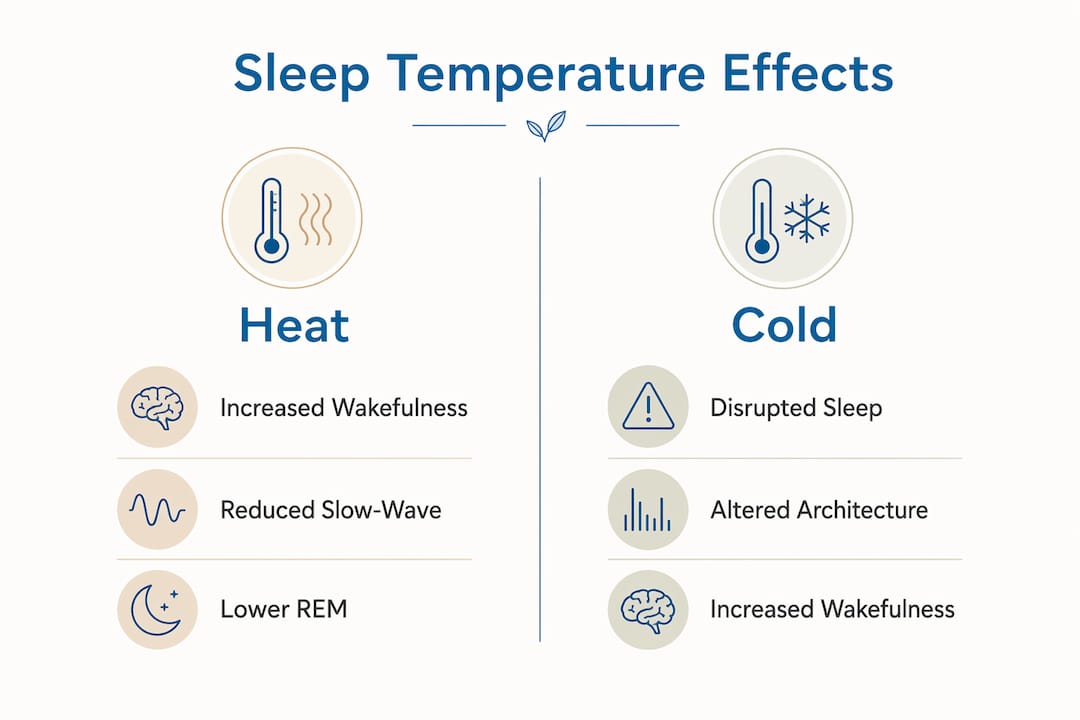
Heat exposure increases wakefulness and reduces both slow-wave sleep and REM sleep, according to research by Okamoto-Mizuno and colleagues. When ambient temperature climbs, the body struggles to offload core heat, keeping the nervous system in a more alert state. The result is lighter, more fragmented sleep with fewer of the deep N3 cycles where physical recovery actually happens.
Cold exposure creates a different problem. Temperatures that are too low trigger thermogenesis, the process by which your body generates heat through muscle activity and metabolic effort. That process is arousing, not sedating. Excessive cold causes vasoconstriction in the extremities, which blocks the heat-dumping mechanism and delays sleep onset. The body cannot complete the peripheral vasodilation it needs to lower core temperature.
“Thermal environment modifies sleep patterns broadly; heat increases wakefulness, cold promotes arousal in mammals.” — International Journal of Molecular Sciences, MDPI 2022
| Condition | Effect on wakefulness | Effect on slow-wave sleep (N3) | Effect on REM sleep |
|---|---|---|---|
| Heat exposure | Increases | Decreases | Decreases |
| Cold exposure (moderate) | Mild increase | Variable | Variable |
| Cold exposure (excessive) | Increases via thermogenesis | Decreases | Disrupted |
| Optimal thermal range | Minimal | Maximized | Preserved |
Warming the hands and feet specifically accelerates vasodilation and shortens sleep latency. This is why wearing socks to bed, counterintuitive as it sounds, can help people fall asleep faster. The socks warm the distal skin, promote blood vessel dilation in the feet, and help the body shed core heat more efficiently.
How your circadian rhythm controls body temperature during sleep
The circadian clock does not just regulate when you feel sleepy. It orchestrates a precise temperature cycle that coordinates every major sleep stage transition throughout the night.
Core body temperature falls starting about two hours before sleep onset, according to research by Krauchi and colleagues, reaching its lowest point approximately two hours after lights out. That decline is not passive. It is driven by the hypothalamic suprachiasmatic nucleus, which signals the autonomic nervous system to reduce sympathetic tone in peripheral blood vessels, allowing heat to escape through the skin.
“In experiments where participants self-selected their bedtime, subjects were most likely to select a moment when the body temperature was at its maximum rate of decline.” — The Temperature Dependence of Sleep, PMC
The proximal-to-distal skin temperature gradient tells the story clearly. As sleep approaches, the temperature difference between your torso and your hands or feet can reach 1.5°C. Once sleep begins and core temperature settles at its new lower set point, that gradient narrows to about 0.5°C. Melatonin secretion rises in parallel with this cooling, reinforcing the biological signal that it is time to sleep.
Pro Tip: If you struggle to fall asleep, check your hands and feet. Cold extremities are a sign that peripheral vasodilation has not occurred, meaning your body has not yet completed the heat-dumping process it needs for sleep onset. Warming them with socks or a warm foot bath can help trigger that response.
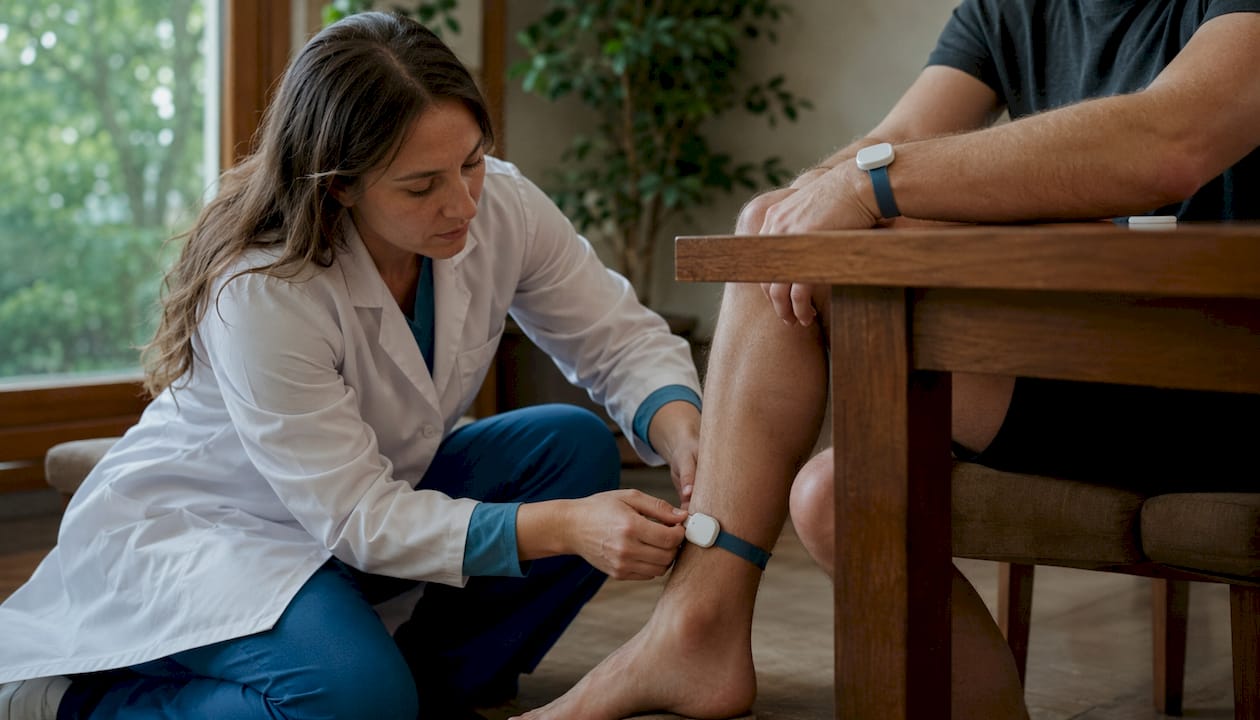
During NREM sleep, brain temperature also drops slightly, by about 0.2–0.4°C per transition. Transitions back to REM or wakefulness are accompanied by rewarming. This cycling of brain temperature across the night may play a direct role in the restorative functions of sleep, including memory consolidation and metabolic regulation.
What is the optimal bedroom temperature for sleep?
Most adults sleep best in a bedroom kept between 60–67°F (15–19°C), according to sleep medicine specialists at UCLA Health. Deviations in either direction cause awakenings and disturbed sleep architecture.
That said, individual variation is real. Research on older adults found that sleep was most efficient when nighttime ambient temperature ranged between 20–25°C (68–77°F), with a clinically relevant 5–10% drop in sleep efficiency when temperature increased from 25°C to 30°C. The right number for you depends on your age, body composition, and how well your thermoregulatory system functions.
Practical ways to reach and hold your target temperature:
- Set your thermostat to drop to your target range 30–60 minutes before bed so the room is already cool when you lie down.
- Use a programmable thermostat or smart home device to maintain the temperature through the night without manual adjustment.
- Open windows on cooler nights to use natural airflow instead of air conditioning, which can dry out the air.
- Place a fan at the foot of the bed to circulate air without directing a cold draft at your face.
- Use a cooling mattress pad or mattress topper designed to conduct heat away from your body during sleep.
- Keep blackout curtains closed during the day in summer to prevent solar heat gain in the bedroom.
- In winter, lower the thermostat at night rather than relying on heavy blankets alone, since blankets trap heat unevenly.
Bedding and clothing choices that support thermal balance:
- Choose breathable natural fibers like cotton, linen, or bamboo for sheets and pajamas. Synthetic fabrics trap heat and moisture against the skin.
- Layer blankets rather than using one heavy comforter. Layering lets you shed or add coverage as your temperature shifts through the night.
- Avoid tight-fitting sleepwear that restricts blood flow to the extremities, since peripheral circulation is central to heat regulation.
- Use a lighter pillow fill if you tend to sleep hot. Memory foam retains significantly more heat than latex or buckwheat alternatives.
- Consider a dual-zone bedding setup if you share a bed with a partner whose thermal preferences differ from yours.
How thermoregulation shapes sleep quality and your overall health
Body temperature is not just a comfort variable. It functions as a metabolic signal that the brain uses to determine when and how deeply to sleep.
The hypothalamic preoptic area acts as the master switch linking thermoregulation to arousal state. Warm-sensing neurons in this region activate during sleep onset and NREM sleep, simultaneously promoting body cooling and suppressing wakefulness. When those neurons receive warm thermal input from the skin, they trigger the cascade that initiates deep sleep. This is why a warm bath taken 1–4 hours before bed works: it heats the skin, activates preoptic neurons, and paradoxically accelerates the body cooling that follows.
“Body temperature is not simply an environmental influence but a fundamental metabolic signal controlling the transition from wakefulness to NREM sleep via vasodilation.” — The Temperature Dependence of Sleep, PMC
The downstream effects on health are measurable. A 2024 study published in Scientific Reports found that conductive body cooling during sleep increased N3 (slow-wave) sleep and decreased heart rate across 72 participants of varying age, sex, and BMI. Participants who experienced greater body cooling showed a significant increase in N3 and a phase advance in the NREM-REM sleep cycle, meaning they reached their deepest sleep earlier in the night.
Slow-wave sleep is where growth hormone release, tissue repair, and immune function are concentrated. Consistently shortchanging N3 sleep by sleeping in a thermally suboptimal environment accumulates a physiological debt that no amount of caffeine or weekend recovery sleep fully repays. The temperature-sleep connection is also tied to energy homeostasis: sleep debt accumulates more slowly at cooler temperatures, suggesting that the metabolic cost of sleep is directly linked to thermal state.
Practical habits that help you manage body temperature for better sleep
The most effective temperature management strategies work with your circadian biology rather than against it. Timing matters as much as the intervention itself.
Habits that support your body’s natural cooling cycle:
- Take a warm bath or shower 1–4 hours before bed. The skin warming activates preoptic neurons and the subsequent cooling accelerates sleep onset. Doing it immediately before bed is less effective because the body has not had time to complete the cooling response.
- Avoid intense exercise within two hours of bedtime. Physical activity raises core temperature and can delay the circadian cooling signal, though morning or afternoon exercise generally supports better sleep quality overall.
- Eat your last large meal at least two to three hours before sleep. Digestion generates metabolic heat that competes with the body’s cooling process.
- Wear light, breathable socks to bed if your feet tend to run cold. Warming the feet promotes vasodilation and speeds up heat dissipation from the core.
- Limit alcohol in the evening. Alcohol initially causes vasodilation and a feeling of warmth, but it disrupts thermoregulation later in the night and suppresses REM sleep.
- Stay well hydrated through the day. Dehydration impairs the body’s ability to regulate temperature through sweating and peripheral circulation.
Pro Tip: The goal is a cool room with warm extremities, not an ice-cold bedroom. A room below 60°F can trigger peripheral vasoconstriction that blocks heat dissipation and delays sleep onset just as effectively as an overheated room. Find the lower edge of your comfort zone, not the coldest setting your thermostat allows.
Lifestyle factors beyond the bedroom also shape your nightly temperature cycle. Consistent wake times anchor the circadian clock, which in turn stabilizes the timing of your nightly temperature decline. Exposure to natural morning light reinforces the same clock, making the evening temperature drop more predictable and pronounced. For a broader look at how your environment and daily habits interact with sleep, the Evergreenbliss guide on designing your sleep environment covers bedding materials, insulation, and room setup in practical detail.
How poor thermoregulation contributes to insomnia and other sleep disorders
Insomnia is not always a psychological problem. For a meaningful subset of people who struggle to fall or stay asleep, the root cause is a failure of the body’s thermal regulation system.
Research consistently shows that people with insomnia tend to have higher core body temperatures at night compared to good sleepers. Their bodies do not complete the circadian cooling process efficiently, leaving them in a physiologically aroused state at bedtime. The brain interprets this elevated temperature as a signal to stay awake, creating a feedback loop that is hard to break through willpower or relaxation techniques alone.
Peripheral vasodilation is particularly disrupted in insomnia. When the hands and feet fail to warm and dilate before sleep, the body cannot dump core heat, and sleep latency extends. This is one reason why thermal interventions, such as warm foot baths, heated socks, or sleep aids that support healthy temperature cycles, show measurable benefit in people with chronic insomnia rather than just in healthy sleepers.
Restless legs syndrome and night sweats represent two other disorders with strong thermoregulatory components. Night sweats, in particular, reflect a dysregulation of the hypothalamic set point, where the body overcorrects its temperature during sleep and triggers a sweating response that causes arousal. Menopause-related hot flashes follow the same mechanism, with estrogen withdrawal destabilizing the hypothalamic thermostat and producing sudden, intense heat that fragments sleep architecture. Managing the bedroom environment becomes especially critical for people in these groups, since external thermal control can partially compensate for internal dysregulation.
How aging changes body temperature regulation during sleep
Older adults face a compounding challenge: the thermoregulatory system becomes less efficient with age at exactly the time when sleep architecture is already shifting toward lighter, more fragmented sleep.
Aging reduces the amplitude of the circadian core temperature rhythm. The nightly temperature drop becomes shallower, the timing shifts earlier, and the body’s ability to respond to thermal challenges, both heat and cold, slows down. Peripheral vasodilation in the hands and feet becomes less robust, which means the heat-dumping mechanism that initiates sleep operates less effectively. The result is longer sleep latency, more nighttime awakenings, and less time in slow-wave sleep.
Older adults and those with higher BMI show increased sensitivity to temperature-related sleep disturbances, with research suggesting that their optimal sleep temperature range often sits slightly higher than the standard 60–67°F recommendation. A longitudinal study tracking community-dwelling older adults found that sleep was most efficient and restful at nighttime ambient temperatures between 20–25°C, and that an 8°C increase from 22°C to 30°C was associated with a 10% drop in sleep efficiency. That magnitude of effect is comparable to the impact of evening alcohol consumption on sleep quality.
For older adults, personalized temperature management is not optional. A programmable thermostat, breathable bedding, and attention to extremity warmth can meaningfully offset the age-related decline in thermoregulatory capacity. Wearable sleep monitors and environmental sensors now make it practical to track the relationship between bedroom temperature and your own sleep metrics over time, allowing you to find your personal optimal range rather than relying on population averages. Evergreenbliss offers a range of wellness and recovery products designed to support exactly this kind of personalized, environment-aware approach to better rest.
Key Takeaways
Core body temperature decline and peripheral vasodilation are the primary physiological mechanisms through which body temperature directly controls sleep onset, depth, and overall sleep quality.
| Point | Details |
|---|---|
| Core cooling triggers sleep | Core temperature falls about 2 hours before sleep onset, reaching its lowest point roughly 2 hours after lights out. |
| Optimal bedroom temperature | Most adults sleep best at 60–67°F (15–19°C); older adults often benefit from a slightly warmer range of 20–25°C. |
| Warm bath timing matters | Warming the body 1–4 hours before bed increases slow-wave sleep and NREM consolidation; doing it immediately before bed is less effective. |
| Cooling mattress boosts N3 | Conductive body cooling during sleep increased slow-wave (N3) sleep and decreased heart rate across a 72-person study. |
| Aging reduces thermal efficiency | Older adults show a shallower nightly temperature drop and increased sensitivity to heat, requiring personalized temperature adjustments. |