The ideal sleep environment is defined as a bedroom calibrated to support your body’s natural sleep rhythms through controlled temperature, light, sound, and sensory input. Most people focus on mattresses and pillows, but the room itself does the heavier lifting. Getting the temperature, lighting, and layout right can mean the difference between waking rested and waking exhausted. This guide covers the core factors for good sleep, grounded in sleep science, so you can build a bedroom that actually works.
How to design your ideal sleep environment: the core principles
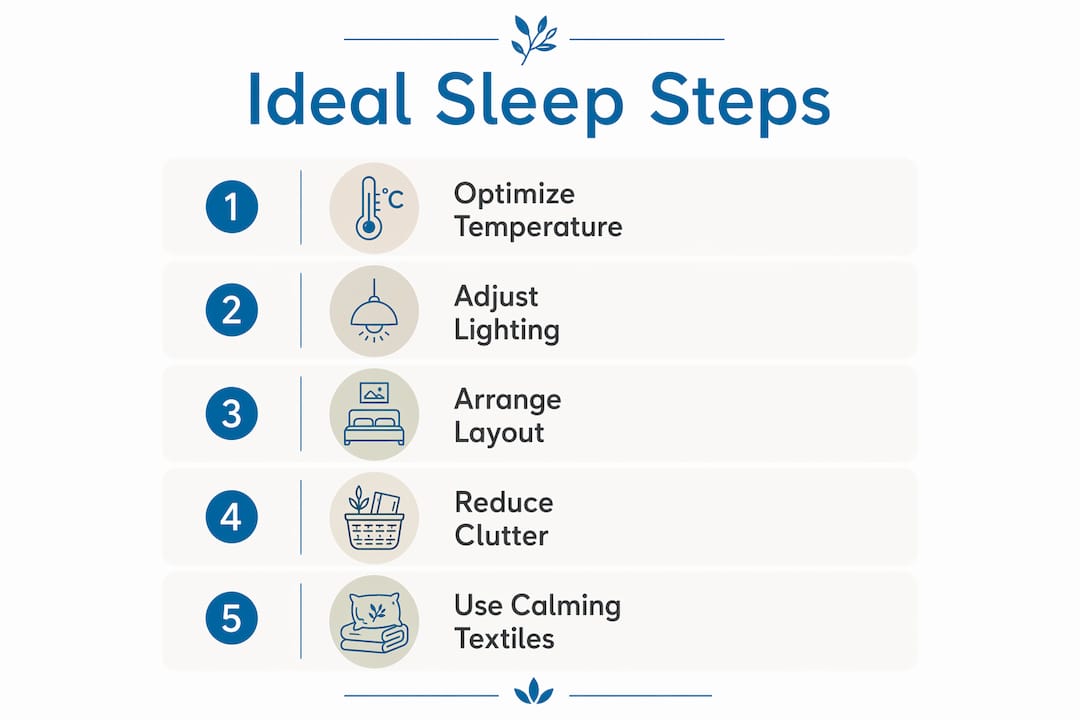
The bedroom is your nervous system’s primary recovery space. When the environment signals safety and calm, your brain stops scanning for threats and allows sleep to deepen. The key variables are temperature, light, layout, and sensory load. Each one affects sleep onset and sleep quality in measurable ways.
Temperature is the most underrated factor. Your core body temperature must drop 1–2°F to initiate sleep. That drop happens faster when the room supports it. Light is the second lever. Blue light from screens and overhead fixtures suppresses melatonin, the hormone that tells your brain it is time to sleep. Layout and sensory clutter are the third and fourth levers, and most people ignore them entirely.
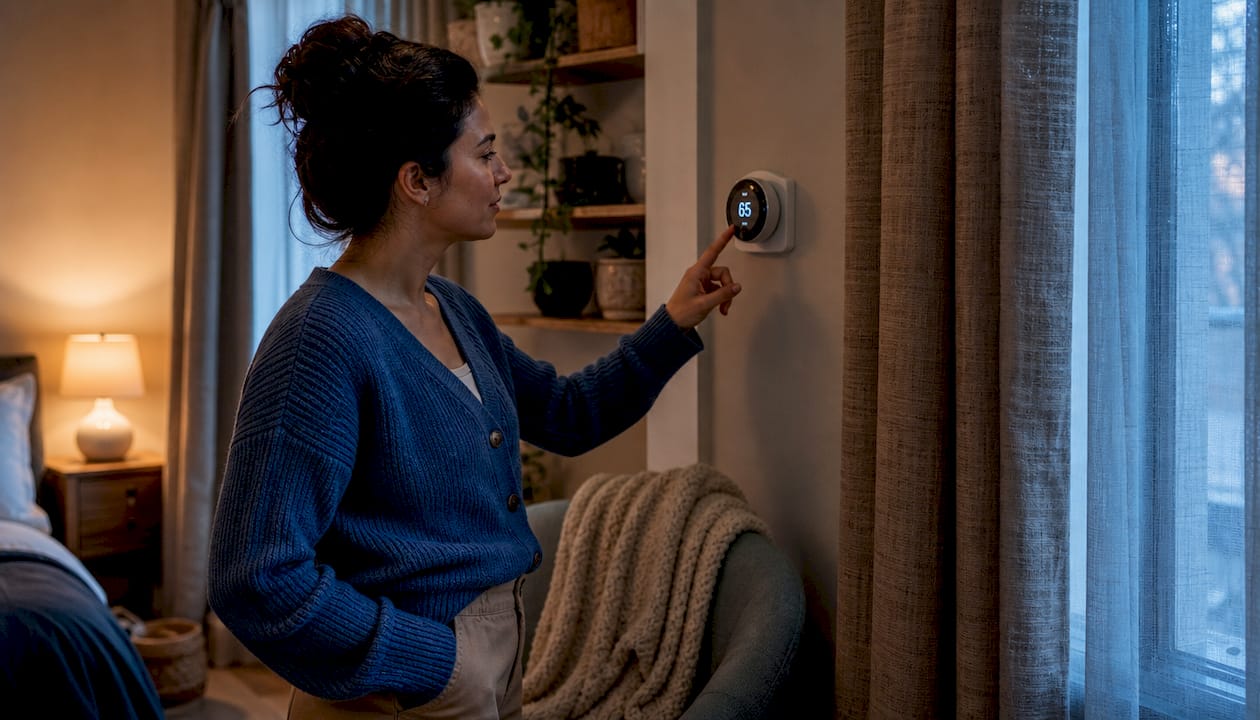
What temperature should your sleep environment be for optimal rest?
The research-backed target for bedroom temperature is 60°F to 67°F (15–19°C). That range supports the core body temperature drop your brain needs to move through sleep stages. A room that stays too warm keeps your body in a mild stress state, which fragments sleep and reduces time in deep, restorative stages.
Treat temperature as a system, not just a thermostat setting
Air temperature alone does not tell the full story. Bedding and air temperature work together as a thermal system. A room set to 65°F with a heavy synthetic duvet can create the same heat stress as a warmer room with lightweight linen bedding. The tog rating of your duvet and the breathability of your sheets matter as much as the number on your thermostat.
Here are the key temperature controls to get right:
- Set the thermostat between 60°F and 67°F before bed
- Choose breathable bedding materials like linen, cotton percale, or bamboo
- Avoid positioning the bed directly under an HVAC vent, since direct airflow disrupts stable skin temperature
- Use layered bedding so you can adjust without waking fully
- Keep a lightweight blanket accessible for early morning temperature drops
Pro Tip: Coordinate your thermostat setting and bedding weight at the same time. Dropping the room to 65°F while switching to a lighter duvet produces faster sleep onset than either change alone.
How can bedroom lighting improve your sleep environment?
Blue light in the 450–490 nm range delays sleep onset by 90 or more minutes by suppressing melatonin production. That is not a minor inconvenience. It means a single hour of overhead LED lighting or screen time after 9 PM can push your actual sleep onset past midnight even if you feel tired.
The fix is straightforward. Swap overhead bulbs for warm-toned options rated at 2700K to 3000K. That color temperature mimics candlelight and does not trigger the alertness response that cool-toned overhead lighting produces. Dimmable, tunable LED bulbs give you the most control because you can shift color temperature and brightness together as the evening progresses.
Practical bedroom lighting for sleep
- Use 2700K to 3000K bulbs in all bedroom fixtures
- Install dimmable switches or smart bulbs with a scheduling feature
- Add blackout curtains to block streetlights and early morning sun, both of which suppress melatonin
- Place lamps at bedside level rather than relying on overhead fixtures at night
- Set a hard cutoff for screens and bright overhead lights after 9 PM
Pro Tip: Run a two-week lighting protocol: switch to warm bulbs, dim by 50% after 9 PM, and cut screens an hour before bed. Most people notice measurably faster sleep onset within two weeks of consistent changes.
How should you arrange your bedroom layout for better sleep?
Bedroom layout affects sleep through psychology, not just comfort. The position of your bed relative to the door triggers subconscious threat responses that keep your nervous system slightly activated. Placing the bed directly opposite the entry door is sometimes called the “coffin position” in design circles because it creates a low-level anxiety response that fragments sleep without you realizing why.
The better placement puts the bed on an internal wall, angled so you can see the door by turning your head, not your whole body. That diagonal alignment gives your brain the security signal it needs to stop scanning and allow deeper sleep. It sounds like a small change, but the effect on nighttime anxiety is real.
Here is a layout checklist to follow:
- Place the headboard against an internal wall, not an exterior wall or under a window
- Position the bed so the door is visible with a head turn, not a body turn
- Maintain at least 24 inches of clearance on each side of the bed for easy movement
- Keep the bed away from HVAC vents to avoid direct airflow on the sleeping surface
- Add a rug covering at least 60% of the floor area to absorb sound and reduce noise above 30 dB
Pro Tip: If your room layout limits ideal bed placement, a white noise machine near the door creates an acoustic buffer that partially compensates for the psychological exposure of a less-than-ideal position.
What sensory and organizational factors create a calm sleep space?
Visual clutter increases prefrontal cortex activation, which delays cognitive wind-down before sleep. The practical target is a visual density below 0.3 objects per square foot of visible surface. That means clear nightstands, closed storage, and no piles of laundry or work materials in the bedroom. Clutter does not just look messy. It keeps your brain working when it should be powering down.
Sensory softness reinforces the calming effect of a tidy room. Tactile fabrics like linen and natural textiles signal physical safety to the nervous system through touch. Scent works through the limbic system, the brain’s emotional processing center. Lavender and cedarwood are the most studied options, and both show consistent results for reducing pre-sleep arousal. A single natural anchor, such as a wood grain headboard, a stone object, or a small plant, adds a biophilic element that helps slow the mind.
Reducing cognitive load before sleep is the underlying goal of all these choices. When your bedroom looks and feels like a recovery space rather than a second office, your brain makes the transition to sleep faster and more completely. Pair aromatherapy and calming aids with a consistent pre-sleep routine for the strongest effect.
Which common mistakes block a good sleep environment?
Most sleep environment problems come from a handful of repeated errors. Recognizing them is the fastest way to fix them.
- Coffin position bed placement. Placing the bed directly opposite the door keeps the nervous system on low-level alert all night.
- Bright, cool-toned overhead lighting in the evening. This mimics daylight and signals the brain to stay awake, regardless of how tired you feel.
- Ignoring bedding as part of thermal regulation. Adjusting only the thermostat while keeping a heavy synthetic duvet defeats the purpose of temperature control.
- Work materials and electronics in the bedroom. Laptops, work bags, and charging phones associate the room with alertness and task completion, not rest.
- No noise control. Noise above 30 dB disrupts sleep stage continuity. Hard floors and bare walls amplify sound significantly.
Designing a bedroom for sleep means removing every signal that tells your brain it is still daytime, still working, or still unsafe. Each mistake on this list sends exactly one of those three signals. Fix the signals, and sleep improves without changing anything else.
Addressing nighttime anxiety triggers through layout and sensory design removes the most common non-medical cause of poor sleep onset.
Key Takeaways
Designing a restful bedroom requires coordinating temperature, lighting, layout, and sensory input as a single system rather than fixing each factor in isolation.
| Point | Details |
|---|---|
| Temperature range | Keep the room between 60°F and 67°F and match bedding weight to air temperature. |
| Lighting protocol | Use 2700K to 3000K bulbs and eliminate blue light exposure after 9 PM. |
| Bed placement | Position the bed on an internal wall so the door is visible with a head turn. |
| Clutter control | Keep visual density below 0.3 objects per square foot to reduce prefrontal cortex activation. |
| Sensory anchors | Add linen textiles, lavender or cedarwood scent, and one natural element to signal safety. |
What I have learned from redesigning my own sleep space
The change that surprised me most was bed placement. I moved my bed off the wall facing the door purely out of curiosity, and I noticed a difference in how quickly I fell asleep within the first week. I had not expected a furniture position to affect anything. But the research on subconscious threat scanning is accurate. Your brain monitors the room even when you think you are relaxed.
The second thing I got wrong for years was treating temperature and bedding as separate decisions. I kept the room cool but slept under a heavy duvet, and I wondered why I still woke up overheated. Switching to a lighter, breathable layer and keeping the thermostat steady solved a problem I had blamed on everything else.
Scent was the last piece I added, and it felt almost too simple. A small cedarwood diffuser running for 30 minutes before bed changed the feel of the room in a way that is hard to quantify but easy to notice. The bedroom started to feel like a place designed for rest rather than a room where I happened to sleep. That psychological shift is what good sleep hygiene actually produces. It is not one trick. It is a consistent environment that tells your body the same thing every night.
— Cadence
Evergreenbliss products that support your sleep setup
A well-designed bedroom creates the conditions for rest. The right products make those conditions easier to maintain every night.

Evergreenbliss carries a curated range of sleep and relaxation aids built around the same principles covered here: reducing physical tension, calming the nervous system, and supporting consistent recovery. From aromatherapy tools to sleep supplements and stress-relief devices, the collection is built for people who take their rest seriously. The full wellness catalog also includes recovery tools and personal care gadgets that complement a bedroom designed for real, restorative sleep. Free shipping and easy returns make it straightforward to find what works for you.
FAQ
What is the best temperature for sleeping?
The optimal sleep temperature is between 60°F and 67°F (15–19°C). This range supports the core body temperature drop your brain needs to initiate and maintain sleep.
How does light affect sleep quality?
Blue light in the 450–490 nm range suppresses melatonin and can delay sleep onset by 90 or more minutes. Switching to warm-toned bulbs rated at 2700K to 3000K and cutting screen exposure after 9 PM corrects this quickly.
Where should I place my bed for the best sleep?
Place the bed on an internal wall so you can see the bedroom door by turning your head. Avoid positioning the bed directly opposite the door, which triggers a low-level anxiety response that disrupts sleep.
Does bedroom clutter actually affect sleep?
Visual clutter activates the prefrontal cortex and delays cognitive wind-down before sleep. Keeping visible surface density below 0.3 objects per square foot reduces this effect and supports faster sleep onset.
What scents help with sleep?
Lavender and cedarwood are the most studied options for pre-sleep calming. Both work through the limbic system and reduce pre-sleep arousal when used consistently as part of a bedtime routine.
Recommended
- What Is Sleep Architecture and Why It Matters | Evergreen Bliss
- Improve Deep Sleep Quality Naturally in 2026 | Evergreen Bliss
- What Is Sleep Hygiene? Your Guide to Better Rest | Evergreen Bliss
- The Best Sleep Aids for Deeper Sleep in 2026 | Evergreen Bliss
Sources and further reading
- How to Set Up a Bedroom for Better Sleep – Sleep Foundation
- Mastering Sleep Hygiene: Your Path to Quality Sleep – Sleep Foundation
- Systematic review: auditory stimulation and sleep – Journal of Clinical Sleep Medicine, via PubMed Central