Sleep architecture is defined as the structured sequence of sleep stages and cycles that repeat throughout the night, determining how physically and mentally restorative your sleep truly is. Clinically, sleep scientists measure this pattern using polysomnography, which scores brain activity in 30-second epochs following AASM guidelines. Most adults complete four to six sleep cycles per night, with each cycle averaging 90 minutes. These cycles move through four distinct stages: NREM stages N1, N2, and N3, followed by REM sleep. The balance of these stages, not just total hours in bed, is what separates genuinely restorative sleep from time simply spent unconscious.
What is sleep architecture and how is it structured?
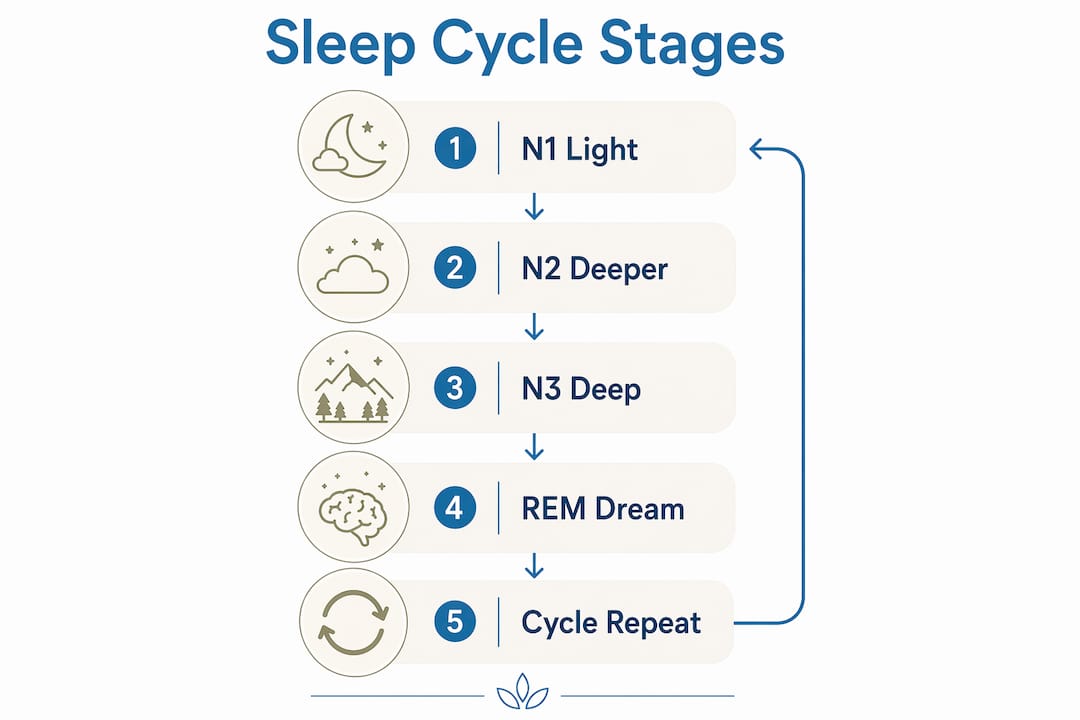
Sleep architecture describes the full pattern of sleep stages across a night, not just how long you sleep. Each cycle follows a predictable sequence: N1 leads into N2, which deepens into N3, and then transitions into REM sleep before the cycle restarts. The AASM manual, the clinical gold standard for sleep scoring, defines these stages based on EEG, EMG, and EOG measurements. Understanding this structure explains why waking up after eight hours can still leave you feeling drained if your stage distribution was off.
The four stages each serve a distinct biological purpose. N1 is the lightest stage, lasting just a few minutes, where the brain begins to slow and the body relaxes. N2 is the most common stage, accounting for roughly 50% of total sleep time in healthy adults. N3, also called slow-wave sleep or deep sleep, makes up 20–25% of the night and drives physical restoration. REM sleep, also at 20–25%, supports dreaming, memory consolidation, and emotional processing.

| Stage | Type | Proportion of Sleep | Primary Function |
|---|---|---|---|
| N1 | NREM | ~5% | Transition from wakefulness |
| N2 | NREM | ~50% | Memory consolidation, light restoration |
| N3 | NREM | 20–25% | Physical repair, immune support, deep restoration |
| REM | REM | 20–25% | Dreaming, emotional regulation, cognitive processing |
How does the sleep cycle progress throughout the night?
The sequence of a single cycle runs N1 → N2 → N3 → REM, then repeats. What changes across the night is the proportion of each stage within each cycle. Early cycles are dominated by deep N3 sleep, while later cycles contain progressively longer REM periods. This shift is not random. The body prioritizes physical repair first, then shifts toward cognitive and emotional processing as the night continues.
This progression has a practical implication. If you cut your sleep short by even 90 minutes, you lose a disproportionate amount of REM sleep, since most of it occurs in the final cycles of the night. That loss directly affects memory retention, mood regulation, and mental sharpness the next day. Conversely, going to bed late but waking at your normal time compresses the early N3-rich cycles, reducing physical restoration.
| Cycle | Approximate Timing | N3 Duration | REM Duration |
|---|---|---|---|
| Cycle 1 | 0–90 min | Long | Short |
| Cycle 2 | 90–180 min | Moderate | Moderate |
| Cycle 3 | 180–270 min | Short | Long |
| Cycle 4–6 | 270+ min | Minimal | Longest |
Sleep architecture also shifts with age. Older adults show reduced N3 sleep and earlier wake times due to circadian changes, which is one reason sleep complaints increase with age even when total sleep time stays the same.
Pro Tip: Aim for a consistent wake time every day, including weekends. Your circadian rhythm anchors to your wake time more strongly than your bedtime, which stabilizes the entire cycle structure.
Why is sleep architecture important for health and well-being?
Sleep architecture is a better predictor of health outcomes than sleep duration alone. The cyclical integrity of sleep stages predicts cardiovascular outcomes more accurately than total sleep hours. That finding reframes how you should think about sleep health. Eight hours of fragmented, shallow sleep is not equivalent to six hours of well-structured, complete cycles.
Each stage contributes something the others cannot replace. N3 deep sleep is when the body releases growth hormone, repairs tissue, and strengthens immune function. NREM sleep also plays a role in consolidating factual memories and clearing metabolic waste from the brain. REM sleep processes emotional experiences and supports creative thinking. Disrupting any one stage creates a specific deficit, not just general tiredness.
The health consequences of poor sleep architecture extend beyond fatigue:
- Cardiovascular risk: Fragmented sleep cycles are linked to elevated blood pressure and inflammation.
- Immune suppression: Reduced N3 sleep impairs the immune system’s ability to produce cytokines during illness.
- Cognitive decline: Insufficient REM sleep reduces the brain’s ability to consolidate new information.
- Mood disorders: Disrupted REM sleep is closely associated with anxiety and depression symptoms.
“Sleep quality may be just as important as quantity when it comes to long-term health outcomes.” — American Heart Association, 2025
Slow-wave sleep in particular is the stage most people are deficient in without realizing it, since it declines naturally with age and is highly sensitive to alcohol and stress.
What factors disrupt normal sleep architecture?
Several common factors fragment sleep cycles and reduce the proportion of restorative stages. Alcohol, stress, certain medications, and circadian rhythm disorders all interfere with natural stage transitions. Alcohol is especially deceptive. It helps people fall asleep faster but suppresses REM sleep in the first half of the night and causes rebound wakefulness in the second half, leaving the overall architecture fragmented.
The most common disruptors include:
- Alcohol: Suppresses REM sleep and fragments later cycles.
- Chronic stress: Elevates cortisol, which delays N3 onset and shortens deep sleep.
- Irregular schedules: Shift work and late nights misalign circadian timing, disrupting the natural stage sequence.
- Medications: Certain antidepressants, beta-blockers, and sleep aids alter REM and N3 proportions.
- Clinical conditions: Depression, traumatic brain injury, and sleep apnea each produce distinct patterns of architectural disruption.
One important nuance: consumer sleep trackers cannot reliably distinguish deep N3 sleep from lighter N2 sleep. Wearable devices use movement and heart rate as proxies, which are imprecise measures of brain state. If your tracker shows you getting “deep sleep,” treat that data as directional, not diagnostic.
Pro Tip: If you suspect your sleep architecture is disrupted, track your daytime symptoms rather than your tracker’s stage data. Persistent brain fog, mood instability, or slow physical recovery are more reliable signals than any wearable readout.
How can you optimize your sleep architecture for better quality sleep?
Improving sleep architecture means supporting the conditions that allow each stage to occur naturally and in the right proportion. The most effective strategies align with both homeostatic sleep pressure and circadian biology.
- Keep a consistent sleep schedule. Good sleep hygiene practices stabilize architecture by aligning timing and physiological pressure. Going to bed and waking at the same time every day is the single most impactful habit.
- Avoid alcohol within three hours of bedtime. Even moderate alcohol consumption suppresses REM sleep and fragments cycles in the second half of the night.
- Limit screen exposure before bed. Blue light from screens delays melatonin release, pushing back the onset of N3 sleep and compressing the early restorative cycles.
- Keep your bedroom cool and dark. Core body temperature drops during N3 sleep. A cooler room supports that drop and deepens slow-wave sleep.
- Address breathing issues. Undiagnosed sleep apnea is one of the most common causes of fragmented architecture. If you snore heavily or wake unrefreshed, learning how to improve breathing during sleep can make a measurable difference.
- Seek clinical evaluation when needed. If lifestyle changes do not improve your sleep quality after several weeks, polysomnography remains the gold standard for identifying specific architectural deficits. A sleep specialist can pinpoint whether you are losing N3, REM, or both, and why.
For people working on improving deep sleep naturally, the evidence consistently points to schedule consistency and substance avoidance as the highest-leverage changes.
Key takeaways
Sleep architecture, not total sleep time, is the true measure of how restorative your sleep is, and protecting the balance of N3 and REM stages is the most direct path to better health.
| Point | Details |
|---|---|
| Architecture over duration | Cyclical stage integrity predicts health outcomes better than total hours slept. |
| Stage proportions matter | Healthy adults need roughly 20–25% each of N3 and REM sleep per night. |
| Early vs. late cycles differ | Early cycles restore the body physically; later cycles process memory and emotion. |
| Common disruptors | Alcohol, stress, irregular schedules, and certain medications fragment sleep stages. |
| Trackers have limits | Consumer wearables cannot accurately measure deep N3 sleep; use symptom tracking instead. |
Why most people are thinking about sleep all wrong
Most people measure sleep success by how many hours they logged. I understand why. Hours are easy to count, and the “get eight hours” message has been repeated so often it feels like settled science. But after spending years reading sleep research and paying close attention to how sleep quality actually affects daily function, I am convinced that the stage structure of sleep matters far more than the clock.
The most telling example is alcohol. People routinely use it to fall asleep faster and genuinely believe it helps. It does not. It trades REM sleep for sedation, and the second half of the night becomes fragmented and shallow. You wake up having slept eight hours and feel worse than after six hours of clean, uninterrupted cycles. That is sleep architecture working against you.
What I find most underappreciated is how much the later cycles of the night matter. Cutting sleep short by 60 to 90 minutes feels minor, but it strips away the REM-rich cycles that handle emotional regulation and memory. The cognitive and emotional cost shows up the next day in ways people rarely connect back to sleep.
The emerging research on sleep quality versus quantity, including work highlighted by the American Heart Association, is finally shifting the clinical conversation. But most people are still stuck on duration. Understanding the structure of your sleep is the first step toward actually improving it.
— Cadence
Sleep better with Evergreenbliss
Understanding your sleep architecture is one thing. Supporting it with the right tools is another.

Evergreenbliss offers a curated collection of sleep and relaxation aids designed to help you build the conditions your sleep cycles need to run properly. From stress-relief supplements that support melatonin production to recovery tools that help your body wind down before bed, each product targets the physical and mental barriers that fragment sleep. If stress is your main disruptor, the mental wellness and stress-relief collection offers practical tools for calming the nervous system before sleep. Better sleep architecture starts with better pre-sleep habits, and Evergreenbliss has the products to support both.
FAQ
What is sleep architecture in simple terms?
Sleep architecture is the pattern of sleep stages your brain cycles through each night, including light sleep, deep sleep, and REM sleep. These stages repeat in 90-minute cycles, and their balance determines how restorative your sleep is.
How many sleep cycles does a healthy adult complete per night?
Most healthy adults complete four to six sleep cycles per night, with each cycle lasting approximately 90 minutes.
Can a smartwatch accurately measure sleep architecture?
No. Consumer sleep trackers cannot reliably distinguish deep N3 sleep from lighter sleep stages. Polysomnography, which measures brain activity directly, remains the only accurate method for clinical sleep stage analysis.
Does aging affect sleep architecture?
Yes. Older adults experience reduced N3 deep sleep and more fragmented cycles due to natural circadian changes. Consistent sleep schedules and healthy lifestyle habits can partially offset this decline.
What is the fastest way to improve sleep architecture?
Keeping a fixed wake time every day and avoiding alcohol within three hours of bedtime are the two highest-impact changes. Both directly protect the N3 and REM stages that fragmented or disrupted sleep most commonly loses.