White noise is defined as a consistent sound signal that covers all audible frequencies equally, and studies show it can reduce the time it takes to fall asleep by 38–40% by masking disruptive background sounds. That single statistic explains why sleep researchers and certified sleep science coaches now treat white noise as a legitimate supplementary tool, not a wellness gimmick. If you struggle with street noise, a snoring partner, or a restless mind at bedtime, learning to use white noise for better sleep may be the most practical change you make this year. The key is knowing how it works, how to set it up correctly, and when to adjust.
How does white noise help you sleep?
White noise works by creating a consistent audio backdrop that prevents your brain from reacting to sudden, disruptive sounds. The brain processes white noise as monotonous and non-engaging, which means it does not command attention the way speech or music does. That quality is exactly what makes it effective. Your brain recognizes the steady hum as a safe, low-priority signal and shifts toward relaxation rather than alertness.
The mechanism is called sound masking. When a car alarm or a door slam occurs, the difference between that sudden sound and a silent room is dramatic. Your brain detects the contrast and triggers a stress response. White noise narrows that contrast gap, so sudden sounds register as less jarring. The result is fewer micro-arousals during the night and a smoother path through sleep stages.
White noise vs. pink and brown noise
Not all noise colors work the same way. White noise distributes energy equally across all frequencies, producing a hiss similar to static. Pink noise emphasizes lower frequencies, creating a softer, more natural sound like rainfall. Brown noise goes even deeper, resembling a strong river current or distant thunder. Research shows that different noise colors affect people differently based on their sensory profile. If white noise feels too sharp or grating, pink or brown noise is worth trying before you give up on sound masking entirely.
Pro Tip: Start with pink noise if you find white noise too harsh. Its lower-frequency emphasis feels closer to natural ambient sound and tends to feel less fatiguing over long listening sessions.
What tools and setup do you need?
The right setup matters as much as the sound itself. Three main options exist for generating sleep sounds: dedicated white noise machines, smartphone apps, and smart speakers. Each has real trade-offs.
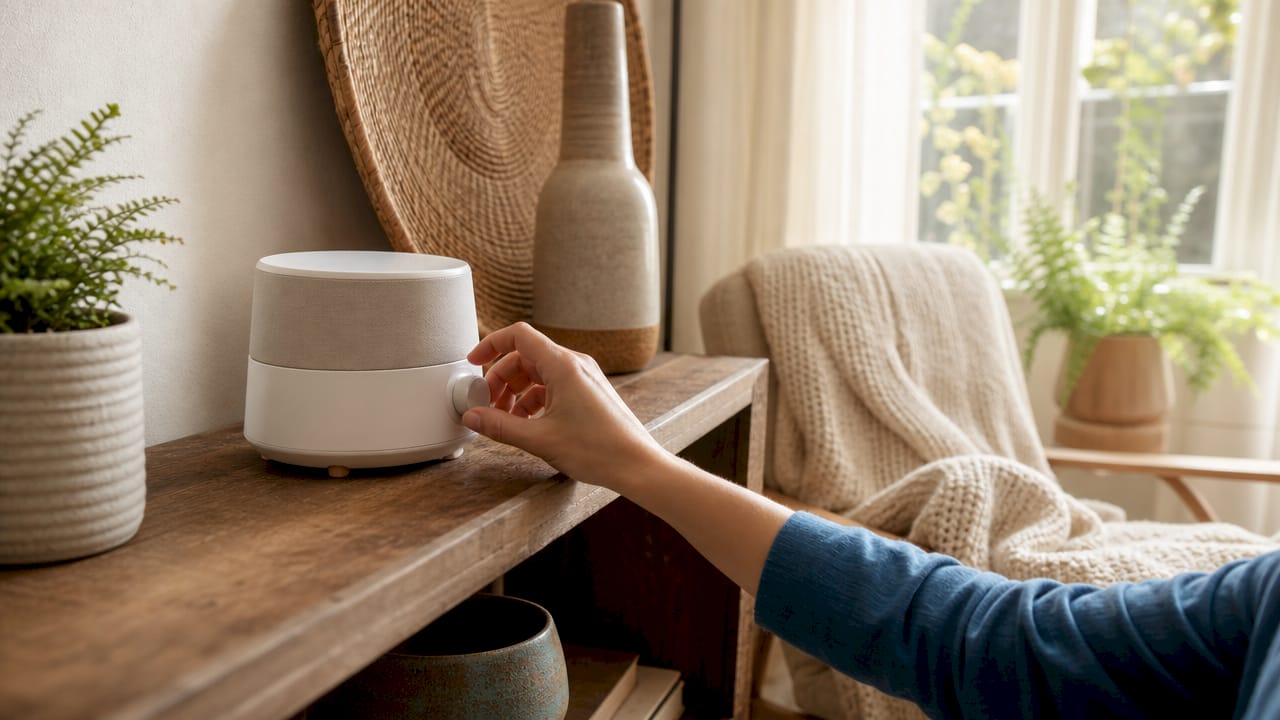
Dedicated white noise machines produce consistent, loop-free sound and do not require an internet connection or a phone screen near your bed. Smartphone apps offer more sound variety and cost less upfront, but they keep your phone active and can introduce notification interruptions. Smart speakers sit in the middle: they offer variety and voice control, but they depend on Wi-Fi and can occasionally drop the audio stream.
Volume and placement are the two most overlooked setup factors. Experts recommend placing your sound source near a window or door rather than directly beside your head. That placement creates a noise barrier at the entry point of disruptive sounds while keeping the volume at your ears lower. Loud white noise over time carries real risk. Excessively loud exposure can cause long-term hearing problems, so moderate volume is not optional.
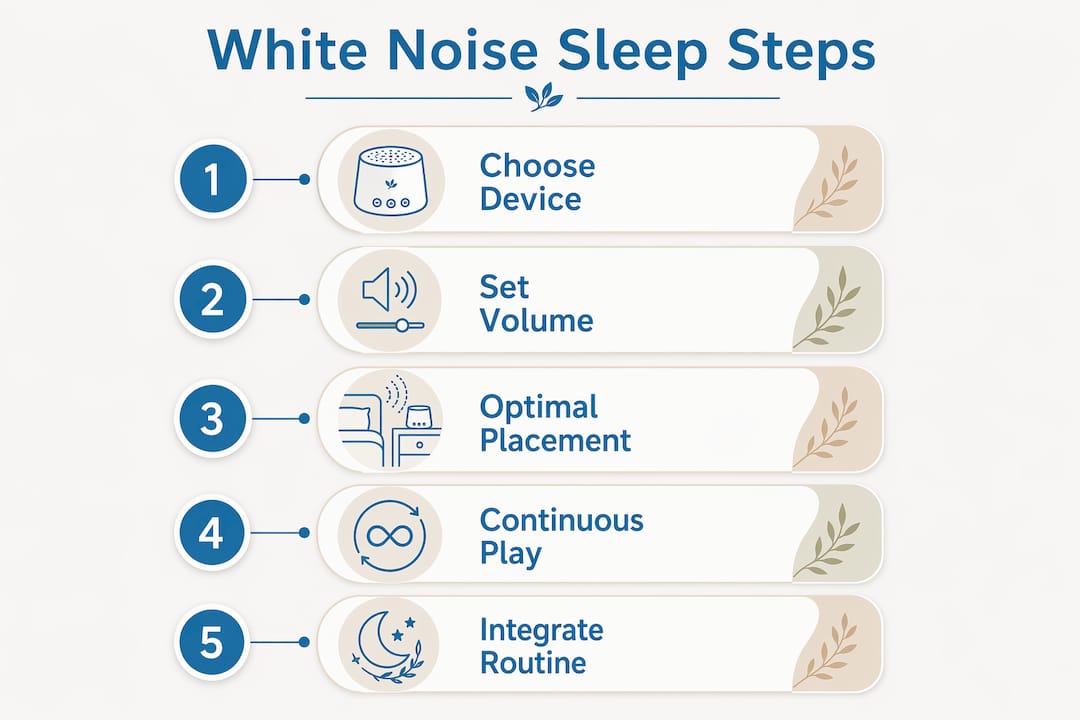
One more setup rule: skip the sleep timer. Continuous white noise through the night prevents sleep fragmentation better than a timed session that cuts out after an hour. When the sound stops mid-sleep, the sudden silence can trigger an arousal just as easily as a loud noise would.
Pro Tip: Set your white noise volume so it is audible but not louder than a normal conversation. If you have to raise your voice to talk over it, turn it down.
How to build white noise into your nightly routine
Consistency is what turns white noise from a novelty into a genuine sleep cue. The brain learns associations through repetition. When you pair the same sound with the same pre-sleep behaviors every night, the sound itself begins to signal that sleep is coming. That conditioned response shortens the time your nervous system needs to shift from alert to calm.
Here is a practical nightly sequence to build that association:
- Set your sound source 30 minutes before bed. Turn on your white noise device or app before you start your wind-down routine, not right when you lie down. This gives your brain time to register the sound as a background cue rather than a new stimulus.
- Pair it with a calming activity. Reading, light stretching, or a brief meditation session works well. The combination of sound and a low-stimulation activity reinforces the sleep signal. If nighttime anxiety is a factor, the Evergreenbliss guide on reducing nighttime anxiety pairs well with this step.
- Keep the room dark and cool. White noise handles the auditory environment. Temperature and light handle the rest. Harvard Medical School notes that the ideal sleep environment is quiet and dark. White noise serves best when it fills a specific gap: environmental noise pollution.
- Leave the sound running all night. Do not set a timer. Continuous playback protects against fragmentation during lighter sleep stages.
- Track your sleep quality for two weeks. Notice whether you fall asleep faster, wake less often, or feel more rested. Adjust the volume or sound type based on what you observe, not on what worked for someone else.
Certified sleep science coaches consistently recommend pairing white noise with broader sleep hygiene practices rather than relying on it alone. Good sleep hygiene includes a consistent bedtime, limited screen exposure before bed, and a cool, dark room. White noise handles one variable. The others still need attention. For a full breakdown of those practices, the Evergreenbliss article on sleep hygiene basics covers the complete picture.
Common mistakes and how to fix them
Even people who use white noise regularly make errors that reduce its effectiveness or create new problems. Knowing what to watch for saves weeks of frustrating trial and error.
- Volume too high. This is the most common mistake. Loud white noise does not mask sound more effectively than moderate white noise. It just increases hearing risk and can actually agitate the nervous system rather than calm it.
- Wrong noise color for your sensory profile. Some people find high-frequency white noise irritating rather than soothing. If you feel more tense after a few nights, switch to pink or brown noise before concluding that sound masking does not work for you.
- Using a sleep timer. As noted above, cutting the sound mid-sleep can cause the same kind of arousal you were trying to prevent.
- Expecting white noise to fix a deeper problem. White noise masks environmental disruption. It does not address insomnia rooted in anxiety, chronic pain, or poor sleep habits. Treating it as a cure rather than a tool leads to disappointment.
- Building dependency without a plan. Long-term reliance on white noise can make it difficult to sleep in silence. Sleep coaches recommend treating it as a transitional tool, especially if you travel frequently or sleep in varied environments.
One finding from 2026 research deserves specific attention. Continuous pink noise may reduce REM sleep by over 18 minutes on average, resulting in lighter, less restorative rest. That is a meaningful trade-off. If you use pink noise and wake feeling unrefreshed, your REM sleep may be the casualty.
“White noise is best considered a supplementary tool. It enhances sleep conditions but does not replace the foundational practices that make sleep restorative. Used correctly, it is one of the most accessible and low-risk sleep interventions available.”
Understanding why REM sleep matters helps you evaluate whether your current sound setup is actually helping or quietly working against you.
Key Takeaways
White noise reduces sleep onset time by 38–40% by masking disruptive sounds, but its full benefit depends on correct volume, placement, and consistent nightly use alongside solid sleep hygiene.
| Point | Details |
|---|---|
| Sound masking mechanism | White noise narrows the contrast between silence and sudden sounds, reducing nighttime arousals. |
| Volume and placement | Keep volume moderate and place the device near a door or window, not beside your head. |
| Run it all night | Continuous playback prevents fragmentation; sleep timers can trigger arousals when the sound cuts out. |
| Match noise color to your profile | White, pink, and brown noise affect people differently. Experiment to find what calms your nervous system. |
| Treat it as a supplement | White noise works best alongside good sleep hygiene, not as a replacement for addressing root causes. |
White noise works, but only if you use it right
I have recommended white noise to people who swore it changed their sleep overnight and to people who tried it for a week and felt worse. The difference was almost never the sound itself. It was how they used it.
The biggest mistake I see is treating white noise as a solution rather than a tool. Someone lies awake with racing thoughts, turns on a white noise app, and expects the sound to do all the work. It does not. White noise handles one specific problem: environmental sound disruption. If your sleep issue is anxiety, an irregular schedule, or too much screen time before bed, white noise will not fix that. It will just give you something to blame when it does not work.
What I have found actually works is using white noise as part of a deliberate wind-down sequence. The sound becomes a trigger, not a treatment. After two or three weeks of consistent use paired with calming pre-sleep habits, most people report that just hearing the sound starts to make them feel drowsy. That conditioned response is the real value.
I also think the dependency risk is underrated. If you travel for work or share a bed with someone who dislikes background noise, building a hard dependency on white noise creates a new problem. Use it consistently enough to build the association, but occasionally practice sleeping without it so silence does not become a barrier.
The 2026 pink noise research is worth taking seriously too. If you switched to pink noise because it felt gentler and you still wake feeling tired, check whether your REM sleep is being affected. Feeling rested in the morning is the only metric that actually matters.
— Cadence
Sleep aids that work alongside white noise
White noise sets the auditory stage for better rest. The physical and mental environment matters just as much.

Evergreenbliss carries a curated range of sleep and relaxation aids designed to complement sound-based sleep strategies. From stress-relief supplements that support a calmer nervous system before bed to personal care gadgets that make your wind-down routine more effective, the collection targets the same goal: fewer barriers between you and deep, restorative sleep. If anxiety or physical tension keeps you awake even with white noise running, the mental wellness and stress-relief products at Evergreenbliss address those root causes directly. Better sleep rarely comes from one change alone.
FAQ
Does white noise actually help you fall asleep faster?
Yes. Studies show white noise can reduce sleep onset time by 38–40% by masking sudden background sounds that trigger alertness. The effect is strongest in noisy environments.
What volume should white noise be for sleep?
Keep it at a moderate level, roughly equivalent to a quiet conversation. Louder is not more effective and carries a real risk of long-term hearing damage with nightly use.
Is pink noise better than white noise for sleep?
Pink noise feels softer and suits people who find white noise too sharp. However, research shows pink noise may reduce REM sleep by over 18 minutes on average, so monitor how rested you feel after switching.
Can you become dependent on white noise to sleep?
Yes. Long-term reliance on white noise can make it difficult to sleep without it. Sleep coaches recommend treating it as a transitional tool and occasionally practicing sleep in silence.
Should white noise run all night or use a timer?
Run it all night. Continuous playback prevents the sleep fragmentation that can occur when the sound cuts out mid-cycle and creates a sudden contrast with silence.