White noise sleep tools are defined by their frequency spectrum, which determines how well they mask disruptive sounds and support deeper rest. The three core categories, white, pink, and brown noise, each produce distinct auditory profiles that affect sleep quality in different ways. Choosing the right type depends on your sound environment, personal sensitivity, and what keeps you awake at night. This guide covers every major category of auditory sleep aid, explains the science behind each, and gives you a practical framework for finding the one that actually works for you.
What are the different types of white noise sleep tools?
White noise sleep tools are categorized primarily by their frequency spectrum, which shapes both their sound character and their masking power. Understanding these categories is the fastest way to narrow down which tool fits your sleep situation.
White noise
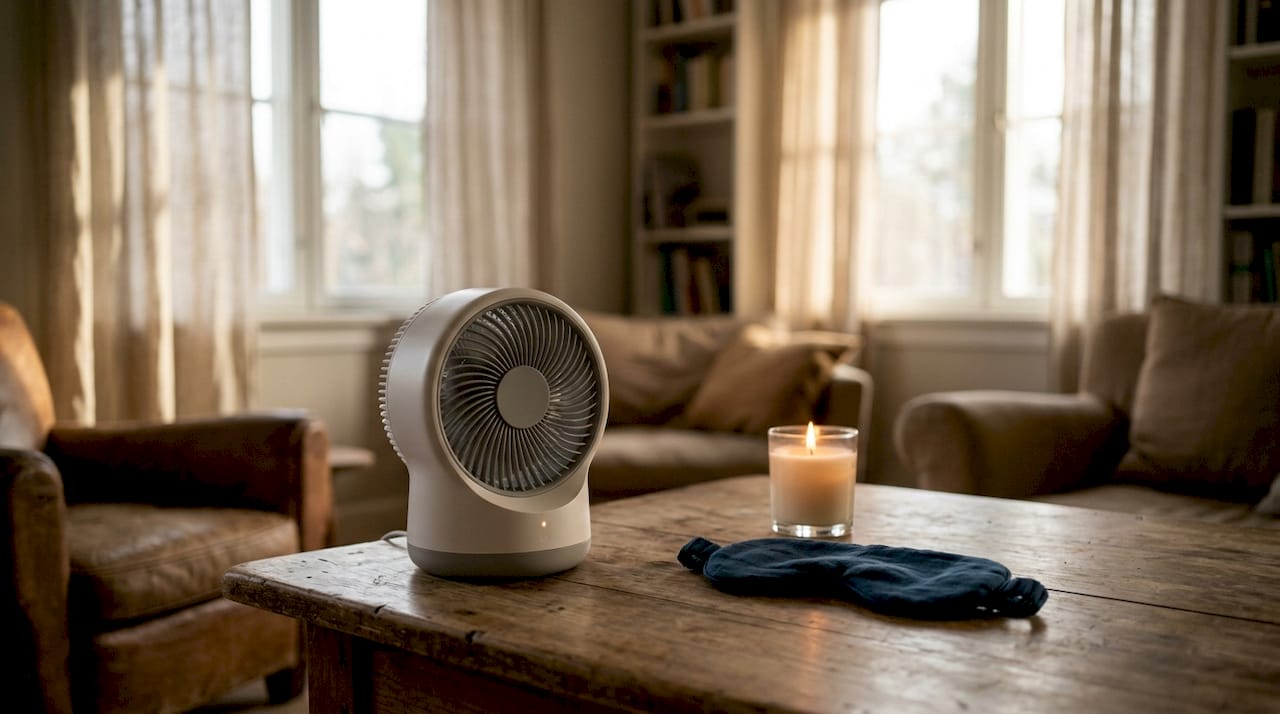
White noise delivers equal energy across all audible frequencies simultaneously. The result sounds like static, a fan running, or an air conditioner. It covers the full frequency range, which makes it the broadest masking tool available. People in loud urban apartments often find it effective because it blunts sharp, sudden sounds like traffic or voices.
Pink noise
Pink noise emphasizes lower frequencies over higher ones, creating a softer, smoother sound. Think of steady rainfall or wind through trees. Pink noise may improve deep sleep quality and memory consolidation, though sleep experts stress that individual preference matters. People who find white noise too harsh often switch to pink noise and notice an immediate improvement in comfort.
Brown noise
Brown noise pushes even further into the low end, producing a deep rumble similar to thunder or a waterfall. It has no sharp high-frequency content at all. Brown noise’s rich, lower-tone rumble helps restless minds relax better than white noise for many people. Those with anxiety or racing thoughts before bed tend to respond well to its grounding quality.
Lesser-known noise colors
- Green noise: Centered around the mid-range frequencies, resembling ambient outdoor sounds.
- Blue noise: Emphasizes higher frequencies, producing a hissing quality that some find useful for concentration but rarely for sleep.
- Violet noise: The highest frequency emphasis, generally too sharp for sleep use.
Pro Tip: Start with pink noise if you are new to sound sleep aids. It sits between the sharpness of white and the heaviness of brown, making it the most broadly tolerable starting point.
What features define modern white noise generators?
Modern white noise generators go far beyond a simple looping audio file. The gap between a basic app and a professional-grade generator is significant, and it directly affects how well you sleep.
1. Real-time sound synthesis
Synthesized white noise in real time avoids the auditory fatigue caused by short loops. When a sound loops every few seconds, your brain eventually detects the pattern and begins to tune it out. Real-time synthesis using Web Audio API techniques produces continuous, non-repeating sound that stays below your conscious awareness all night.
2. Layering and mixing
Professional-grade generators let you combine multiple sound tracks simultaneously. You can layer brown noise under the sound of rain, for example, to create a custom profile that no single preset matches. This layering capability is what separates entry-level apps from tools designed for serious sleep problems.
3. Independent volume controls
Each sound layer should have its own volume slider. This lets you dial in the exact balance between, say, a fan hum and ocean waves. Blunt, single-volume tools force you to choose between too quiet to mask noise and too loud for comfort.
4. Sleep timers and fade-out functions
A fade-out timer gradually reduces volume as you fall asleep. This protects your hearing and avoids the jarring silence that can wake you when a timer cuts off abruptly. Most professional-grade online generators include timers, fade functions, and export options, usually without a subscription.
5. Portability and output formats
The best tools work across devices, including phones, tablets, and dedicated hardware machines. Some generators export audio files for offline use, which matters for travel or areas with unreliable internet. Hardware sleep sound machines offer the added benefit of not requiring a screen nearby, which supports better sleep hygiene practices.
Pro Tip: If you travel frequently, download an exported audio file from a real-time generator before your trip. It gives you consistent, non-looping sound without relying on hotel Wi-Fi.
How to choose the best white noise tool for your sleep needs
The right auditory sleep aid depends on three factors: your noise environment, your auditory sensitivity, and your sleep challenges. Getting this match right makes the difference between a tool you use once and one you rely on every night.
- Identify your noise problem first. Sharp, intermittent sounds like car horns or barking dogs respond best to white noise’s broad frequency coverage. Low, rumbling sounds like traffic or HVAC systems are already in the brown noise range, so adding more low-frequency sound may not help as much.
- Assess your sensitivity. Auditory clutter is a major sleep barrier, and people with busy minds often prefer brown or pink noise for their grounding tones rather than white noise’s sharp static quality.
- Manage volume carefully. Sustained exposure above 60–70 dB risks hearing health over time. Keep your device at a conversational volume level, roughly the sound of a quiet shower, and use fade-out timers.
- Place the device strategically. Positioning the device between you and the noise source creates a more effective masking barrier at lower volume. Placing it across the room forces you to raise the volume to compensate.
- Run a trial period. Spend at least three nights with each noise color before judging it. Your brain needs time to associate the sound with sleep, and first-night impressions are often misleading.
For a broader look at building a sound sleep environment, the Evergreenbliss guide on designing your sleep space covers room acoustics, lighting, and temperature alongside sound.
How specialized sleep sound tools go beyond basic noise masking
The most effective soothing sleep aids do more than cover up noise. Advanced tools target relaxation at a deeper level by engaging the auditory system in ways that promote calm before and during sleep.
Binaural beats
Binaural beats play two slightly different frequencies in each ear. Your brain perceives a third “beat” at the difference between them. Frequencies in the delta range (0.5–4 Hz) are associated with deep sleep, while theta frequencies (4–8 Hz) support relaxation and drowsiness. These tools require headphones to work, which makes them less practical for all-night use but highly effective for pre-sleep wind-down routines.
Nature sound combinations
Nature sounds like rain, ocean waves, and forest ambience combine multiple noise colors naturally. Rain, for instance, contains both pink and white noise components. Lower-frequency noise colors like pink and brown support deeper relaxation by engaging different auditory processing pathways, which may ease stress and anxiety before sleep. Pairing nature sounds with a base layer of brown noise creates a profile that feels immersive without being artificial.
Use cases for specific sleepers
- Insomnia: Brown noise and pink noise both reduce the mental arousal that keeps insomniacs awake. The types of relaxation devices for insomnia extend well beyond sound machines, but auditory tools are often the first and most accessible intervention.
- ADHD: Brown noise in particular has gained attention among people with ADHD for its ability to quiet internal mental chatter without adding stimulation.
- Noise-sensitive sleepers: Pink noise at low volume tends to be the safest starting point. Its smooth frequency curve avoids the harshness that can trigger sensitivity reactions.
“White noise works not by silencing the room, but by lowering the contrast between background noise and sudden disruptive sounds. That reduction in contrast is what prevents sleep interruptions, not the elimination of sound itself.” Sleep Foundation and Popular Science both confirm this masking mechanism as the core function of all color noise sleep tools.
Comparing white noise sleep tool categories
Choosing between pure noise colors, nature sound tools, and hybrid devices comes down to your specific situation. The table below maps each category to its strengths and best-fit scenarios.
| Category | Masking strength | Comfort level | Best for |
|---|---|---|---|
| White noise | High (full spectrum) | Moderate (can feel harsh) | Urban noise, sharp sounds |
| Pink noise | Moderate to high | High (smooth, natural) | General use, deep sleep support |
| Brown noise | Moderate (low-end focus) | Very high (grounding) | Restless minds, anxiety, ADHD |
| Nature sounds | Variable | Very high (familiar) | Relaxation, light sleepers |
| Hybrid/layered | High (customizable) | High (personalized) | Complex noise environments |
- Urban sleepers deal with unpredictable, sharp sounds. White noise or a layered hybrid tool with a strong high-frequency component works best.
- Rural or quiet-environment sleepers often need less masking power and benefit more from the relaxation effect of pink or brown noise.
- Budget-conscious sleepers can access free online white noise generators with real-time synthesis and full layering at no cost. Hardware machines offer convenience and portability at a higher price point.
- Sensitive ears should avoid white noise at high volumes. Pink noise at moderate volume is the safest and most comfortable long-term option.
Pro Tip: If you share a bedroom, brown noise is the most neutral choice. Its low-frequency profile is less likely to disturb a partner who does not need sound masking.
For people whose sleep problems go beyond noise, stress and sleep quality are closely linked, and addressing both together produces better results than sound alone.
Key Takeaways
The most effective white noise sleep tool is the one matched to your specific noise environment, auditory sensitivity, and sleep challenge, not the one with the most features.
| Point | Details |
|---|---|
| Noise color determines masking | White covers all frequencies; pink and brown focus on lower tones for comfort. |
| Real-time synthesis beats loops | Non-repeating synthesized sound prevents auditory fatigue during long sleep sessions. |
| Volume safety is non-negotiable | Keep sound below 60–70 dB and use fade-out timers to protect hearing. |
| Placement amplifies effectiveness | Position the device between you and the noise source to mask at lower volume. |
| Trial periods reveal true fit | Spend at least three nights with each noise color before deciding what works. |
What I’ve learned from years of testing sleep sound tools
The most common mistake people make with white noise is treating it like a light switch. They turn it on, expect silence, and give up after one bad night. White noise does not silence anything. It lowers the contrast between sounds, and that mechanism takes a few nights for your brain to fully use.
The second mistake is defaulting to white noise because it is the most familiar name. Brown noise has genuinely changed how I sleep, and I did not discover it until I stopped assuming white noise was the standard. If you have tried white noise and found it irritating or ineffective, brown noise is not just a variation. It is a fundamentally different auditory experience.
Volume management is the issue I see overlooked most often. People crank the volume to cover a noisy street and end up with a new problem. A device placed between the window and the bed, at moderate volume, outperforms a loud device on the nightstand every time. The physics of sound masking reward smart placement over raw volume.
My honest recommendation is to start with a free real-time generator online before buying any hardware. Spend a week testing pink and brown noise at low volume with a fade-out timer set to 45 minutes. If you find a profile that works, then invest in a dedicated machine for portability and convenience. Buying hardware first and discovering you hate the sound is an expensive and avoidable mistake.
Sound tools work best as part of a broader sleep strategy. Pairing them with good sleep hygiene habits produces results that neither approach achieves alone.
— Cadence
Sleep better with Evergreenbliss’s curated rest and relaxation tools
Getting your sound environment right is one piece of the sleep puzzle. The physical side matters just as much, and that is where Evergreenbliss comes in.
Evergreenbliss carries a curated selection of sleep and relaxation aids designed to work alongside auditory tools. From acupressure mats that release physical tension before bed to stress-relief products that quiet the nervous system, each item targets a different layer of the sleep problem. If white noise handles the sound, these products handle the body. Browse the full mental wellness and stress-relief collection to find what fits your routine.
FAQ
What is the best noise color for sleep?
Pink noise is the most broadly effective starting point for sleep because it balances masking power with auditory comfort. Brown noise works better for people with restless minds or anxiety.
How loud should a white noise machine be?
Keep your device below 60–70 dB, roughly the volume of a quiet conversation. Use a fade-out timer so the sound does not run at full volume all night.
Does white noise actually improve sleep quality?
White noise improves sleep by reducing sound contrast, not by eliminating noise. This lowers the chance that sudden sounds will interrupt your sleep cycle.
What is the difference between white and brown noise for sleep?
White noise covers all frequencies equally and works best against sharp, sudden sounds. Brown noise emphasizes low frequencies and is better suited for calming an active or anxious mind.
Can I use white noise all night safely?
Yes, if you keep the volume at a safe level and use a fade-out timer. Sustained exposure above 70 dB over long periods carries hearing risks, so volume management is the key safety factor.
Recommended
- Use White Noise for Better Sleep Tonight | Evergreen Bliss
- Types of Relaxation Devices for Insomnia: 2026 Guide | Evergreen Bliss
- The Best Sleep Aids for Deeper Sleep in 2026 | Evergreen Bliss
- White Noise Machine | Evergreen Bliss
Sources and further reading
- Systematic review: auditory stimulation and sleep – Journal of Clinical Sleep Medicine, via PubMed Central
- How to Set Up a Bedroom for Better Sleep – Sleep Foundation