Yes, you can use aromatherapy at home to shift your mood in a meaningful way. Pick the right scent for your goal, choose a safe delivery method, and you can feel a difference in as little as 15 minutes. The science behind it is straightforward: scent molecules travel through your olfactory nerves directly to the limbic system, the brain’s emotional control center. As Dr. Melissa Young, MD, of the Cleveland Clinic explains, “These smells influence our brain and nervous system. It’s really an incredible process.” A meta-analysis of randomized controlled trials found that aromatherapy produced a moderate effect size in reducing depressive symptoms, with inhalation and blended oils often outperforming single oils.
Your 3-step starter plan:
- Choose your goal: relaxation, energy, focus, or sleep
- Pick a scent: lavender or bergamot for calm; citrus or peppermint for energy and focus
- Choose a delivery method: diffuser for a room, personal inhaler for on-the-go, roll-on for topical use
Top-line safety: aromatherapy is complementary to conventional medicine, not a substitute. Never apply undiluted essential oils to skin. Use with caution around pets, children, pregnant women, and anyone with asthma. Evergreenbliss carries a curated selection of at-home tools to get you started safely.
Pro Tip: If you’re new to aromatherapy, start with one oil you already find pleasant. Personal scent preference shapes how effective an oil is for you, so begin with what you like.
Table of Contents
- How to use aromatherapy at home for mood: methods and blending
- Which at-home product fits your mood goal?
- Evergreenbliss has what you need to start today
- Key Takeaways
How to use aromatherapy at home for mood: methods and blending
Match your scent to your goal
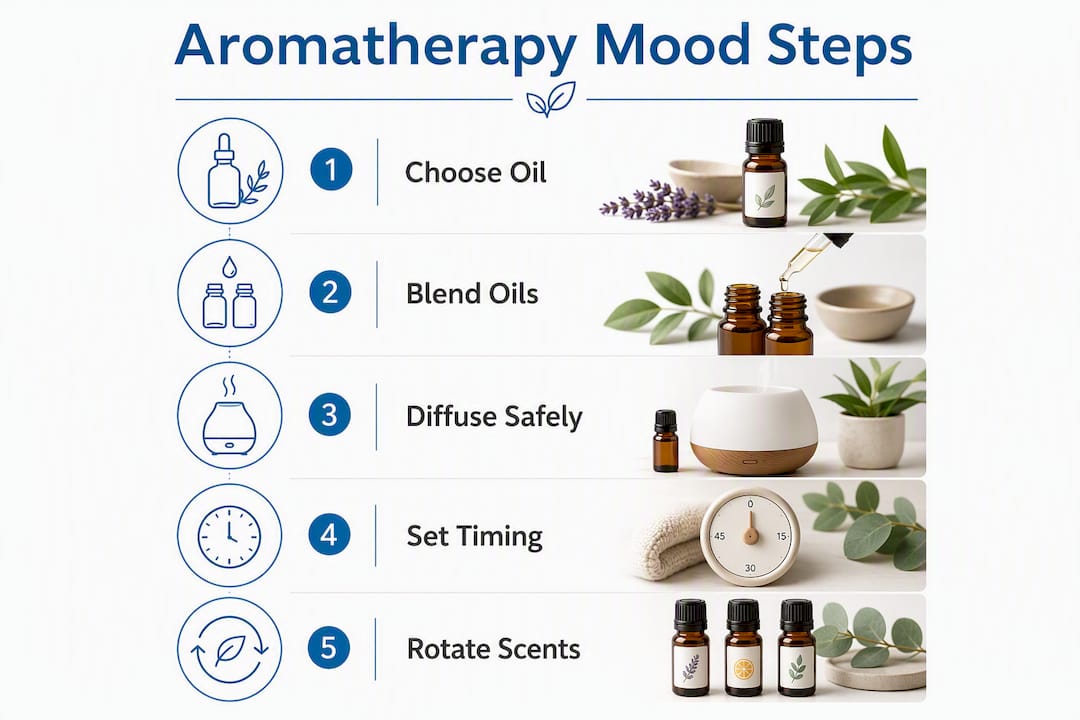
Start by deciding what you want to feel. Lavender, bergamot, neroli, lemongrass, and frankincense are among the most commonly recommended oils for stress relief and relaxation. For energy and mental focus, citrus oils (lemon, sweet orange) and peppermint are the go-to choices. Rosemary works well for concentration. Frankincense suits both meditation and sleep. Because individual responses vary significantly, personal preference matters as much as the research.
Step-by-step delivery methods
- Electric ultrasonic diffuser: Add 5–10 drops of essential oil to the water reservoir. Run for 30–60 minutes per session. Best for filling a room with a consistent, gentle scent. Clean the reservoir weekly to prevent mold.
- Nebulizing diffuser: Uses no water; delivers undiluted oil as a fine mist. Stronger aroma intensity and faster onset than ultrasonic models, making it better for larger rooms or when you want a quicker effect. Use in shorter bursts (15–20 minutes).
- Personal inhaler or small vial: Add 15–20 drops to a cotton wick inside a small inhaler tube. Hold near your nose and breathe slowly for 1–2 minutes. Effective and portable — you can use it at your desk, in the car, or anywhere.
- Roll-on topical application: Dilute essential oil in a carrier oil (jojoba, fractionated coconut, or sweet almond oil) and apply to pulse points — wrists, temples, behind the ears. For general adult use, a 2–5% dilution is the standard range; for facial use, keep it at 1–3%. In practical terms, that’s roughly 12–30 drops of essential oil per one ounce of carrier oil for body use.
- Steam inhalation: Add 2–3 drops to a bowl of hot water, drape a towel over your head, and inhale for 5–10 minutes. Simple, inexpensive, and effective for a quick session.
- Scented candle: Choose candles made with real essential oils rather than synthetic fragrance. Good for ambient relaxation, though scent concentration is lower than a diffuser.
Blending for better results
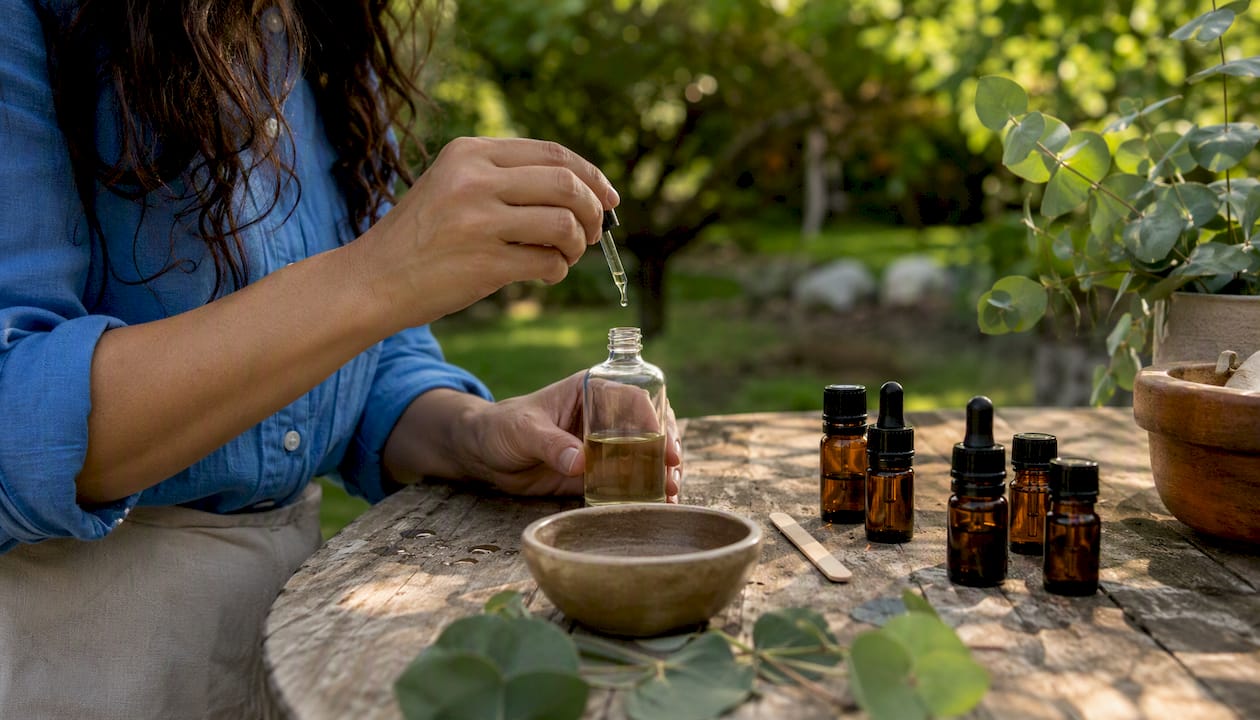
Single oils work, but blended formulations often do better. An EEG study found that blended essential oils restored stress-related brain patterns more effectively than lavender alone. A simple 2–3 oil blend approach:
- Relaxation: lavender + bergamot + frankincense (3:2:1 ratio)
- Energy: sweet orange + peppermint + rosemary (2:2:1 ratio)
- Sleep: lavender + neroli + chamomile (3:2:1 ratio)
Blend in a small glass bottle, then use in your diffuser or diluted in a carrier oil for topical use.
Session timing and scent rotation
Mood effects from inhalation typically begin within minutes. A 30–60 minute diffuser session is enough for most goals; longer is not necessarily better. For daily use, rotate between two or three different oils or blends every few days. Your nose adapts quickly to a repeated scent, a phenomenon called olfactory habituation, which can reduce perceived intensity over time.
Pro Tip: Pair aromatherapy with another sensory relaxation tool — a massage device or weighted blanket — for a stronger combined effect than either alone.
Which at-home product fits your mood goal?
| Product Type | Best For | Delivery | Typical Cost | Portability | Pet/Child/Pregnancy Safety | Maintenance |
|---|---|---|---|---|---|---|
| Personal Care & Hygiene Gadgets | Energy, on-the-go comfort | Personal inhaler, roll-on | $10–$30 | High | Roll-ons: generally safer; avoid near infants | Refill wick or oil |
| Mental Wellness & Stress-Relief | Relaxation, stress relief | Ultrasonic diffuser, blends | — | Medium | Keep diffusers out of reach; avoid eucalyptus near young children | Weekly cleaning |
| Sleep & Relaxation Aids | Sleep, nighttime relaxation | Diffuser, sleep blends | — | Low | Use in ventilated rooms; avoid with cats | Weekly cleaning |
| Home Fitness Recovery | Post-workout recovery | Topical roll-on, diffuser | $15–$60 | Medium | Dilute properly before skin use | Refill as needed |
| Nebulizing diffuser (standalone) | Large rooms, fast onset | Nebulizer | — | Low | Stronger concentration — use with caution around pets | Monthly cleaning |
| Scented candle | Ambient relaxation | Candle | — | Medium | Fire hazard; never leave unattended | Replace when spent |
Shopping checklist before you buy:
- Look for a Certificate of Analysis (COA) or third-party GC-MS testing. Product quality varies widely in the commercial essential oil market, and batch-specific testing confirms botanical identity and purity.
- Check for clear ingredient labeling with botanical (Latin) names.
- Confirm the supplier’s return policy before ordering.
- Match diffuser capacity to your room size — a small personal diffuser won’t adequately cover a large living room.
- For a curated starting point, browse aromatherapy products from vetted wellness retailers.
Evergreenbliss has what you need to start today
Aromatherapy works best when the tools are simple, safe, and actually fit your routine. Evergreenbliss curates wellness gadgets specifically for at-home use, with transparent product pages, free shipping, and easy returns — so you’re not guessing about what you’re buying or whether it’ll work for your space.
The smartest starting point: one compact diffuser and one goal-focused scent blend. Use it consistently for one to two weeks before adding anything else. That single-method approach lets you observe your own response clearly, which matters because personal scent preference shapes effectiveness as much as the oil itself.
For portability and daily mood support, the personal care and hygiene gadgets collection covers compact diffusers, roll-ons, and carryable inhalers. For stress relief and relaxation-focused bundles, the mental wellness collection is the better starting point. If your main goal is better sleep, the sleep and relaxation aids collection pairs diffusers with sleep-oriented blends. Browse all three and pick the one that matches your first goal.
Key Takeaways
Aromatherapy supports mood by activating the olfactory pathway to the limbic system, and inhalation with blended oils consistently produces the strongest results across clinical trials.
| Point | Details |
|---|---|
| Inhalation works fastest | Mood effects from inhalation typically begin within minutes; a 30–60 minute session covers most goals. |
| Blends outperform single oils | A meta-analysis found blended oils often outperform single oils for reducing depressive symptoms. |
| Dilution is non-negotiable | For topical use, dilute to 2–5% in a carrier oil (jojoba, coconut, sweet almond) to avoid skin irritation. |
| Quality requires verification | Choose oils with a COA or third-party GC-MS testing; product consistency varies widely across the market. |
| Evergreenbliss for at-home use | Evergreenbliss offers curated diffusers, roll-ons, and sleep aids across collections matched to relaxation, stress relief, and recovery goals. |
This article is general wellness information, not medical advice. Consult a healthcare provider before using aromatherapy if you have a medical condition, take medications, are pregnant, or have respiratory sensitivities.