A wellness ritual is an intentional, repeated practice built around a specific sequence, at least one sensory cue, and a personal meaning that shifts your mental or physical state. That last part is what separates it from everything else you do on autopilot.
The defining elements are:
- Intention: You know why you’re doing it before you start.
- Sequence: The steps follow a consistent order, which trains your nervous system to anticipate the shift.
- Sensory anchor: A scent, sound, texture, or light that signals the ritual has begun.
- Repetition: Done regularly enough that the cue alone starts to trigger the state change.
- Meaning: The practice connects to something you value, not just something you need to check off.
A simple example: brewing a cup of herbal tea each night, holding the warm mug, and taking three slow breaths before bed. A more layered one: a 20-minute morning sequence of journaling, light stretching, and a cold face splash with a specific playlist running. Both qualify. The complexity doesn’t matter; the intention does.
The Global Wellness Institute defines wellness as the active pursuit of activities, choices, and lifestyles that lead to holistic health across mental, emotional, spiritual, environmental, and physical dimensions. A wellness ritual is the daily mechanism that makes that pursuit concrete and repeatable.
Table of Contents
- How do wellness rituals differ from routines and habits?
- What are the real benefits of wellness rituals?
- Seven wellness ritual examples you can adapt tonight
- How to create a wellness ritual that actually sticks
- How long before you actually notice a difference?
- Rituals, religion, and cultural sensitivity
- Common mistakes that kill rituals (and how to fix them)
- Three starter ritual templates you can use tonight
- Key Takeaways
- Why patience is the most underrated ritual skill
- Tools that make your rituals easier to keep
- Useful sources and further reading
How do wellness rituals differ from routines and habits?
Most people use these three words interchangeably. They’re not the same thing, and the difference changes how you build them.
A habit is an automatic behavior triggered by a cue, with little conscious involvement. Brushing your teeth is a habit. You don’t think about it; you just do it. A routine is a sequence of habits organized for efficiency, like a morning routine that gets you out the door on time. A ritual is a practice you do with full presence and a clear sense of why it matters to you.
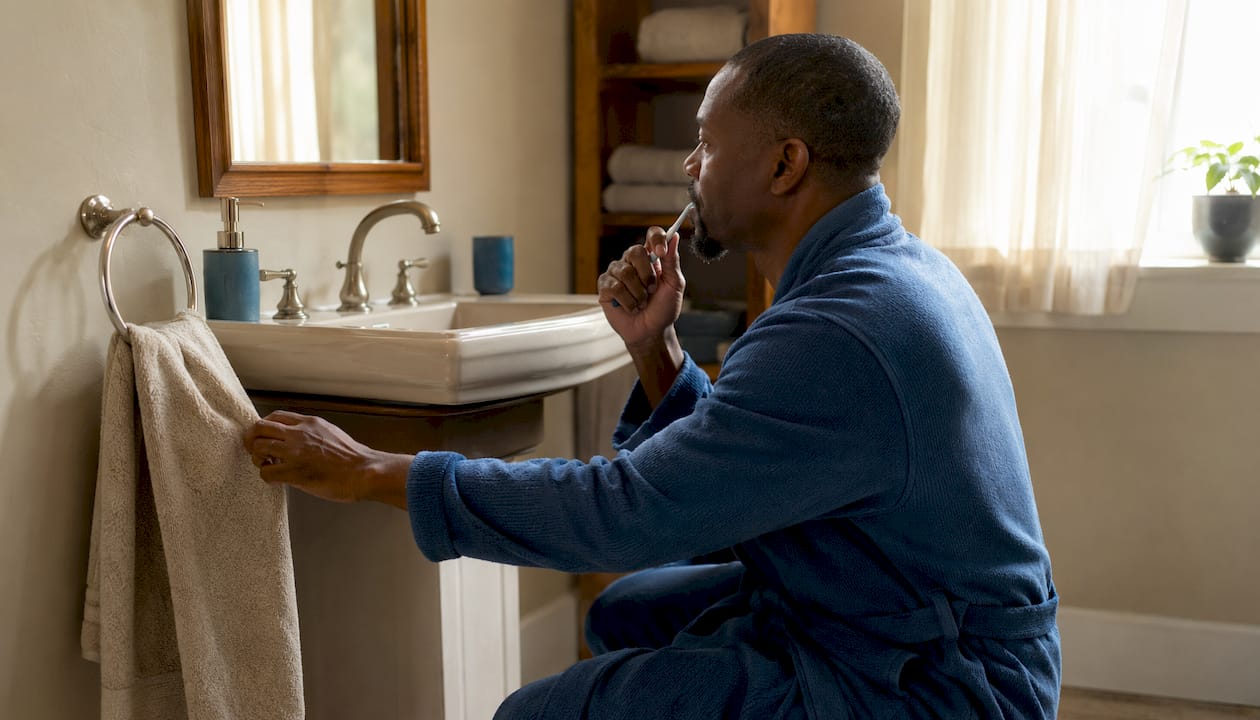
Practitioners distinguish routines by their focus on practicality, while rituals signal pause and presence through sequence and meaning. That’s not a soft distinction. Under stress, routines often collapse because efficiency stops feeling worth the effort. Rituals tend to persist under stress precisely because their sensory cues and meaning give them a psychological weight that pure task-completion doesn’t.
Here’s a quick comparison:
- Habit: Drinking a glass of water when you wake up. Automatic, no meaning required.
- Routine: A 45-minute morning sequence of shower, coffee, email, breakfast. Efficient, but skippable when life gets chaotic.
- Ritual: Five minutes of quiet tea-drinking with the phone face-down, framed as your daily reset. Meaning-laden, sensory, and resilient.
When should you convert a routine into a ritual? When the routine involves something you actually want to feel, not just finish. A how routine reduces stress framework can help you identify which habits already have emotional weight worth amplifying. Don’t force it on every task. Your commute doesn’t need to become a ritual. Your wind-down before sleep probably should.
What are the real benefits of wellness rituals?
The benefits span physiology, psychology, and behavior, and they compound over time.
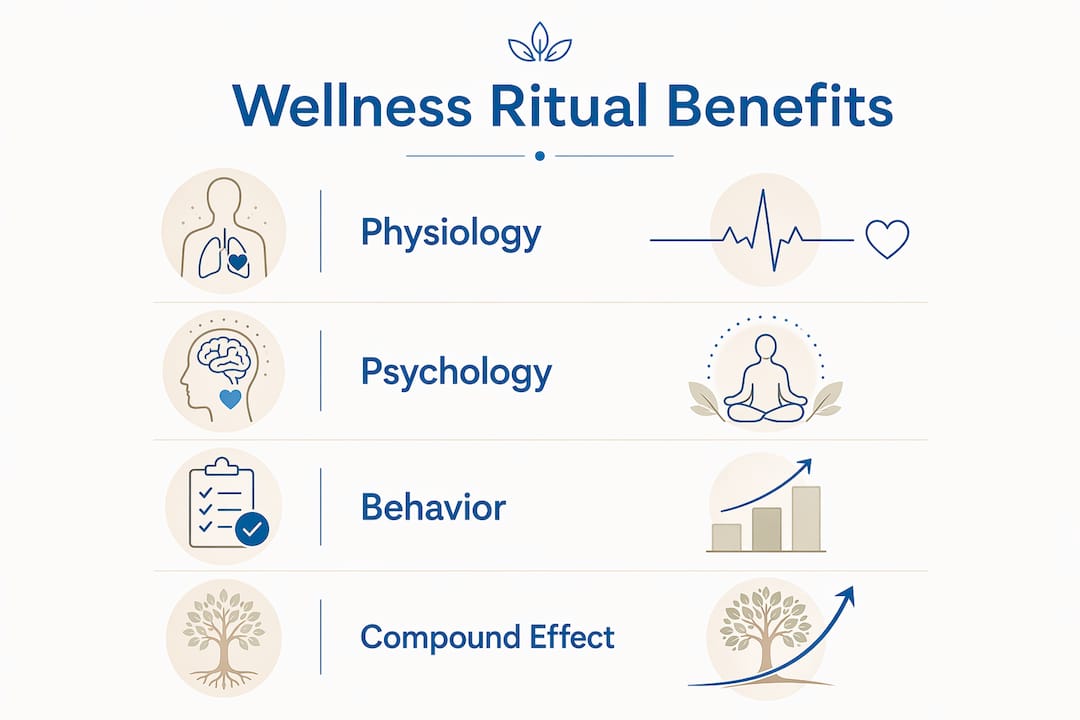
On the physiological side, consistent rituals can lower cortisol, improve heart-rate variability, and support circadian rhythm by acting as predictable daily anchors. Practitioners also link regular rituals to better digestion and metabolic function, because the body responds to predictable cues by preparing the right systems in advance. Think of it as priming: your nervous system starts the shift before the ritual even finishes.
Psychologically, rituals reduce decision fatigue. When a sequence is fixed, you’re not spending mental energy choosing what comes next. That freed-up attention goes toward presence instead of planning. Sensory cues like scent, warm light, or a specific sound strengthen neural circuits over time, making the state change faster and more reliable with each repetition.
Wellness rituals work across eight dimensions of health: physical, mental, emotional, spiritual, environmental, occupational, relational, and financial. A single daily practice rarely covers all eight, but it can anchor the others.
Behaviorally, rituals improve adherence. A practice tied to meaning and sensory experience is harder to skip than one that’s purely functional. Research on wellness habit formation shows that the emotional weight of a ritual is one of the strongest predictors of long-term consistency. That’s why a five-minute breathwork session someone actually looks forward to beats a 30-minute workout they dread.
The touch-based practices involved in rituals like self-massage or acupressure also trigger oxytocin release, which reduces anxiety and supports social connection, even when practiced alone.
Seven wellness ritual examples you can adapt tonight
These are practical, not aspirational. Each one has a sensory anchor and a realistic time commitment.
-
Morning focus ritual: Wake, splash cold water on your face, sit with a warm drink, and write about what you want to feel by end of day. The cold water is the sensory anchor; the writing is the intention. Works for shift workers if moved to the start of any waking period.
-
Midday reset ritual: Step away from your screen, place both feet flat on the floor, and do slow box breaths. Add a specific scent, like a roll-on essential oil, to make the cue portable. Deep breathing techniques like this activate the parasympathetic nervous system within minutes.
-
Evening wind-down ritual: Dim the lights before bed, apply a body lotion or use an acupressure mat, then read a few pages of a physical book. The light change is the anchor. Parents can do this after kids are down; it doesn’t require silence, just consistency.
-
Movement ritual: A short walk taken at the same time each day, with the same playlist or podcast. The audio cue trains your brain to associate movement with that specific mental state. Regularity is what allows benefits to accumulate, not intensity.
-
Social connection ritual: A weekly voice call with one person you care about, always at the same time, always starting with the same question: “What’s one good thing from this week?” The structure makes it easy to sustain even when schedules are tight.
-
Sensory restoration ritual: Sit in a quiet spot, hold something with a pleasing texture (a smooth stone, a warm mug, a soft cloth), and focus only on the sensation. No agenda. High-stress professionals find this particularly effective between back-to-back meetings.
-
Restorative body ritual: Use a massage device or acupressure mat while listening to a specific ambient track. The combination of physical sensation and sound creates a layered sensory anchor that deepens the nervous-system response over time. Sensory relaxation tools can make this ritual accessible without a spa visit.
How to create a wellness ritual that actually sticks
The most common reason rituals fail is that they start too big. A five-step morning sequence sounds appealing on Sunday night and collapses by Wednesday. Start with a single two-minute core action, then layer from there.
Here’s a sequenced process:
-
Clarify your intention. Write one sentence: “I do this ritual to feel ___.” Not to be healthier in general. Specific: calmer, more focused, less reactive. That sentence becomes your micro-intention.
-
Pick a cue. Attach the ritual to something that already happens: waking up, finishing lunch, getting into bed. The existing event is the trigger; your ritual follows it automatically.
-
Choose one sensory anchor. A specific candle scent, a playlist, a particular mug, warm lighting. The anchor signals your nervous system before the first step begins. Adding a sensory anchor converts a routine into a ritual faster than any other single change.
-
Make the core action two minutes. Two minutes of breathwork, two minutes of journaling, two minutes of stretching. Automatic success at this length builds momentum before complexity enters.
-
Prepare your environment the night before. Put the mat out. Set the mug on the counter. Lay the journal open. Reducing friction is one of the highest-leverage moves in ritual design; if you have to hunt for your tools, you’ll skip the ritual.
-
Schedule it explicitly. Put it in your calendar for the first two weeks. Not as a task, as an appointment with yourself.
-
Track for 2–4 weeks. A simple checkmark in a notebook works. You’re not measuring performance; you’re watching a pattern emerge.
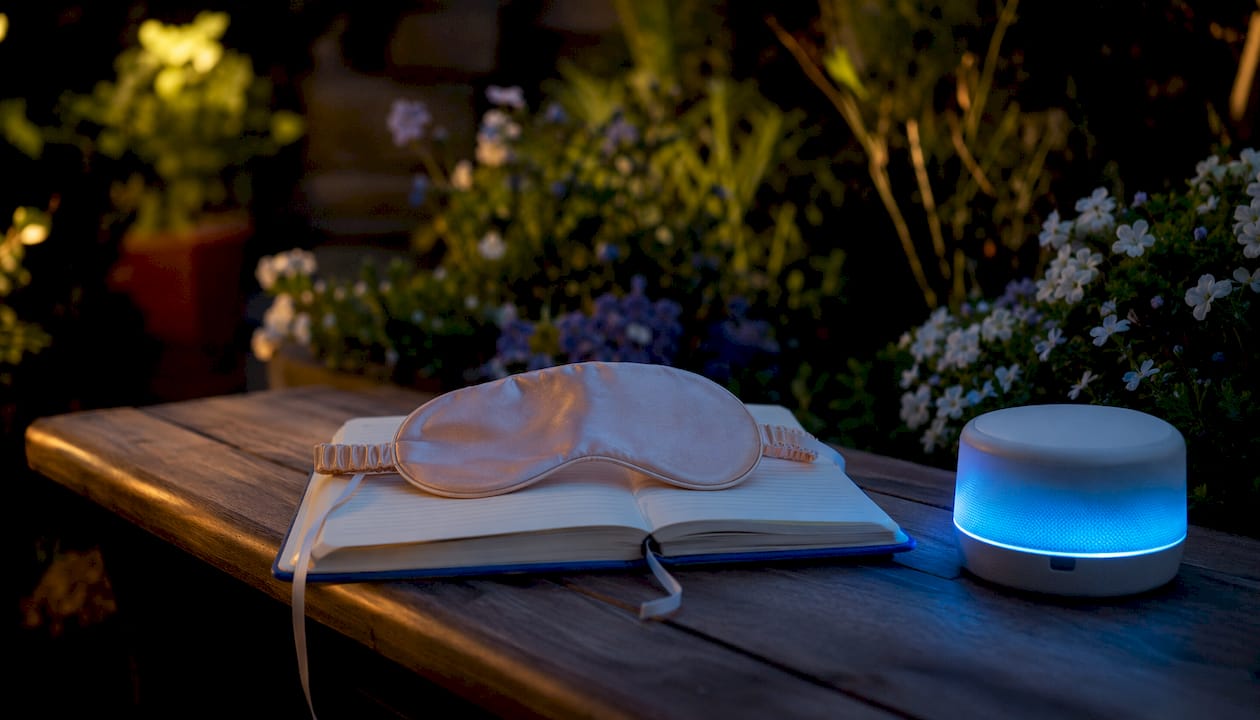
Pro Tip: Place your ritual tools somewhere you’ll see them before you need them. A sleep mask on your pillow, an acupressure mat rolled out by your bed, a journal on your nightstand. Visibility cuts activation energy to near zero.
How long before you actually notice a difference?
Expect three distinct phases, and don’t confuse the first for the whole story.
Immediately (first few sessions): Most people notice a subjective sense of calm within the first one to three sessions. That’s real, but it’s largely a placebo-adjacent response to the novelty of slowing down. Perceived stress relief arrives faster than measurable physiology changes, which is actually useful: it keeps you coming back long enough for the deeper changes to set in.
2–4 weeks: This is the habit-consolidation window. Behavioral science research, including the foundational work by Lally et al. published in the European Journal of Social Psychology, found that habit automaticity develops over a range of weeks depending on complexity and consistency. Simpler rituals consolidate faster. By the end of this window, you’ll likely notice the cue alone starts to shift your state before you’ve completed a single step.
3+ months: Measurable physiological changes, including improved heart-rate variability, more stable cortisol patterns, and better sleep quality, tend to emerge here. These are the changes worth tracking with a wearable or a sleep log.
Small metrics to watch during the process:
- Sleep onset time (how long it takes to fall asleep)
- Morning stress reactivity (how quickly you feel overwhelmed after waking)
- Midday energy dips (frequency and severity)
- Consistency rate (percentage of days the ritual happened, even partially)
The 2–4 week window is when most people quit. The novelty has worn off but the automaticity hasn’t arrived yet. Knowing this in advance is the single most useful piece of timeline information you can have.
Rituals, religion, and cultural sensitivity
Wellness rituals and religious rites share a structure: sequence, repetition, sensory cues, and meaning. That overlap is worth acknowledging clearly, because borrowing from a tradition without understanding it can cause harm, even when the intent is personal well-being.
The practical distinction: a personal wellness ritual is self-directed and serves your own regulation. A religious rite belongs to a community, carries theological weight, and is governed by that community’s norms. You can draw inspiration from traditions without appropriating them, but it requires care.
A few grounded guidelines:
- Do: Learn the origin of any practice you adopt (breathwork, meditation, sound bathing, smudging). Understanding context deepens the practice and shows respect.
- Do: Give credit when you share a practice publicly. Saying “this is inspired by Ayurvedic tradition” is both accurate and respectful.
- Do: Consult a religious leader or cultural practitioner if you want to incorporate elements from a specific faith tradition into your ritual. Many are glad to guide sincere inquiry.
- Don’t: Reduce a sacred practice to an aesthetic. Using a singing bowl as decor while ignoring its Tibetan Buddhist context is the clearest example of what to avoid.
- Don’t: Claim ownership or expertise over a tradition you’ve adopted recently.
Personalization is the safest and most effective approach: build rituals from your own values first, then layer in influences you’ve taken time to understand.
Common mistakes that kill rituals (and how to fix them)
Most rituals don’t fail because the person lacks discipline. They fail because of design problems that are entirely fixable.
-
Starting too big. A six-step morning ritual sounds complete but collapses under a single bad night’s sleep. Fix: strip it to one two-minute action and add steps only after 14 consecutive days.
-
Rigid rules instead of flexible windows. “I must do this at 6 AM” becomes a reason to skip entirely when you wake at 7. Fix: define a window (“sometime before I open my laptop”) rather than a fixed time.
-
No sensory anchor. Without a cue that signals the shift, the ritual feels like another task. Fix: add one specific sensory element, even something as small as a particular mug or a single song.
-
Skipping the environment setup. If your mat is in the closet and your journal is in a drawer, the ritual requires three decisions before it starts. Fix: lay everything out the night before.
-
Treating a miss as a failure. One skipped day becomes two, then a week, then “I’m not a ritual person.” Fix: use a micro-commit recovery. After a miss, do just 60 seconds of the ritual’s core action the next day. That’s enough to re-anchor the pattern.
Pro Tip: Pair your ritual with an existing anchor you already love, not one you think you should love. If you genuinely enjoy your morning coffee, that’s your cue. Build the ritual around what’s already working.
The stress relief techniques that stick long-term share one trait: they’re designed around real life, not ideal life. Iterate freely. A ritual that evolves is still a ritual.
Three starter ritual templates you can use tonight
These are copy-and-use frameworks. Adapt the details; keep the structure.
Evening wind-down (10–15 minutes)
- Dim overhead lights or switch to a lamp (light anchor).
- Spend 10 minutes on an acupressure mat or with a neck massager while listening to the same ambient playlist each night.
- Write one sentence: “One thing I’m releasing from today.”
- Put on a sleep mask and take five slow breaths before sleep.
Optional Evergreenbliss tools: acupressure mat, sleep mask, white noise machine. Substitution for limited time: skip the mat, keep the light change and the one-sentence journal entry. That’s still a ritual.
Midday reset (3–5 minutes)
- Step away from your workspace entirely (location change is the anchor).
- Apply a roll-on essential oil to your wrists and take four box breaths.
- Read one paragraph of something unrelated to work.
- Return to your desk.
Works for shift workers and parents: do it during any natural break, even a bathroom visit. The scent anchor makes it portable.
Morning focus (7–10 minutes)
- Splash cold water on your face immediately after waking (sensory anchor).
- Sit with a warm drink, no phone, for three minutes.
- Write three words that describe how you want to feel today.
- Take two minutes of slow breathing or light stretching before any screen time.
Optional Evergreenbliss tools: sleep and relaxation aids used the night before improve morning baseline, making this template easier to sustain. Substitution: if mornings are chaotic, move this template to the first five minutes of your lunch break.
Key Takeaways
A wellness ritual works because intention, sensory anchoring, and repetition combine to train your nervous system to shift states on cue, not just when you have time or energy to spare.
| Point | Details |
|---|---|
| Definition | A wellness ritual is an intentional, repeated practice with a sensory anchor and personal meaning that shifts your mental or physical state. |
| Start tiny | Begin with a single two-minute core action; add steps only after 14 consecutive days of consistency. |
| Sensory anchors matter | One specific scent, sound, or light cue signals your nervous system before the ritual begins, making the shift faster over time. |
| Expect a 2–4 week window | Habit automaticity develops over weeks; perceived calm arrives sooner, but measurable physiology changes take 3+ months. |
| Evergreenbliss tools reduce friction | Products like acupressure mats, sleep masks, and white noise machines lower activation energy and support ritual consistency at home. |
Why patience is the most underrated ritual skill
The wellness world tends to oversell speed. You’ll see “transform your mornings in three days” and “feel the difference immediately.” Some of that is true in a narrow sense: a single breathwork session does produce a measurable parasympathetic response. But the deeper value of a ritual, the kind that changes how you handle a hard Tuesday in February, builds slowly and quietly.
What most articles miss is that the early weeks of a ritual aren’t really about the practice itself. They’re about proving to yourself that you can show up for something small, consistently, without a dramatic result to justify it. That proof is what makes the ritual load-bearing later, when stress is high and motivation is low.
The rituals worth keeping are the ones that feel almost boring after a month, because boring means automatic, and automatic means they’ll be there when you need them most. Evergreenbliss exists to make that consistency easier, not by replacing the practice, but by removing the friction that causes people to skip it.
Tools that make your rituals easier to keep
The hardest part of any ritual isn’t starting. It’s the Tuesday when you’re tired and your mat is in the closet and your sleep mask is somewhere in a drawer. That’s where physical tools earn their place.

Evergreenbliss carries the specific product categories that reduce that friction: stress-relief products like white noise machines and relaxation devices for midday and evening rituals, sleep masks and sound aids for bedtime wind-downs, and acupressure mats and massage devices for restorative body rituals. None of these replace the intention behind a ritual. They just make it easier to show up for it when you’re running on empty.
Tools work best when they’re already in position. A sleep mask on your pillow is a ritual cue. A white noise machine on your nightstand is an anchor. Browse the wellness and recovery collection to find the one or two tools that match the templates above, then put them somewhere you’ll see them tonight.
Useful sources and further reading
These are the primary sources used in this article, annotated for readers who want to go deeper.
-
Global Wellness Institute definition via Keeko Oral Care: Used for the foundational definition of wellness across eight dimensions. The GWI is the leading independent research organization in the wellness industry.
-
Wellness Voice: Rituals vs. Routines: Used for the behavioral distinction between rituals, routines, and habits. Clear practitioner-level explanation of why the difference matters under stress.
-
Dr. Anna Cabeca: Why Rituals Beat Routines: Used for physiological benefits (cortisol, HRV, circadian anchoring), sensory anchor mechanisms, and the two-minute start principle. Dr. Cabeca is a board-certified OB/GYN and integrative medicine practitioner.
-
Serena Loves: What Are Wellness Rituals?: Used for the examples section and the principle that regularity drives benefit accumulation.
-
Southwest Voices: What Is a Wellness Ritual?: Used for the how-to section on converting habits into rituals with sensory anchors and micro-intentions.
-
WMN Magazine: How to Design a Wellness Ritual: Used for the environment-preparation principle and friction-reduction guidance in the how-to and troubleshooting sections.
-
Psychology Today: Ritual as a Source of Wellness and Resilience: Used for personalization guidance, values alignment, and cultural sensitivity framing.
-
Real Simple: Dopamine-Boosting Wellness Rituals: Used for the timeline section, specifically the distinction between immediate perceived relief and longer-term physiological change.
-
Holistic Health Fair: How Daily Wellness Rituals Support Balance: Background reference on the role of daily rituals in supporting overall balance across wellness dimensions.
-
AM Wellness Spa: Wellness: Useful for readers interested in professional spa-based ritual contexts and how clinical wellness settings apply ritual frameworks.