Yes, electric blankets deliver real comfort, sleep, and cost benefits when you use them correctly. Energy reporting suggests running one for personal warmth instead of cranking the thermostat can cut winter electricity costs by 10 to 20 percent, and models certified by testing bodies like UL Solutions build in hot-spot monitoring that makes overnight use far safer than older designs. Evergreenbliss sources personal-care and recovery products with this same safety-first standard in mind.
- Comfort and faster sleep onset for cold sleepers
- Potential savings on winter heating bills
- Temporary relief for stiff joints and tense muscles
- Extra caution needed for infants, pets, and anyone with reduced temperature sensitivity
Key Takeaways
Electric blankets work best as a targeted comfort and cost tool: pre-warm the bed for faster sleep onset, keep the room cool overnight, and expect real but temporary relief for muscle and joint pain.
| Point | Details |
|---|---|
| Savings are real but modest | Expect about 10 to 20 percent off winter electricity bills, not a dramatic cut. |
| Pre-warm, don’t overheat | Heat the bed 20 to 30 minutes before sleep, then lower the setting to protect deep sleep. |
| Pain relief is temporary | Heat eases stiffness and boosts circulation but doesn’t treat the underlying cause. |
| Safety rules aren’t optional | Skip electric blankets for infants and pets, and replace units older than about 10 years. |
| Maintenance extends benefits | Roll rather than fold for storage, and detach the controller before washing. |
This article is general information, not a substitute for advice from a qualified doctor. Consult a qualified healthcare professional about your own circumstances before acting on anything here.
Table of Contents
- Electric Blanket Benefits Ranked by Everyday Impact
- How Do Electric Blankets Work?
- What Are the Real Energy Savings?
- Pain Relief, Circulation, and Sleep Quality
- Electric Blanket Safety Tips You Shouldn’t Skip
- How to Use an Electric Blanket Safely and Efficiently
- What to Look for When Buying an Electric Blanket
- What the Research Actually Supports
- Manufacturing, Disposal, and the Bigger Environmental Picture
- Does It Matter What Bedding You Use It With?
- Maintenance Habits That Determine How Long It Lasts
- When an Electric Blanket Makes Sense and When It Doesn’t
- Where to Start if You Want the Full Benefit
- Sources
Electric Blanket Benefits Ranked by Everyday Impact
The biggest electric blanket benefit is the simplest one: you feel warm within minutes instead of waiting for a whole room to heat up. Here’s how the rest stack up.
- Direct warmth and comfort. A cold bed is one of the most common complaints in winter, and localized heat solves it faster than a furnace ever will. Best for cold sleepers in poorly insulated bedrooms.
- Faster sleep onset. Warming the sheets before bed helps your body relax into sleep quicker, since a warm surface signals it’s time to wind down. This matters most for people who lie awake shivering before they can settle.
- A better pre-warmed sleep environment. Heating the bed for 20 to 30 minutes before you get in, then turning it off, keeps the room itself cool. That combination supports the natural temperature drop your body needs for deep sleep, according to sleep researchers.
- Temporary pain relief and circulation support. Gentle heat can ease stiffness from arthritis, sciatica, and general muscle tension by relaxing tissue and encouraging local blood flow. It’s relief, not a cure, and it wears off once the heat does.
- Mood and relaxation effects. Warmth has a calming, almost ritualistic quality, similar to a warm bath, that many people associate with lower stress before bed.
- Energy savings versus central heating. Heating yourself instead of an entire house is inherently cheaper, which is where most of the measurable savings come from.
Pro Tip: If you run hot at night, use the blanket only to pre-warm the bed, then switch it off before you fall asleep. You get the comfort without the risk of overheating through the night.
How Do Electric Blankets Work?
Inside the fabric, insulated heating wires run in a grid pattern connected to a controller that regulates power output and, in higher-end models, separate heat zones. Built-in sensors monitor for hot spots and maintain steady-state temperature limits, which is a major reason modern blankets are safer than the ones your grandparents used.
- Underblankets sit on the mattress under your sheet and warm you from below, best for all-night use.
- Overblankets lay on top of the bedding like a throw and heat you from above, good for extra layering.
- Heated mattress pads combine cushioning with warmth for a more even heat spread.
- Throws are the sofa version, ideal for evening use rather than sleep.
What Are the Real Energy Savings?
Most electric blankets draw somewhere between 100 and 300 watts, with basic models closer to 40W and larger underblankets running 250W or higher. At typical electricity rates, that translates to just a few cents per hour, a fraction of what it costs to keep a furnace running overnight.
The real number to know: heating yourself instead of your whole home can save a household roughly 10 to 20 percent on winter electricity bills.
Say you run a 200W blanket for eight hours a night through a four-month winter. That’s cheap enough that most households barely notice it on the bill, especially when it replaces turning up the thermostat for the whole house. To get the most out of it:
- Preheat on high for 20 to 30 minutes, then drop to a lower, maintenance setting.
- Use the built-in timer instead of leaving it on all night at a middle setting.
- Layer a duvet over the blanket to trap the heat instead of letting it escape.
- Replace blankets older than about a decade, since newer models run more efficiently and safely.
Pain Relief, Circulation, and Sleep Quality
Heat works on pain the same way it always has: it relaxes tight muscle tissue and encourages local blood flow, which can ease the ache of arthritis, sciatica flare-ups, and everyday muscle tension. That relief is real, but it’s temporary. Once the heat source is gone, so is most of the benefit, which is why heat therapy works best alongside other pain management, not instead of it.
Sleep is more nuanced. Warmth helps you fall asleep faster, but staying too hot all night can work against you.
Research shows that prolonged high heat during sleep can reduce slow-wave and REM sleep, meaning the same warmth that helps you doze off can quietly cut into your deepest sleep stages if it doesn’t ease off.
- People with insomnia often do best pre-warming the bed, then sleeping in a cooler room.
- Heat-sensitive sleepers should favor a timer that shuts off within an hour of falling asleep.
- Those managing chronic pain may need low, steady warmth through the night, accepting a slight sleep-quality trade-off for comfort.
Electric Blanket Safety Tips You Shouldn’t Skip
Electric blankets are safe for most adults, but a handful of risks deserve attention.
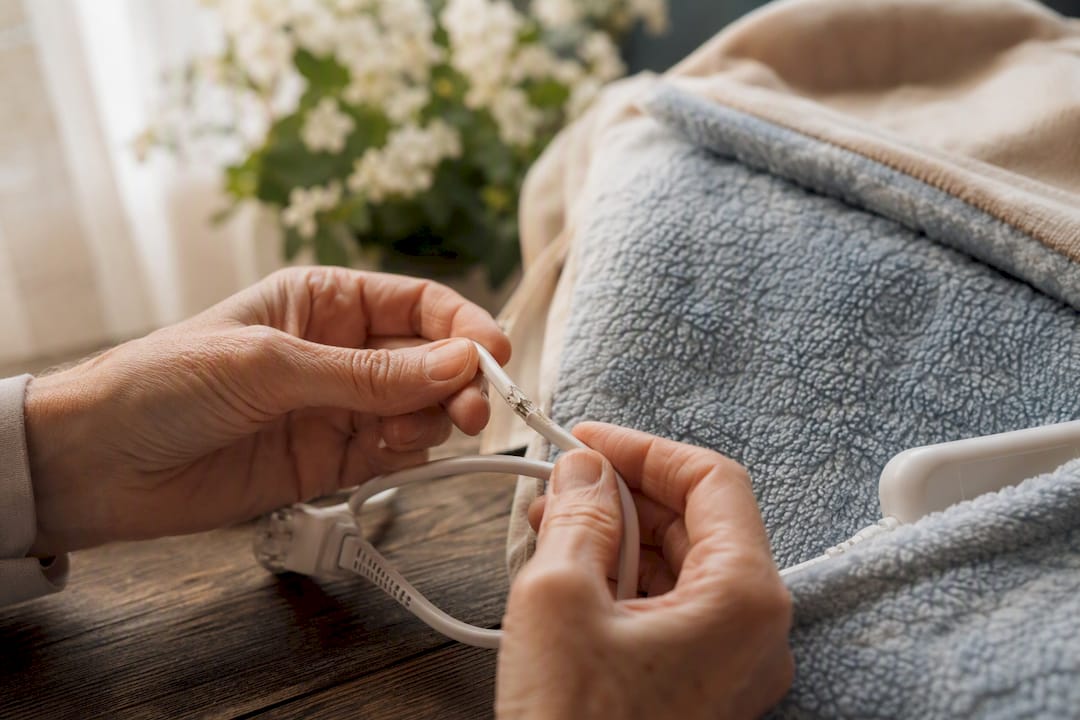
- Overheating and fire risk. Damaged wiring, frayed cords, or improper extension cord use are the leading causes of electric blanket fires. Never bunch the blanket or tuck it tightly under a mattress where heat can concentrate.
- Infants and young children. Pediatric guidance is unambiguous: electric blankets and excess bedding increase the risk of sleep-related infant death, so they have no place in a crib or toddler bed.
- Pets. Dogs and cats can chew through cords, and animal-safety guidance recommends supervision or pet-specific heated bedding instead.
- Reduced temperature sensitivity. People with severe neuropathy or certain medical devices, including pacemakers, should talk to a doctor before using one, since they may not sense overheating early enough to react.
- Old blankets. Anything older than roughly 10 years lacks the hot-spot monitoring built into current models and should be replaced.
Pro Tip: Buy only blankets certified by UL Solutions or Intertek, and unplug the controller when you’re not using it, not just when it’s turned off.
How to Use an Electric Blanket Safely and Efficiently
Getting the routine right takes about a week to become habit, and it pays off in both safety and lower bills.
- Inspect the cord and fabric for damage before each winter season.
- Preheat on high for 20 to 30 minutes before bed, then switch to a lower maintenance setting or a timer.
- Layer a duvet over the top to trap warmth so the blanket doesn’t have to work as hard.
- Unplug the controller when you’re not using the blanket, not just after turning it off.
- Remove the controller before washing, and follow the care label for the fabric itself.
Pro Tip: Store the blanket flat or loosely rolled over winter. Folding it into tight creases year after year is one of the most common causes of internal wire damage.
What to Look for When Buying an Electric Blanket
A few features separate a blanket that lasts from one you’ll be replacing in two winters.
- Safety certification from UL or Intertek is non-negotiable, not optional.
- Wattage in the 100W to 300W range with a dual-zone controller if you share a bed with someone who runs a different temperature.
- A programmable timer or auto-shutoff, especially if you tend to fall asleep before turning it off yourself.
- A removable, washable cover, which extends the life of the heating element underneath.
- A clear warranty, since manufacturers who stand behind a product for several years usually build it to last that long.
Budget buyers can get by with a basic single-zone underblanket. Anyone managing chronic pain should prioritize a model with a low, steady overnight setting rather than one built mainly for quick preheating.
What the Research Actually Supports
The 10 to 20 percent winter savings estimate comes from energy analysts tracking real household usage, not manufacturer marketing. On the health side, large cohort studies have not found a convincing link between electric blanket use and increased cancer risk, though observational research always carries limits.
- Strong evidence: energy savings, basic mechanics, and short-term sleep-onset benefits.
- Weaker evidence: long-term clinical outcomes for chronic pain, where heat therapy is better understood as symptomatic relief than a documented cure.
Treat electric blanket warmth as a comfort and cost tool with a solid evidence base behind sleep onset and savings, and a more modest one behind pain outcomes.
Manufacturing, Disposal, and the Bigger Environmental Picture
Energy savings only tell part of the environmental story. Electric blankets are made from a mix of synthetic fabric, copper or resistance wire, and plastic controller housings, materials that take real energy and raw resources to produce in the first place. None of that shows up on your electricity bill, but it’s part of the true footprint.
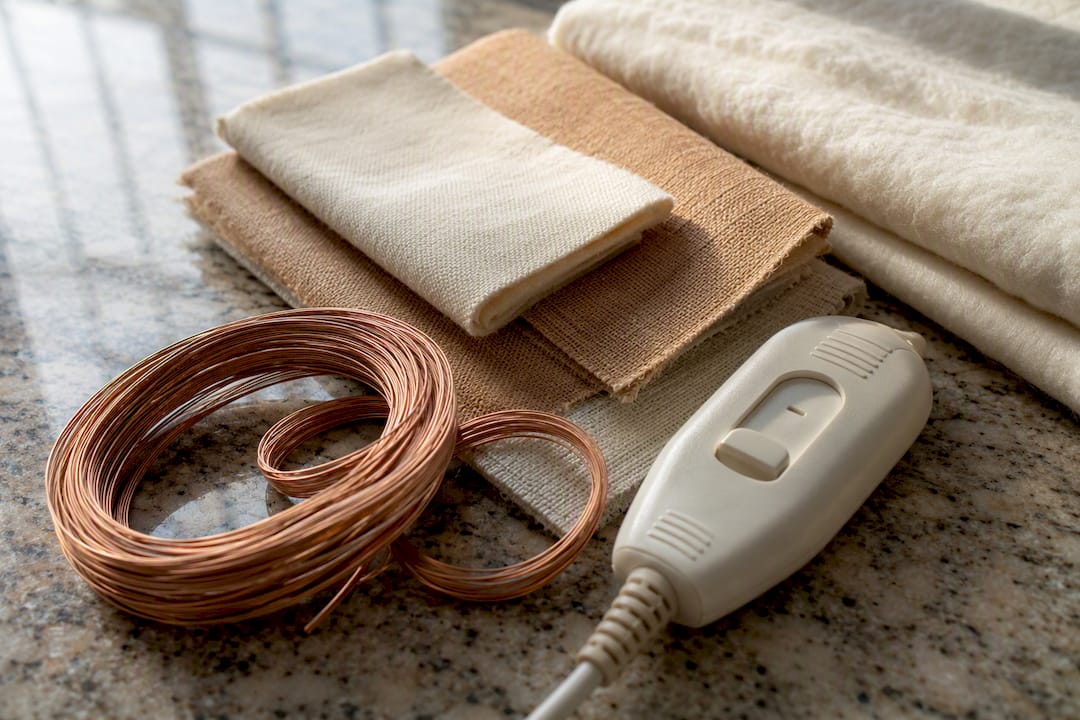
Disposal is the bigger blind spot. A blanket with embedded wiring can’t go in a normal textile recycling bin, since the metal and fabric layers have to be separated first, and most curbside recycling programs aren’t set up for that. Most end up in landfill once they wear out or fail a safety inspection, which is exactly why buying a well-made blanket less often beats replacing a cheap one every couple of winters.
That’s where the running-cost savings and the environmental case actually line up. A blanket that lasts eight or ten years because it was built with better wiring and a sturdier controller does less environmental damage over its lifetime than three cheaper ones that fail and get tossed. If you’re choosing between a bargain model and a slightly pricier one with a longer warranty, the warranty is often the better environmental signal, not just the better financial one.
None of this means electric blankets are an environmental liability. Compared to running a furnace or space heater for hours each night, heating one person instead of one house is still the lower-impact choice on balance. It just means the story doesn’t end at the electricity meter, and it’s worth choosing a blanket you’ll actually keep for a decade rather than one you’ll replace in two winters.
Does It Matter What Bedding You Use It With?
It does, more than most people expect. Electric blankets work by transferring heat through direct contact with the layer above and below them, so what you pair them with changes how they feel and how efficiently they perform.
Cotton and cotton-blend sheets are the safest, most reliable pairing since the fabric breathes and doesn’t trap excess heat the way synthetic materials can. Flannel sheets amplify the warmth nicely for cold sleepers, since the material insulates well on its own, but that combination can run hot for people who overheat easily. Down comforters and heavy synthetic duvets layered on top hold heat in extremely well, which is great for pre-warming a bed quickly but risky if left running on a high setting underneath a thick duvet all night.
Electric blankets generally shouldn’t be used with waterproof mattress protectors placed directly against the heating element, since the non-breathable layer can trap heat unevenly and interfere with the built-in sensors that prevent hot spots. Memory foam mattresses also deserve a note: an electric mattress pad’s heat doesn’t dissipate through dense foam the way it does through a traditional spring mattress, so temperatures can build up more than expected underneath you.
The safest general rule is to keep at least one breathable layer, like a cotton sheet, between your skin and the heating element, and to avoid stacking multiple heavy insulating layers on top when the blanket is running on anything above a low setting.
Maintenance Habits That Determine How Long It Lasts
A well-maintained electric blanket can perform reliably for close to a decade. A poorly maintained one can develop hazards within a couple of winters, which makes maintenance a real factor in whether you actually get the benefits you paid for.
The single biggest damage risk is folding or crushing the internal wiring. Tight creases from repeated folding, stuffing it into a small storage bag, or letting pets or kids sit heavily on one spot can stress the wires enough to create weak points over time. Rolling the blanket loosely for storage, rather than folding it into quarters, meaningfully extends its working life.
Washing matters just as much. Always detach the controller before washing, since it’s not designed to get wet, and follow the fabric care label rather than defaulting to hot water or a dryer’s high heat setting, both of which can degrade the wiring’s insulation faster than normal use would. Air-drying flat is the safer bet for most models.
Regular inspection is the habit that catches problems before they become dangerous. Before each winter season, check the cord for fraying, look for any areas that feel unusually stiff or lumpy where a wire might have shifted, and test that all heat settings are working evenly. If you notice a spot that heats unevenly or a section that stays cold, that’s the blanket telling you it’s time to replace it, not patch it.
When an Electric Blanket Makes Sense and When It Doesn’t
I’d recommend one without hesitation for someone living alone in a cold apartment, or anyone pre-warming the bed to fall asleep faster with insomnia. Arthritic stiffness that flares up at night is another clear case.
I’d steer people away from relying on one for infants, anyone with neuropathy, or those who just want passive all-night warmth without managing electronics. In those cases, a heated neck massager or targeted sleep aid from Evergreenbliss often fits better.
Where to Start if You Want the Full Benefit
If sleep and pain relief are your main goals, pair an electric blanket with tools built for the same purpose. Evergreenbliss stocks home recovery equipment designed to work alongside heat therapy, from massage rollers that target the muscle tension a blanket only partly resolves to sleep-focused devices that address the room-temperature side of the equation covered in why ambient temperature affects rest. For readers who want targeted, localized heat rather than a full-bed solution, browsing the personal care and hygiene gadgets collection is a practical next step.