A spiky massage roller is a studded self-massage tool designed to press into soft tissue and fascia, releasing knots and tension that smooth foam rollers simply can’t reach. For most buyers, the Evergreenbliss massage foam roller is the practical pick: it delivers targeted myofascial release with a spike profile built for daily home use.
Core benefits at a glance:
- Targeted myofascial release: The raised studs concentrate pressure on specific knots and tight spots rather than spreading load across a broad surface.
- Faster recovery: Rolling out fatigued muscles after a workout can reduce soreness and help you bounce back sooner.
- Improved local circulation: Pressure from the studs stimulates blood flow to the treated area, which supports tissue repair.
Table of Contents
- What does a spiky massage roller actually do for your muscles?
- Which type of spiky roller suits your body and goals?
- How to use a spiky roller safely and effectively
- When should you avoid using a spiky roller?
- Spiky roller vs. smooth foam roller: which one do you actually need?
- What to look for when buying a spiky roller
- How to clean and maintain your spiky roller
- The expert tip most roller users miss
- Key Takeaways
- Why the “just roll harder” advice misses the point
- The Evergreenbliss recovery roller is ready when you are
- Useful sources and further reading
What does a spiky massage roller actually do for your muscles?
A spiky (or studded) massage roller is a cylindrical or ball-shaped tool covered in raised points. Those points concentrate pressure into small areas of muscle and connective tissue, a process practitioners call self-myofascial release (SMR). Where a smooth foam roller distributes load broadly, the studs on a spiky roller dig into the tissue, which is why they’re particularly effective at breaking up adhesions and trigger points.
The evidence behind the benefits is solid enough to take seriously. Research from physiotherapy practitioners confirms that spiky balls and foam rollers can improve flexibility and joint range of motion when used consistently on tight muscle groups. For the feet specifically, clinical guidance from Integrity Physiotherapy endorses spiky massage tools for plantar fasciitis and general foot pain, noting improvements in blood flow and pain reduction through targeted pressure.
Body areas where studded rollers genuinely earn their place:
- Feet and plantar fascia: Rolling the arch of the foot over a small spiky ball is one of the most effective at-home treatments for plantar fasciitis.
- Calves and hamstrings: The studs reach into the belly of the muscle, which is often where post-run tightness accumulates.
- Shoulders and upper back: Shorter rollers or spiky balls let you work around the shoulder blade without the awkward positioning a long roller demands.
- Neck base: Light pressure along the suboccipital muscles can relieve tension headaches, though this area requires a gentler touch.
Understanding muscle recovery helps frame why these tools work: when you apply sustained pressure to a tight area, the nervous system responds by signaling the muscle to relax, and blood flow to the region increases. The studs accelerate that process by making the pressure more localized.
Which type of spiky roller suits your body and goals?
The format you choose matters more than most buyers realize. A long stick roller and a small spiky ball are both “spiky massage tools,” but they serve very different purposes.
Common formats
- Roller sticks with studded balls: A handle on each end with one or more rotating spiked balls in the middle. The handles give you leverage and control, making these ideal for calves, quads, and hamstrings. Rollers with independently rotating spiked balls deliver a pull-and-release action on skin and fascia rather than simply grinding over tissue, which tends to produce a more therapeutic release.
- Single spiky balls (soft or firm): Soft spiky balls are gentler and suit the feet, neck, and upper back. Firm small spiky balls go deeper and work well for the glutes and thoracic spine.
- Compact mini rollers: Short EVA foam rollers with a textured surface. Mini EVA foam rollers are built for targeted areas like calves, forearms, and feet, and they pack easily into a gym bag or carry-on.
- Long stick rollers: Full-length cylinders for broad coverage across the back, IT band, and quads.
Size and material trade-offs
| Format | Best for | Material | Pressure level |
|---|---|---|---|
| Long cylinder (12–18 in) | Back, IT band, quads | EVA foam or PVC | Medium to firm |
| Short/mini roller (6–8 in) | Calves, forearms, feet | EVA foam | Firm but comfortable |
| Roller stick with rotating balls | Calves, hamstrings, neck | Rubber studs on plastic frame | Adjustable via hand pressure |
| Single spiky ball (firm) | Glutes, plantar fascia, shoulders | Hard plastic or rubber | Deep/targeted |
| Soft spiky ball | Feet, neck, sensitive areas | Soft rubber or TPE | Gentle to medium |
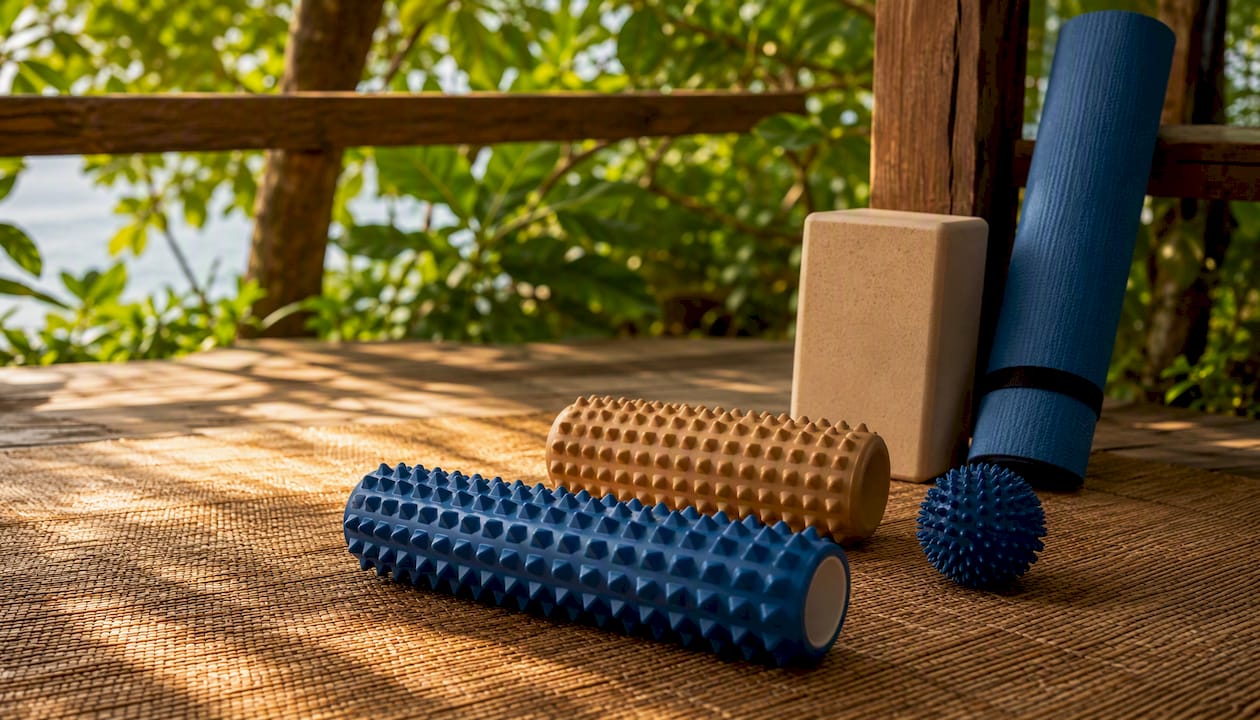
Selection rule of thumb: Choose a smaller diameter and firmer studs for deep trigger-point work. Go with a larger diameter for broad muscle groups. A mini roller is the right call for travel and foot care.
Buyers often overlook rotating studs when comparing options. Static textured cylinders compress tissue, but rotating studs pull and release the fascia as the ball spins, which feels less abrasive while still delivering deep work. That distinction is worth paying attention to when you’re comparing products side by side.
How to use a spiky roller safely and effectively
Getting results from a studded roller comes down to technique, not just time spent rolling. Here’s a step-by-step routine that works for most body areas.
- Position the roller under the target muscle — For calves: sit on the floor, place the roller under one calf, and use your hands for support. For the upper back: lie on the floor with the roller perpendicular to your spine. For feet: stand and place the ball under the arch, using a wall for balance.
Do: Use both hands on a roller stick for even pressure. Breathe steadily throughout. Drink water after a session.
Don’t: Roll directly over a joint (knee, elbow, ankle). Roll over an area that’s acutely inflamed or bruised. Apply full body weight to the neck.

When should you avoid using a spiky roller?
Most healthy adults can use a studded roller without issue, but there are clear situations where you should hold off or get clearance first.
Skip the roller entirely if you have:
- Open wounds, cuts, or skin infections in the target area
- Acute inflammation or a fresh injury (within 48–72 hours of onset)
- A recent fracture or surgical site that hasn’t fully healed
- Deep vein thrombosis (DVT) or a known blood-clot risk
- Severe varicose veins in the area you’d be rolling
Stop and seek care if you experience:
- Sharp, shooting, or electric pain during rolling (not the “good hurt” of a tight muscle releasing)
- Numbness or tingling that doesn’t resolve within a minute of stopping
- Swelling or bruising that appears or worsens after a session
- Skin breakdown or unusual redness that persists
Consult a clinician before using a spiky roller if you have a chronic inflammatory condition (rheumatoid arthritis, lupus), a peripheral neuropathy, or if you’re pregnant. One conversation with your physical therapist or physician is all it takes to confirm whether rolling is appropriate for your specific situation.
Avoid rolling directly on bony prominences like the shins, kneecap, or spine. If an area causes sharp pain rather than the familiar ache of a tight muscle releasing, reduce pressure or move to a different spot entirely.
Spiky roller vs. smooth foam roller: which one do you actually need?
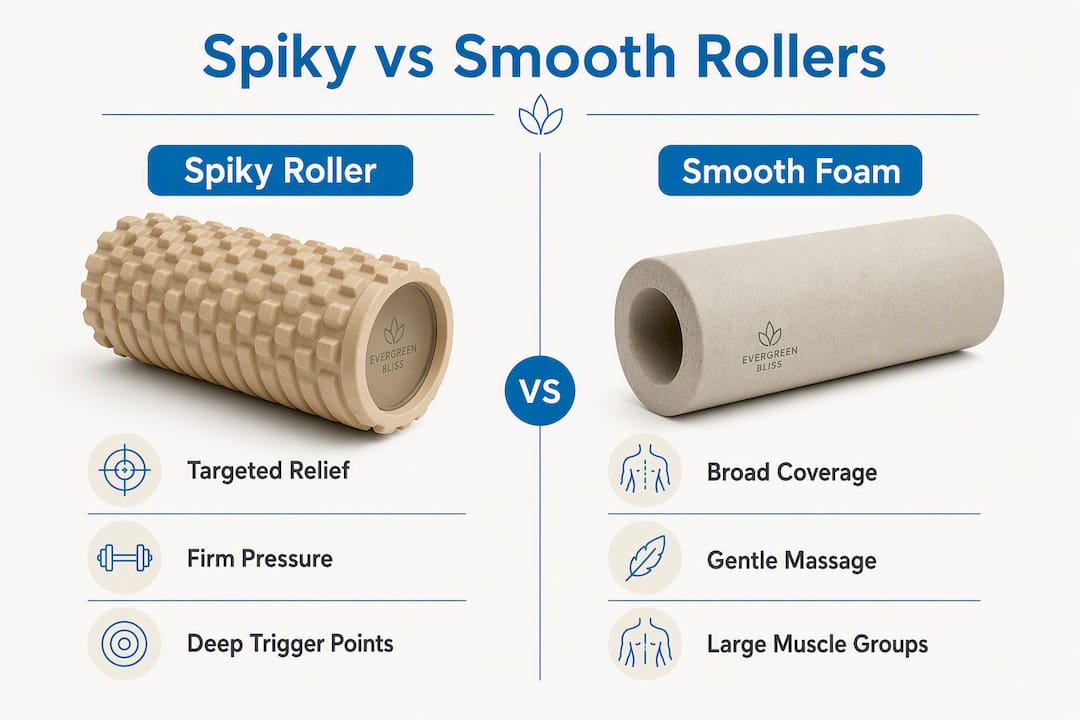
The short answer: spiky rollers are for targeted work, smooth rollers are for broad coverage. Most people benefit from having both, but if you’re buying one tool, your goal determines the choice.
| Feature | Spiky/studded roller | Smooth foam roller |
|---|---|---|
| Pressure profile | Concentrated, point-specific | Broad, distributed |
| Best for | Trigger points, plantar fascia, knots | Large muscle groups (quads, IT band, lats) |
| Comfort level | More intense, especially for beginners | Gentler, easier to tolerate |
| Travel/portability | Mini versions pack easily | Standard sizes are bulky |
| Warm-up use | Good for activating specific areas | Better for general pre-workout prep |
| Sensitive areas | Use soft spiky balls; avoid firm rollers | Generally safer for sensitive users |
If your main goal is loosening tight calves after a run or managing plantar fasciitis, a studded roller or spiky massage ball is the better tool. For rolling out the IT band or broad quad soreness, a smooth foam roller covers more ground with less discomfort. For neck and shoulder tension, a small spiky ball gives you the control that a full-length cylinder can’t.
The Evergreenbliss pain relief and posture correction collection includes both roller types and complementary tools, which is worth browsing if you’re building out a full recovery kit.
What to look for when buying a spiky roller
A few features separate a roller you’ll use every day from one that ends up under the bed after a week.
Top criteria to evaluate:
- Spike size and density: — Shorter, denser studs suit general use and sensitive areas. Taller, more spaced studs go deeper and suit experienced users targeting specific knots.
Price expectations:
The Evergreenbliss massage foam roller sits in the midrange and is a strong fit for most buyers: the spike profile handles both broad rolling and targeted trigger-point work, the build is durable enough for daily use, and it ships free with easy returns if it’s not the right fit.
How to clean and maintain your spiky roller
A roller that gets used after workouts picks up sweat, skin cells, and product residue fast. Regular cleaning keeps it hygienic and extends the life of the studs.
By material:
- Hard PVC or plastic: Wipe down after every use with a damp cloth and mild soap. For a deeper clean, use a diluted isopropyl alcohol solution (70%) and let it air dry fully before storing. Avoid soaking, which can loosen glued components.
- EVA foam: Wipe with a damp cloth and mild soap. Don’t submerge EVA foam in water; it absorbs moisture and can develop odor or lose its shape. Air dry completely.
- Rubber studs on a plastic frame: These tolerate a slightly more aggressive wipe-down. A soft brush helps clear debris from between the studs.
Storage tips:
- Store away from direct sunlight and heat, both of which degrade foam and rubber over time.
- Keep the roller on a flat surface or hang it; storing it compressed under other equipment can flatten the studs permanently.
- For roller sticks, check the connection points between the handle and ball assembly periodically. A loose ball reduces rolling effectiveness and can cause uneven pressure.
Quick troubleshooting:
- Sticky residue: Wipe with a cloth dampened with isopropyl alcohol, then rinse with plain water.
- Loose studs: If studs on a foam roller start detaching, the roller has reached end of life. Loose pieces are a hygiene and safety issue.
- Handle wear on roller sticks: Grip tape designed for sports equipment can extend the life of a worn handle.
The expert tip most roller users miss
Pro Tip: Apply a topical recovery or pain-relief product two to three minutes before rolling, then start with the lightest pressure you think you need and build from there. Manufacturer guidance confirms this sequence: topical first, light pressure second, increase only as tolerated. Over bony or sensitive areas, reduce pressure further or switch to a softer ball entirely. Patch-test any new topical on a small skin area before applying it broadly.
The deeper insight here is about stud behavior. Independently rotating spiked balls pull and release the skin and fascia as they spin, rather than grinding over tissue the way a static textured cylinder does. That pull-and-release action is what makes the release feel less abrasive while still going deep. When you combine that design with a topical product and controlled pressure, you get a noticeably more effective session than rolling dry on a static surface.
Key Takeaways
A spiky massage roller delivers targeted myofascial release that smooth foam rollers can’t match, making it the better tool for trigger points, plantar fasciitis, and post-workout knot work.
| Point | Details |
|---|---|
| Targeted release | Raised studs concentrate pressure on knots and fascia that smooth rollers miss entirely. |
| Rotating studs matter | Independently rotating spiked balls pull and release fascia rather than just compressing it. |
| Safety first | Avoid rolling over joints, acute injuries, or open skin; stop if you feel sharp or shooting pain. |
| Match tool to goal | Mini rollers for feet and travel; long cylinders for quads and back; spiky balls for shoulders and glutes. |
| Evergreenbliss recommendation | The Evergreenbliss massage foam roller is a midrange pick with a spike profile suited to daily home use. |
Why the “just roll harder” advice misses the point
Most articles on spiky rollers tell you to roll more, roll longer, and push through the discomfort. That advice gets the mechanism backwards. The nervous system releases a tight muscle in response to sustained, tolerable pressure, not to pain. Rolling so hard that you tense up against the discomfort defeats the whole purpose: a contracted muscle resists the very release you’re trying to create.
The tools that work best are the ones that let you modulate pressure precisely. A roller stick with rotating balls gives you that control through your hands. A small spiky ball lets you shift your body weight incrementally. A long foam cylinder with fixed studs gives you much less control, especially on the back, where your full body weight is the only variable.
The other thing worth saying plainly: spiky rollers are not a substitute for professional care when something is genuinely wrong. They’re a maintenance tool, not a diagnostic one. If you’ve been rolling the same tight spot for two weeks and it’s not improving, that’s a signal to see a physical therapist, not to roll harder.
The Evergreenbliss recovery roller is ready when you are
Tight muscles after a long day or a hard workout don’t have to wait for a clinic appointment. The Evergreenbliss massage foam roller gives you a studded recovery tool built for daily home use: a spike profile that handles both broad rolling and targeted trigger-point release, durable construction that holds up to regular use, and free shipping with easy returns so there’s no risk in trying it.

It’s a practical fit for anyone managing plantar fasciitis, post-workout soreness, or chronic desk-related tension in the shoulders and neck. Browse the full home fitness recovery equipment collection at Evergreenbliss to see the complete range of recovery tools, or go straight to the product page and order today.
Useful sources and further reading
- Spikey Ball Techniques for Foot Pain | Integrity Physiotherapy — Clinical guidance on using spiky balls for plantar fasciitis and foot pain, including technique and blood-flow benefits.
- Foam Rollers and Spiky Balls: How Do They Work? | Blackburn Osteopathy — Practitioner explanation of how spiky balls and foam rollers release tight areas and improve range of motion.
- HA-501 Spiky Ball Massage Roller | Emu Therapy — Manufacturer product page covering rotating stud design, topical application guidance, and pressure technique.
- EVA Mini Massage Roller | Greaves Sports — Product listing for a compact EVA foam roller with portability and use-case details for calves, forearms, and feet.
- Spiky Massage Roller | Amazon — Broad product listing useful for comparing price ranges and formats available in the US market.
- SISSEL Spiky Roller | Performance Health — Manufacturer page for a well-known studded roller with stimulation and natural massage positioning.
- What Is Muscle Recovery? A Guide for Athletes | Evergreenbliss — Educational resource on the physiology of muscle recovery and how tools like rollers support the process.
Recommended
- massage foam roller - Relieve Muscle Tension & Recover Fast | Evergreen Bliss
- Neck Massager - Relaxation with Soothing Heating Mode | Evergreen Bliss
- Top 6 Blissy Neck Product Alternatives 2026 | Evergreen Bliss
Sources and further reading
- A Meta-Analysis of the Effects of Foam Rolling on Performance and Recovery – Wiewelhove et al., Frontiers in Physiology (2019), via PubMed Central
- Massage Therapy: What You Need To Know – National Center for Complementary and Integrative Health (NIH)