Muscle recovery is defined as the biological process through which your body repairs exercise-induced micro-damage, replenishes glycogen stores, and restores muscle strength and function. This process runs continuously after every training session, lasting anywhere from 24 hours to several days depending on how hard you pushed. Understanding the muscle recovery process is not optional for serious athletes. It is the difference between consistent performance gains and a cycle of fatigue, stagnation, and injury. The three core pillars driving effective recovery are nutrition, rest, and smart training management.
What is muscle recovery at the biological level?
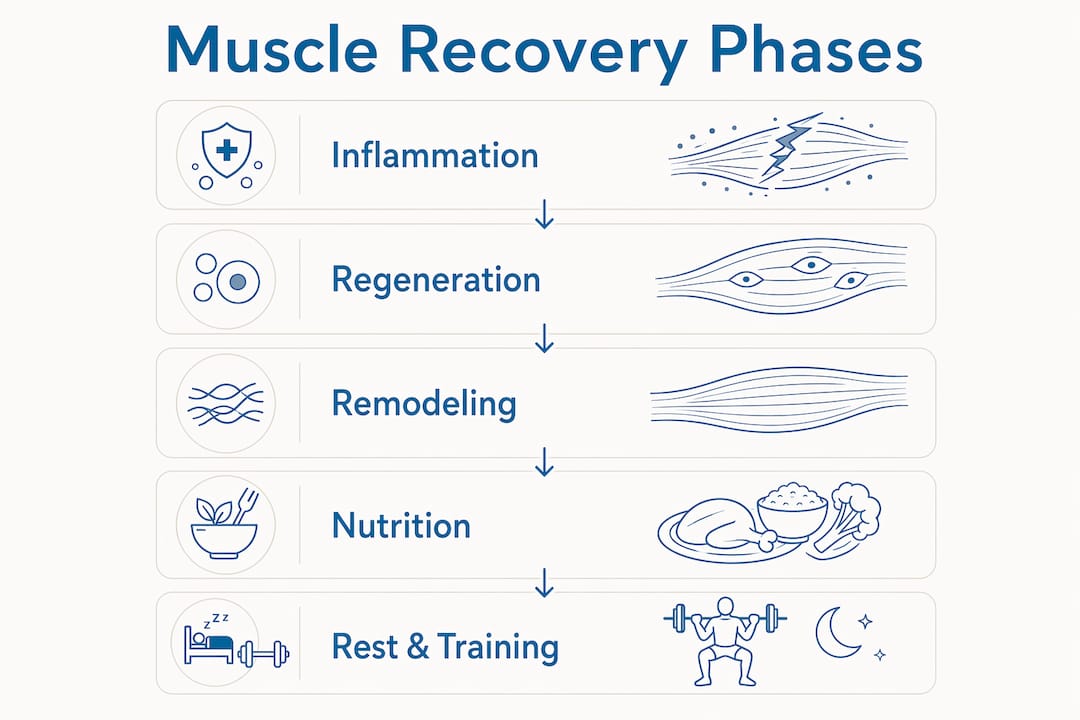
Muscle recovery follows three overlapping biological phases: inflammation, regeneration, and remodeling. Each phase has a distinct timeline and cellular role. Skipping or disrupting any one of them compromises the final result.
-
Inflammation (hours 0–72): The body sends immune cells to the damaged site to clear debris and signal repair. This phase feels uncomfortable, but it is necessary. Suppressing it too aggressively with anti-inflammatory drugs can actually slow the overall repair process.
-
Regeneration (days 2–7): Satellite cells, which are muscle stem cells sitting dormant along fiber walls, activate and fuse to damaged fibers. This is where new muscle fiber growth begins. Adequate protein intake directly fuels this phase.
-
Remodeling (weeks 1–3): New tissue matures, connective structures reorganize, and tensile strength builds. This phase is the most underestimated. Improperly managed remodeling can lead to excess Type I collagen deposition, creating fibrotic scar tissue that permanently weakens the muscle and raises re-injury risk.
The remodeling phase is where most athletes make their biggest mistake. Pain fades, they feel ready, and they return to full intensity before the tissue has the structural integrity to handle it.
Pro Tip: Track your training velocity, not just how sore you feel. Mean concentric velocity in resistance exercises drops measurably before subjective fatigue becomes obvious, giving you an early warning that your muscles are not yet ready for peak loads.
How does nutrition support muscle recovery?
Nutrition is the raw material your body uses to execute every phase of repair. Without the right inputs at the right time, even perfect rest will not fully restore muscle function.
The priorities after exercise, in order, are:
- Glycogen replenishment: Carbohydrates are the first priority. Restoring carbohydrate stores shortly after exercise is the foundation of recovery, especially when you train twice a day or on back-to-back days.
- Protein intake: Muscle protein synthesis requires a steady supply of essential amino acids. Consuming protein within the first few hours post-exercise maximizes the anabolic window when satellite cells are most active.
- Hydration: Water supports circulation, which delivers nutrients to damaged tissue and removes metabolic waste. Even mild dehydration slows this transport system.
- Micronutrients: Vitamins C and D, zinc, and magnesium each play supporting roles in collagen synthesis, immune function, and muscle contraction. Deficiencies in any of these extend recovery time.
Pro Tip: A ratio of roughly 3:1 carbohydrates to protein in your post-workout meal covers both glycogen and synthesis needs simultaneously. A banana with Greek yogurt is a practical, low-cost example.
The timing window matters more than most athletes realize. Adequate rest, nutrition, and hydration work as a system. Nail one and neglect the others, and you leave performance gains on the table.
| Nutrient | Primary role in recovery | Timing |
|---|---|---|
| Carbohydrates | Replenish muscle glycogen | Within 30–60 minutes post-exercise |
| Protein | Fuel muscle protein synthesis | Within 2 hours post-exercise |
| Water | Support circulation and waste removal | Continuously throughout the day |
| Micronutrients | Collagen synthesis and immune support | With meals, consistently |
What are effective training and rest strategies?
Rest is not passive. It is a structured part of your training program, and getting it wrong costs you as much as poor nutrition does.
The rest period your muscles need scales with exercise intensity:
- Low-intensity sessions: 24 hours is typically sufficient before training the same muscle group again.
- Moderate-intensity sessions: 48 hours allows inflammation to resolve and regeneration to begin.
- High-intensity or heavy resistance sessions: 72 hours or more may be needed before the tissue is structurally ready for another full load.
Active recovery fills the gaps between hard sessions. Low-intensity movement, such as walking, cycling at an easy pace, or swimming, increases blood flow without adding mechanical stress. This speeds nutrient delivery to repairing tissue without triggering a new damage cycle.
Objective monitoring separates smart athletes from those who guess. Mean concentric velocity detects neuromuscular recovery deficits on average 24–48 hours before athletes consciously report fatigue. Relying on subjective scales like RPE alone means you are always reacting to a problem that already exists, rather than catching it early.

Pro Tip: Log your bar speed on a key lift at the start of each session. A consistent drop of more than 10% from your baseline is a reliable signal to reduce that day’s volume, not push through it.
What is neuromuscular recovery, specifically? It is the restoration of the nervous system’s ability to recruit and coordinate muscle fibers efficiently. This is distinct from structural repair. A muscle can feel fine while its neuromuscular output remains compromised, which is why velocity metrics catch what soreness ratings miss.
Premature return to intense exercise is the most common cause of incomplete functional recovery. The tissue looks healed on the surface, but the maturation process inside the fiber is still running. Loading it too hard too soon disrupts that process and can cause chronic atrophy or permanent reduction in force output.
What are common misconceptions about soreness and recovery?
Soreness is not a reliable measure of recovery status. This is the most persistent myth in fitness, and it causes real harm.
- DOMS is normal, not dangerous. Delayed onset muscle soreness peaks 1–3 days after training and is a sign of the micro-damage that drives adaptation. It does not mean your session failed or that something is wrong.
- No soreness does not mean full recovery. Tissue remodeling continues for 1–3 weeks after the pain resolves. The absence of soreness tells you the inflammation phase is winding down, not that the muscle is structurally complete.
- Pushing through soreness is not toughness. Returning to high-intensity training before the remodeling phase finishes risks fibrotic scar tissue formation. That scar tissue is weaker than healthy muscle and becomes a recurring injury site.
- Progressive loading is the correct approach. Gradually increasing training stress over weeks gives the remodeling phase time to produce durable, functional tissue rather than fragile connective filler.
The benefits of muscle recovery extend beyond feeling better. Consistent, well-managed recovery produces measurable improvements in strength, power output, and endurance over time. Athletes who respect recovery timelines outperform those who train harder but recover poorly. Sleep is one of the most underused recovery tools available. The role of sleep in muscle growth is well established: growth hormone release peaks during deep sleep, directly supporting the regeneration and remodeling phases.
Signs of muscle recovery progressing well include returning strength and power in training, reduced localized tenderness, stable resting heart rate, and consistent sleep quality. Signs that recovery is incomplete include persistent weakness, elevated resting heart rate, disrupted sleep, and mood changes. These are not signs of overtraining in isolation. They are signals to adjust load and prioritize rest before the next hard session.
Key Takeaways
Effective muscle recovery requires managing all three biological phases, nutrition, rest, and training load together, not in isolation.
| Point | Details |
|---|---|
| Three-phase repair process | Inflammation, regeneration, and remodeling each require time and specific inputs to complete properly. |
| Nutrition timing matters | Consume carbohydrates and protein within 2 hours post-exercise to maximize glycogen and muscle protein synthesis. |
| Objective monitoring beats guesswork | Mean concentric velocity detects neuromuscular deficits 24–48 hours before subjective fatigue appears. |
| Soreness is not a recovery gauge | DOMS peaks at 1–3 days but tissue remodeling continues for 1–3 weeks after pain resolves. |
| Premature loading causes lasting damage | Returning to full intensity before remodeling completes risks fibrotic scar tissue and chronic injury. |
Why I think most athletes are recovering in the wrong order
Most recovery advice focuses on what to do after training. Foam roll, eat protein, sleep eight hours. That advice is not wrong, but it misses the bigger picture.
The athletes I have seen make the most consistent progress are the ones who plan recovery before they plan training. They decide how much recovery time a session requires before they schedule the next one. They treat the remodeling phase as part of the training block, not as downtime between blocks.
The velocity-based training insight changed how I think about readiness. Knowing that mean concentric velocity catches recovery deficits before you feel them means you can make adjustments proactively. That is a fundamentally different relationship with your own body than waiting until you feel wrecked.
The other thing most people underestimate is the fibrotic scar tissue risk. Excess collagen deposition during a rushed remodeling phase creates permanent weak points. I have seen athletes with recurring strains at the exact same location, session after session, because they never gave the original injury time to remodel properly. Patience in the remodeling phase is not weakness. It is the most performance-focused decision you can make.
Combine objective monitoring with sound nutrition and deliberate rest, and you stop guessing. You start managing recovery like the performance variable it actually is.
— Cadence
Recovery tools that support every phase of repair
Physical recovery does not happen in a vacuum. The right tools make a measurable difference in how well your body moves through inflammation, regeneration, and remodeling.

Evergreenbliss carries a curated range of home fitness recovery equipment designed for athletes who take the repair process seriously. From massage foam rollers that support circulation during active recovery to neck massagers and acupressure mats that ease tension after hard sessions, each product targets a specific stage of the recovery cycle. Quality sleep is equally critical, and Evergreenbliss offers sleep and relaxation aids that help you hit the deep sleep stages where growth hormone release peaks. Every order ships free, with easy returns and secure checkout.
FAQ
What is muscle recovery, exactly?
Muscle recovery is the biological process of repairing exercise-induced micro-damage, replenishing glycogen, and restoring muscle strength and function. It spans 24 hours to several days depending on training intensity.
How long does muscle recovery take?
Recovery time ranges from 24 hours for low-intensity sessions to 72 hours or more after heavy resistance training. Full tissue remodeling can take 1–3 weeks after significant muscle damage.
What are the signs of muscle recovery?
Signs of recovery include returning strength and power, reduced soreness, stable resting heart rate, and consistent sleep quality. Persistent weakness or elevated resting heart rate signals incomplete recovery.
Does soreness mean my muscles are still recovering?
DOMS peaks 1–3 days after training and is a normal part of the adaptation process. The absence of soreness does not mean recovery is complete, since tissue remodeling continues for weeks after pain resolves.
What aids muscle recovery most effectively?
Combining glycogen replenishment through carbohydrates, protein for muscle synthesis, adequate hydration, quality sleep, and structured rest periods produces the best recovery outcomes. Objective monitoring tools like velocity-based training metrics add an additional layer of precision.