For fast shoulder knot relief, press firmly on the tender spot for a sustained period as recommended by clinicians, then stretch the muscle while the area is still warm as is recommended by clinicians. Stop if you feel sharp pain, numbness, or any sign of infection like redness and heat. Most people feel looser the same day; a knot that’s been building for months may take one to two weeks of daily work to fully settle.
TL;DR:
- Applying sustained pressure on the tender spot for 30 to 90 seconds is crucial; avoid pushing into sharp pain or numbness during this step.
- Use heat first, then pressure, followed by stretching within a single 10-minute routine, repeating two to three times daily for best results.
- Self-massage tools like tennis balls or foam rollers are effective only if used correctly, with caution around bones, joints, or if on blood thinners or with recent injuries.
- Persistent knots that do not improve after several days of home treatment may require professional help from a physical therapist or massage therapist.
- Addressing underlying causes such as poor posture, stress, or muscle imbalances through strengthening exercises and ergonomic adjustments prevents knots from recurring.
Table of Contents
- How Do You Get Fast Relief From a Shoulder Knot?
- What’s the Best Way to Self-Massage a Shoulder Knot?
- When Should You See a Professional for Shoulder Knots?
- Why Do Shoulder Knots Form in the First Place?
- How Do You Stop Shoulder Knots From Coming Back?
- Who’s Behind This Guide?
- The Real Problem With Most Shoulder Knot Advice
- Build a Shoulder Care Routine That Actually Sticks
- Sources
How Do You Get Fast Relief From a Shoulder Knot?
The order matters more than most people realize. Heat first, then pressure, then stretch, in that exact sequence, because a cold muscle resists release and skipping the stretch afterward lets the tissue tighten right back up. This isn’t a guess; it mirrors the step-by-step approach clinicians recommend for working knots out of the shoulder, and it takes about 10 minutes.
Here’s the routine, start to finish:
- Warm up (5 minutes). Stand under a hot shower with water hitting the upper back and shoulder, or apply a heating pad on medium. The goal is a pliable muscle, not a scald. You’ll know it’s working when the area feels loose rather than just warm on the surface.
- Find the spot. Run your fingers slowly across the upper trap or between the shoulder blade and spine until you hit a nodule that’s noticeably more tender than the surrounding tissue. That’s your trigger point.
- Apply sustained pressure (30 to 90 seconds). Use your fingers, a knuckle, or a ball pressed against a wall. Push until you feel a “hurts so good” ache, around a 6 or 7 out of 10, not a wince. Breathe slowly through it. Many people feel the spot soften or the ache dull partway through, which is the muscle letting go of its guarding response.
-
Stretch immediately after, while the area is still warm:
- Shoulder rolls: 10 slow backward circles.
- Rhomboid stretch: reach one arm across your chest, hold 20 to 30 seconds per side.
- Cross-body stretch: pull the affected arm across your body with the opposite hand, hold 20 seconds.
- Thread-the-needle: on hands and knees, slide one arm under your body and rotate, hold 20 to 30 seconds per side.
- Repeat the compress-and-stretch cycle two to three times in one session.
Do this once or twice a day for the first three to five days. Twice daily tends to move things faster if the knot is fresh; once a day is plenty for maintenance once it starts easing up.
Pro Tip: Set a timer for the pressure phase instead of counting in your head. Most people bail at 15 to 20 seconds because it’s uncomfortable, well before the muscle actually starts to release.
A few safety rules apply across every step: never push into sharp, shooting, or electric pain, never hold pressure directly on a joint or bone, and back off entirely if the area is bruised, swollen, or was recently injured.
What’s the Best Way to Self-Massage a Shoulder Knot?
The technique behind all of this is called ischemic compression, essentially cutting off blood flow to a contracted spot just long enough that when you release, fresh circulation floods back in and the muscle fiber relaxes. Trigger points are pockets of overexcited, contracted muscle tissue in the fascia, and pressing on them stimulates local receptors, calms the guarding response, and improves circulation rather than physically “untying” anything, according to the Cleveland Clinic.
Different tools suit different spots:
- Tennis ball against a wall for the upper trap and rhomboids, letting you control pressure by leaning your body weight in.
- Lacrosse ball on the floor for a firmer, more precise dig if a tennis ball feels too soft.
- Foam roller for broader coverage across the upper back when you’re dealing with general tightness rather than one isolated spot.
- A hooked massage cane for the levator scapulae, the muscle running from your neck to shoulder blade that’s almost impossible to reach with your own hands at the right angle.
Percussive massage guns work too, but dosage matters. Start on the lowest speed setting for just 10 to 20 seconds per spot, then build up gradually to around 60 seconds if it feels fine. Pushing straight to high intensity or holding too long on one area can increase inflammation instead of easing it. Never run a massage gun over bone, the spine directly, or the front of the neck.
Skip the tools entirely if you’re on blood thinners, have a recent injury or unexplained bruising in the area, or notice swelling that wasn’t there before. Those are conditions where self-massage can do more harm than good.
When Should You See a Professional for Shoulder Knots?
Some warning signs mean it’s time to stop self-treating: progressive weakness in the arm, numbness or tingling that radiates down toward the hand, pain that’s severe and won’t ease at all, fever or redness suggesting infection, or a clear traumatic cause like a fall or car accident.
If you’ve worked the routine for several days with little improvement, that’s your cue to call in help rather than keep grinding away at it. A physical therapist can identify the actual root cause, whether it’s a posture pattern, a weak stabilizer muscle, or a joint restriction feeding the knot, and build a strengthening plan around it. A licensed massage therapist provides more precise, sustained soft-tissue work than you can do on yourself. For truly stubborn cases, a physician may refer you for dry needling or a trigger-point injection.
- Persistent knots often benefit from one or two physical therapy sessions paired with a home program to see real change.
- Reviews of trigger-point treatment place manual therapy and dry needling within a broader rehab plan, not as standalone fixes.
Why Do Shoulder Knots Form in the First Place?
Head-forward posture from hours at a screen is the most common culprit, but it’s rarely the only one. Repetitive arm motions (think typing, painting, or carrying a bag on one shoulder), chronic stress that keeps muscles braced, dehydration, and imbalances between overworked and underused muscles all feed into the same pattern.
A true trigger point has a distinct signature: a pinpoint spot that’s noticeably more tender than the tissue around it, a dull ache that sometimes refers pain elsewhere (a knot near the shoulder blade can trigger a headache), and a slight limit in how far you can move the area before it pulls.
That’s different from a shoulder problem that needs a doctor’s attention. Watch for these differentiating cues:
- Radiating nerve pain down the arm past the elbow, especially with tingling, suggests a nerve issue rather than a muscle knot.
- True weakness, not just pain-related hesitation to move, points toward something structural.
- Pain that’s worse with specific joint positions rather than with pressure on a spot often signals a joint problem, not a muscle one.
If any of those apply, self-massage isn’t the answer. A combination of manual release and posture correction tends to work best for the muscular knots that don’t have those red flags attached.
How Do You Stop Shoulder Knots From Coming Back?
Relief without a fix is just a loop. If you release a knot and go right back to the same desk setup and the same stress load, it comes back within a week or two.
Start with the workstation. Your monitor should sit at eye level, your keyboard at elbow height, and your chair should actually support your lower back. Set a reminder to shift position or stand every 30 to 60 minutes; a few small posture adjustments through the day do more than one perfect ergonomic setup you never move from.
Layer in daily micro-habits: 10 minutes of shoulder and neck mobility work, water within reach so you’re not going hours dehydrated, a couple of deep breathing breaks if your job runs stressful, and side-sleeping with a supportive pillow rather than face-down with your neck cranked.
Then build actual strength so the muscles stop overcompensating:
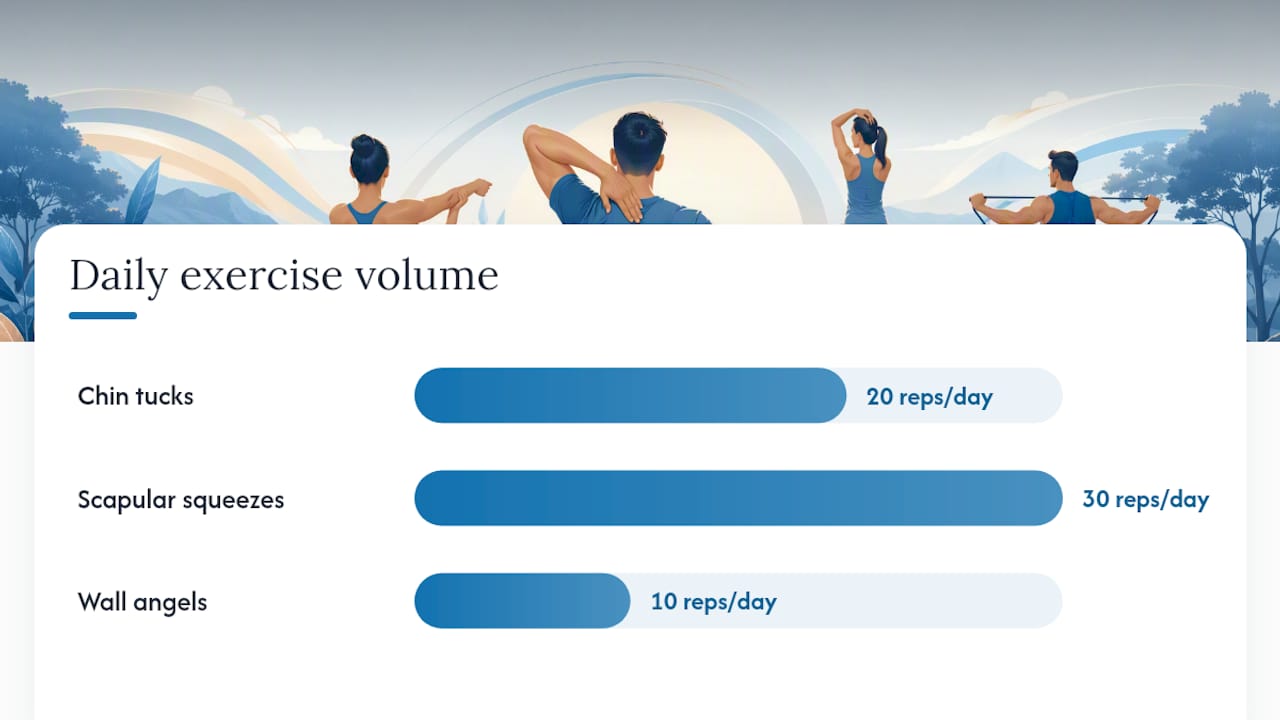
- Chin tucks: 10 reps, twice daily, to counter forward head posture.
- Scapular squeezes: 15 reps, twice daily, pulling shoulder blades together and holding two seconds.
- Wall angels: 10 slow reps daily, sliding arms up and down a wall to retrain shoulder blade movement.
Run this as a four-week progression: weeks one and two, focus on consistency with light reps to build the habit; weeks three and four, add hold time and a few extra reps as the movements get easier. Pair it with the tension-relief stretch work from earlier and the knots that do form should be smaller and easier to release.
Pro Tip: Anchor the mobility work to something you already do daily, like brushing your teeth or waiting for coffee to brew. Habits stick when they’re attached to an existing routine instead of floating on their own to-do list.
Who’s Behind This Guide?
This piece was written by Cadence for Evergreen Bliss, a wellness retailer built around practical recovery tools rather than gimmicks. The routine above works with basic household items, but a few products make it easier to execute consistently and safely.
A foam roller covers the broad upper-back tightness that a single ball can’t reach efficiently. A heated neck massager combines the warm-up and pressure phases into one step, useful on days when a hot shower isn’t practical. Posture supports help reinforce the ergonomic habits between active mobility sessions, especially during long desk stretches.
The Real Problem With Most Shoulder Knot Advice
Most guides on this topic treat a shoulder knot like a mystery that needs solving instead of a signal that needs answering. The truth, backed by how trigger points actually behave in tissue, is less complicated: press it, warm it, stretch it, and if that doesn’t move the needle in a few days, address whatever’s causing it in the first place.
Where a lot of advice falls short is stopping at the massage. Pressure and stretching handle the symptom. They don’t fix the desk setup, the stress load, or the weak scapular muscles that let the knot form in the first place. That’s the piece people skip because it’s less satisfying than a quick fix.
If you take one thing from this: prioritize the four-week strengthening habit over chasing the perfect massage tool. A tennis ball works fine. What actually changes the pattern is what you do on the days your shoulder feels fine.
— Cadence
Build a Shoulder Care Routine That Actually Sticks
Evergreenbliss exists for the exact moment after you’ve done the stretch and pressure work and realized you need something more consistent than a tennis ball wedged against a doorframe. That’s the gap between a quick fix and an actual routine, and it’s where the right tool changes whether you keep this up past week one.

The personal care and hygiene gadgets collection covers exactly the tools this routine calls for, foam rollers, massage balls, and posture supports, without the guesswork of comparing a dozen options online. If heat-plus-pressure is your bottleneck, the neck massager with a soothing heating mode folds both steps into a five-minute session you can run at your desk or on the couch. Every order ships free and comes with easy returns, so testing whether a tool fits your routine costs you nothing but the time to try it. Start with the foam roller or the heated massager, run it alongside the stretch sequence for a week, and see how much less time you spend hunting for a knot that used to show up every Friday.
This article is general information, not a substitute for advice from a qualified doctor. Consult a qualified healthcare professional about your own circumstances before acting on anything here.
Sources
- Would You Benefit From Trigger Point Massage? | Cleveland Clinic
- Can massage remove knots? The truth behind muscle knots explained | Weaver Physio
- Getting knots out of your shoulder: A step-by-step stretching guide | Center for Specialty Care
- Myofascial pain and trigger points — NCBI Bookshelf