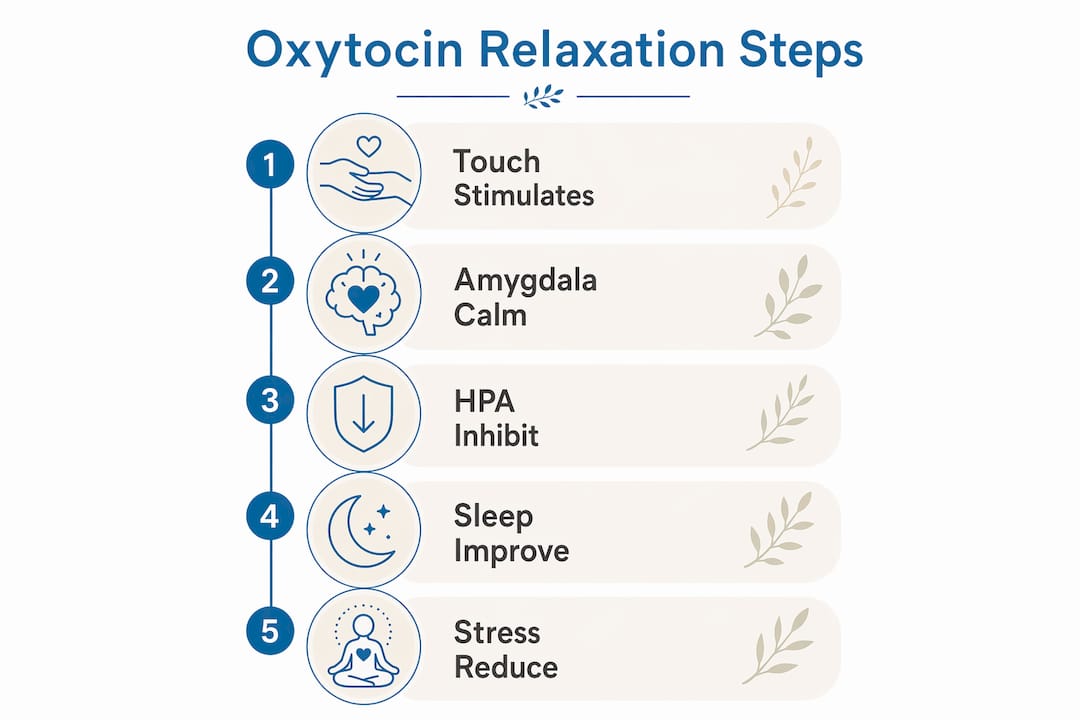
Oxytocin is defined as a neuropeptide produced in the hypothalamus that directly reduces anxiety and stress by calming the brain’s fear circuits. The role of oxytocin in relaxation goes far beyond its reputation as a “bonding hormone.” It actively suppresses the amygdala, inhibits the hypothalamic-pituitary-adrenal (HPA) axis, and shifts the nervous system into a state of social safety and physiological calm. Social touch, warm interaction, and moderate-pressure massage all trigger its release within minutes. Understanding how this system works gives you real tools for managing stress and improving well-being every day.
How does oxytocin biologically facilitate relaxation?
Oxytocin produces relaxation through two primary brain mechanisms: amygdala suppression and HPA-axis inhibition. The amygdala is the brain’s threat-detection center. When oxytocin binds to receptors there, it reduces fear-driven activation, quieting the alarm signals that generate anxiety and tension.
The HPA axis controls the release of cortisol, the body’s main stress hormone. Oxytocin dampens this axis, which means less cortisol floods the bloodstream during stressful events. Lower cortisol translates directly to slower heart rate, reduced muscle tension, and a calmer mental state.
Oxytocin also interacts with GABAergic interneurons, the brain’s natural braking system. This interaction amplifies inhibitory signaling, further reducing neural excitability. The result is a state of calm that feels socially grounded rather than chemically sedated.
This distinction matters. Traditional sedatives like benzodiazepines suppress the entire central nervous system. Oxytocin, by contrast, shifts the brain into a social safety state while keeping cognition and social awareness intact. You feel calm and connected, not foggy.
Key biological pathways oxytocin activates for relaxation:
- Amygdala suppression: Reduces fear responses and threat perception
- HPA-axis inhibition: Lowers cortisol output and physiological stress markers
- GABAergic activation: Amplifies the brain’s natural inhibitory signals
- Prefrontal cortex restoration: Tactile stimulation reverses stress-impaired neuronal activity via oxytocin receptors in the prelimbic cortex
Pro Tip: Pairing physical touch with a calm social environment maximizes oxytocin’s anxiolytic effect. The brain responds more strongly when both tactile and social cues are present simultaneously.
Does social touch actually trigger oxytocin release?

Physical touch is one of the most reliable triggers for oxytocin release. Hugging for at least 20 seconds stimulates endogenous oxytocin production, suppresses HPA-axis activity, and reduces cortisol within minutes. That is not a metaphor for feeling better. It is a measurable hormonal shift.
The type of touch matters as much as the duration. Research shows that touch intensity shapes oxytocin release in distinct ways. Gentle, light touch initiates social interaction signals. Firm, static pressure activates deeper oxytocinergic neuron pools linked to stronger antistress and growth-promoting effects. A firm hug or moderate-pressure massage does more than a light pat on the shoulder.
Massage therapy produces some of the most consistent results in clinical settings. Studies show that 15 minutes of moderate-pressure massage increases salivary oxytocin by 17% and reduces cortisol by 30%. That cortisol reduction is significant enough to produce noticeable changes in mood and physical tension. For people who cannot access regular massage therapy, tools that replicate firm, consistent pressure on the body can produce similar tactile stimulation.
The social context surrounding touch amplifies these effects further. The social buffering hypothesis explains that oxytocin combined with social support produces greater cortisol reduction than either factor alone. A massage from a trusted person in a calm environment works better than the same pressure applied in isolation. Social warmth and physical contact are not separate levers. They work together.
Here are four practical touch-based approaches ranked by evidence strength:
- Extended hugging (20+ seconds): Triggers measurable oxytocin release and cortisol suppression in healthy adults
- Moderate-pressure massage (10–90 minutes): Shown to modulate both oxytocin and cortisol levels across age groups, including youth aged 11–18
- Skin-to-skin contact: Particularly effective in parent-infant contexts but also documented in adult pairs for mutual stress reduction
- Acupressure and firm mat contact: Replicates static pressure stimulation that activates deeper oxytocinergic pathways
Pro Tip: Consistency matters more than intensity. Regular daily touch, even brief, builds a more stable oxytocin baseline than infrequent long sessions.
You can read more about the science of touch and stress to understand how these mechanisms apply to everyday self-care routines.
What is oxytocin’s role in sleep and stress recovery?
Oxytocin directly improves sleep quality by modulating the brain circuits responsible for deep, restorative rest. Research shows that oxytocin increases delta oscillations during NREM sleep, the slow-wave phase associated with physical recovery and memory consolidation. Delta oscillations in the 0.1–4 Hz range are the hallmark of truly restorative sleep, and oxytocin actively promotes them.
The hippocampal-amygdalar circuit also benefits from oxytocin signaling. By calming amygdala activity during sleep, oxytocin reduces nighttime arousal, the kind that wakes you at 3 AM with racing thoughts. This is why people who feel emotionally secure tend to sleep more deeply. The connection is neurochemical, not just psychological.
Chronic stress creates a damaging cycle. Stress depletes oxytocin signaling. Depleted oxytocin disrupts sleep. Poor sleep increases stress sensitivity. Research confirms that sleep loss reduces oxytocin signaling, which then heightens stress reactivity in a feedforward loop. Breaking this cycle requires addressing both the oxytocin deficit and the sleep disruption simultaneously.
| Sleep Benefit | Oxytocin Mechanism | Practical Implication |
|---|---|---|
| Deeper NREM sleep | Increases delta oscillations (0.1–4 Hz) | More restorative sleep per night |
| Reduced nighttime arousal | Calms hippocampal-amygdalar circuits | Fewer middle-of-the-night wake-ups |
| Lower stress sensitivity | Inhibits HPA-axis reactivity | Less cortisol spike from minor stressors |
| Improved emotional security | Enhances social safety signaling | Easier to fall asleep in unfamiliar settings |
For people dealing with stress-driven sleep problems, restoring oxytocin pathways through consistent touch and social connection is a foundational step. Explore how stress disrupts sleep quality and what the research says about breaking that pattern.
How can you naturally stimulate oxytocin for stress relief?
Natural oxytocin stimulation requires consistent, repeatable behaviors rather than one-time interventions. The body’s oxytocinergic system responds to patterns. Building those patterns into daily life produces a more stable baseline of calm.
Activities with strong evidence for oxytocin release:
- Physical affection: Hugging, holding hands, and skin contact with trusted people trigger release within minutes
- Moderate-pressure massage: Self-massage or professional massage activates the same oxytocinergic pathways as social touch
- Warm social interaction: Positive conversation, group activities, and laughter all stimulate oxytocin through social reward circuits
- Acupressure mat use: Firm, distributed pressure across the back and neck mimics the static pressure that activates deeper oxytocin neuron pools
- Consistent routines: Predictable, calming rituals signal safety to the nervous system, sustaining oxytocin release over time
One critical warning: oxytocin supplements and nasal sprays marketed for relaxation do not replicate the effects of naturally triggered release. The natural pathways triggered by warmth and tactile engagement produce sustained, context-appropriate oxytocin activity. Exogenous oxytocin bypasses the regulatory systems that make the natural version effective and safe.
Social support is not optional in this equation. The social buffering effect means that oxytocin’s stress-reducing power scales with the quality of your social environment. Investing in relationships is a direct investment in your neurochemical resilience. Wellness devices that replicate tactile stimulation, such as acupressure mats and massage tools, serve as practical supplements to social touch, especially for people who live alone or have limited access to regular physical contact.
Pro Tip: Use a sensory relaxation tool for 15–20 minutes before bed. The firm pressure stimulates oxytocin pathways and prepares the nervous system for deeper sleep.
Key Takeaways
Oxytocin reduces stress and promotes relaxation by suppressing the amygdala, inhibiting cortisol release, and improving deep sleep quality through consistent social and tactile stimulation.
| Point | Details |
|---|---|
| Oxytocin is not a sedative | It creates calm by activating social safety circuits, not by suppressing the nervous system broadly. |
| Touch duration and pressure matter | Firm pressure for 20+ seconds produces stronger oxytocin release than brief or gentle contact. |
| Massage delivers measurable results | 15 minutes of moderate-pressure massage raises oxytocin by 17% and cuts cortisol by 30%. |
| Sleep and oxytocin reinforce each other | Oxytocin boosts delta sleep waves; poor sleep depletes oxytocin, worsening stress sensitivity. |
| Supplements are not a substitute | Natural oxytocin pathways require consistent touch, warmth, and social connection to function properly. |
Oxytocin is more social than most people realize
People often ask me whether they can “boost” their oxytocin through a supplement and call it done. The honest answer is no, and I think that framing misses the entire point of what this neuropeptide does.
Oxytocin is not a relaxation chemical you can isolate and dose. It is a social signal. Its power comes from context. The same molecule that calms you during a warm hug does something very different in a competitive or threatening environment. The brain reads the social situation first, then determines how to deploy the oxytocin signal.
What I find most underappreciated is the feedforward loop between sleep, stress, and oxytocin. People who are chronically stressed and sleep-deprived are often in a state of oxytocin depletion without knowing it. They feel irritable, disconnected, and wired at night. Restoring physical touch and social warmth is not soft advice. It is addressing a real neurochemical deficit.
The practical implication is straightforward. Build touch into your daily routine. Use firm-pressure tools when social contact is limited. Prioritize sleep as an oxytocin recovery window. And treat your relationships as part of your stress management plan, because neurochemically, they are.
— Cadence
Evergreenbliss wellness tools that support your relaxation routine
Tactile stimulation is one of the most direct ways to activate the oxytocin pathways that produce genuine relaxation and stress relief. Evergreenbliss carries a curated selection of wellness tools designed to deliver the firm, consistent pressure that research links to oxytocin release and cortisol reduction.

The acupressure massage mat applies distributed static pressure across the back and neck, replicating the deep-touch stimulation that activates oxytocinergic neurons. Paired with a massage foam roller for targeted muscle release, these tools create a daily tactile routine that supports your body’s natural calm response. Browse the full sleep and relaxation collection at Evergreenbliss to find tools matched to your recovery needs.
FAQ
What is the role of oxytocin in relaxation?
Oxytocin reduces anxiety and promotes relaxation by suppressing amygdala activity and inhibiting the HPA axis, which lowers cortisol and shifts the brain into a social safety state. This process is triggered by physical touch, warm social interaction, and consistent tactile stimulation.
How does oxytocin differ from a sedative?
Oxytocin does not suppress the central nervous system broadly. It targets specific fear and stress circuits, producing calm while keeping social awareness and cognition intact, which is fundamentally different from how tranquilizers or benzodiazepines work.
Can massage really increase oxytocin levels?
Yes. Fifteen minutes of moderate-pressure massage increases salivary oxytocin by 17% and reduces cortisol by 30%, making it one of the most evidence-backed methods for stimulating natural oxytocin release.
How does oxytocin affect sleep quality?
Oxytocin increases delta oscillations during NREM sleep and calms hippocampal-amygdalar circuits, reducing nighttime arousal. Sleep loss, in turn, depletes oxytocin signaling and worsens stress sensitivity in a self-reinforcing cycle.
Do oxytocin supplements work for stress relief?
Exogenous oxytocin supplements bypass the regulatory systems that make naturally triggered oxytocin effective. Consistent natural stimulation through touch, warmth, and social connection produces more reliable and context-appropriate relaxation effects than supplementation alone.