Relaxation devices are defined as consumer or clinical tools that activate the body’s parasympathetic nervous system through targeted physical, electrical, or sensory stimulation. Understanding how relaxation devices work means understanding three core mechanisms: transcutaneous vagus nerve stimulation (taVNS), acupressure, and biofeedback. Devices like Apollo Neuro, CalmiGo, and auricular acupressure tools each trigger distinct physiological pathways to reduce cortisol, improve heart rate variability (HRV), and shift the nervous system away from a stress state. The industry term for this category is “neuromodulation devices,” though most consumers know them simply as relaxation or stress relief gadgets. These tools do not just create a feeling of calm. They produce measurable changes in your body’s chemistry and electrical activity.
How do relaxation devices work? types and core mechanisms
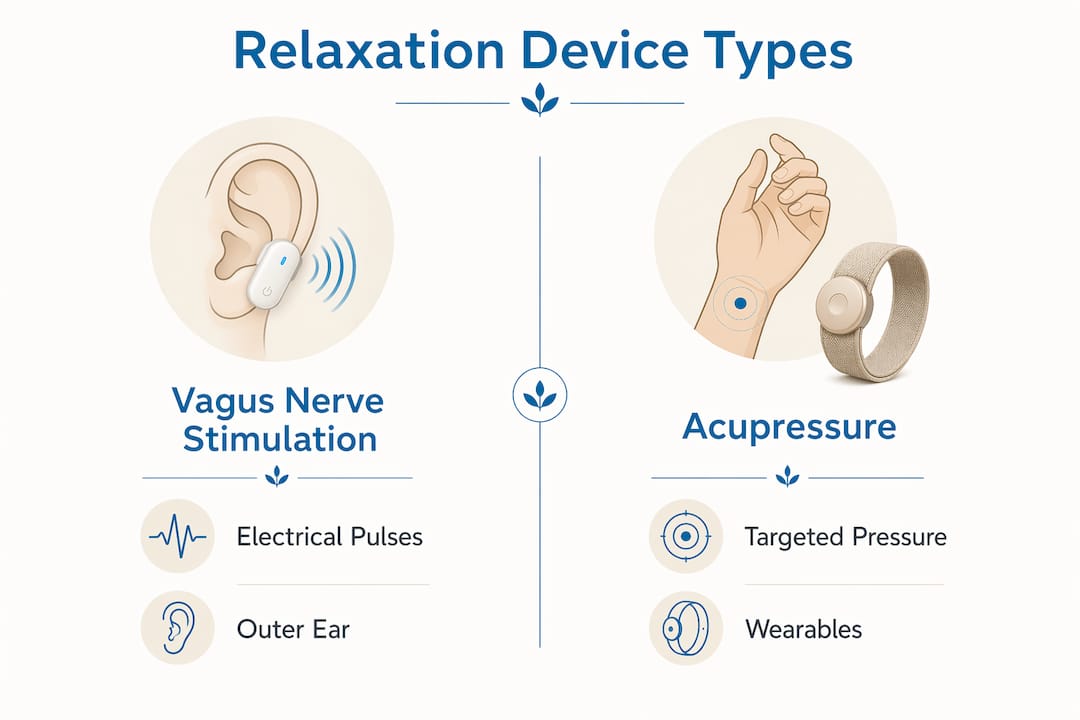
The three dominant categories of relaxation equipment are vagus nerve stimulators, acupressure tools, and biofeedback wearables. Each operates through a different biological pathway, and knowing the difference helps you choose the right device for your goal.
Vagus Nerve Stimulators (taVNS)
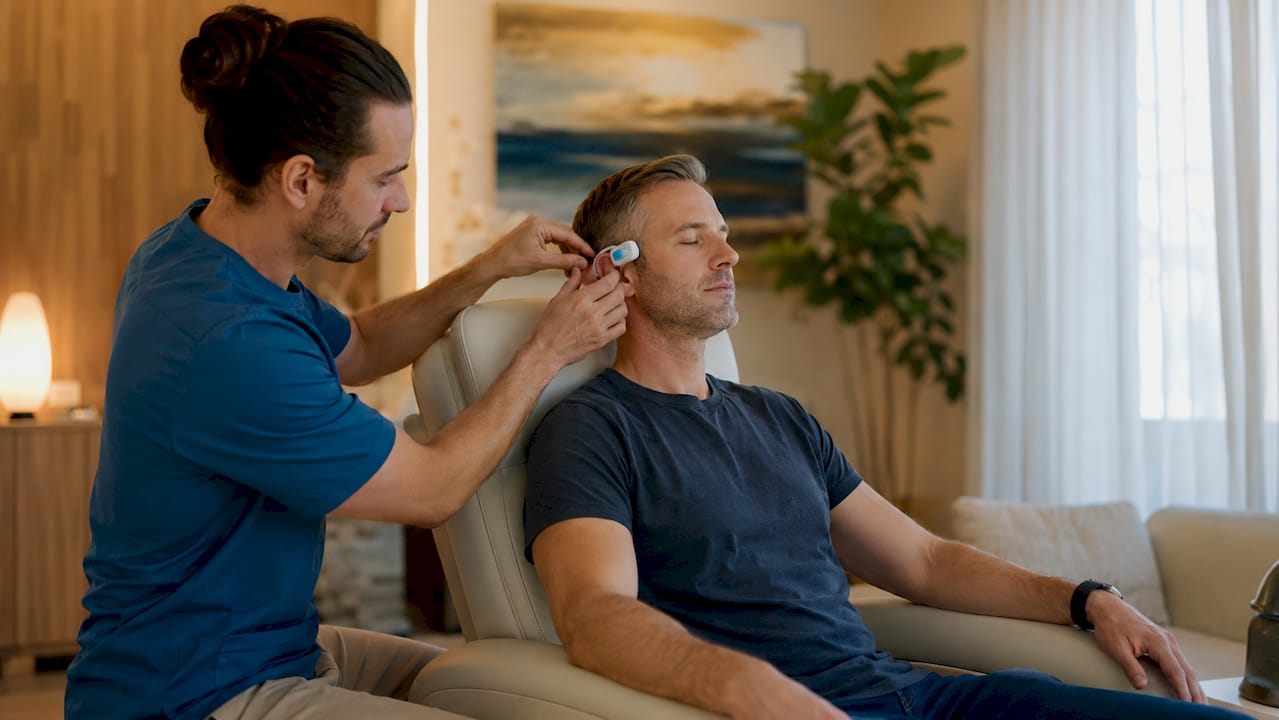
Transcutaneous auricular vagus nerve stimulation delivers low-level electrical pulses to the outer ear, specifically the auricular concha, where a branch of the vagus nerve runs close to the skin. The vagus nerve is the body’s primary parasympathetic highway, connecting the brain to the heart, lungs, and gut. When stimulated, it triggers autonomic control over heart rate, immune response, and emotional regulation. Devices like Apollo Neuro deliver vibration-based stimulation rather than electrical pulses, but the target pathway is the same.
Acupressure Devices
Acupressure tools apply sustained pressure to specific anatomical points, most commonly on the ear, wrist, or along the spine. This pressure stimulates nerve endings that send signals to the hypothalamus and limbic system, the brain regions that regulate stress hormones and sleep cycles. Research confirms that acupressure modulates neurotransmitter balance and suppresses inflammatory markers, which explains why effects build over multiple weeks rather than appearing after a single session.
Biofeedback Wearables
Biofeedback devices measure real-time physiological data, typically HRV, skin conductance, or respiratory rate, and feed that information back to the user through an app or audio cue. The goal is to teach your nervous system to self-regulate. Devices like Muse (EEG headband) and Garmin wearables with stress tracking fall into this category. The mechanism is behavioral conditioning: you learn to recognize and replicate the physical state of calm.
| Device Type | Primary Mechanism | Key Biomarker Targeted | Best Use Case |
|---|---|---|---|
| taVNS (e.g., Apollo Neuro) | Electrical/vibrational nerve stimulation | HRV, brain activity | Anxiety, insomnia |
| Acupressure tools | Pressure on nerve-rich anatomical points | Cortisol, sleep stages | Sleep quality, chronic stress |
| Biofeedback wearables (e.g., Muse) | Real-time physiological data feedback | HRV, respiratory rate | Stress awareness, self-regulation |
| Breathing devices (e.g., CalmiGo) | Guided respiratory pacing | Respiratory rate, HRV | Acute stress, panic reduction |
Pro Tip: If your primary goal is sleep improvement, prioritize auricular acupressure or taVNS devices. If your goal is daytime stress management, a biofeedback wearable or breathing pacer like CalmiGo gives you faster, more visible feedback.
What do relaxation devices do to your body’s stress markers?
The effects of relaxation devices are not subjective. Clinical trials measure them through polysomnography, HRV analysis, and EEG recordings, and the results are specific.
A 2025 randomized controlled trial published in Frontiers in Neurology found that taVNS improves HRV metrics including RMSSD and pNN50 in patients with primary insomnia disorder compared to sham treatment. Higher RMSSD values indicate stronger parasympathetic tone, meaning the nervous system is spending more time in recovery mode. A 2026 systematic review covering 13 studies found that tVNS improves sleep quality in 12 of those studies, with auricular concha stimulation producing the strongest results. That is a 92% positive outcome rate across independent research groups.
Acupressure produces equally measurable results. An eight-week randomized controlled trial showed that auricular acupressure increases deep sleep duration by 12.64% and improves sleep efficiency in elderly patients with diabetes and insomnia. Deep sleep is the stage where the body repairs tissue and consolidates memory. A 12.64% increase in that stage is clinically meaningful, not just statistically significant.
| Device Category | Measured Outcome | Study Type | Result |
|---|---|---|---|
| taVNS | HRV (RMSSD, pNN50) | RCT, 2025 | Significant increase vs. sham |
| tVNS (auricular) | Sleep quality score | Meta-analysis, 2026 | Improved in 12/13 studies |
| Auricular acupressure | Deep sleep duration | RCT, 8 weeks | +12.64% increase |
| Home-based taVNS | Anxiety (HAM-A score) | Pilot study, 2026 | Decreased after 4 weeks |
A 2026 pilot study on home-based taVNS for anxiety reported decreased HAM-A anxiety scores alongside increased RMSSD after four weeks of daily use. This confirms that home relaxation devices can produce clinical-grade physiological changes without a hospital setting.
Pro Tip: Track your HRV each morning using a wearable like a Garmin or Oura Ring before and after starting a new relaxation device protocol. A rising weekly average HRV is the clearest objective signal that the device is working for your physiology.
Why do results vary so much between users?
Relaxation device outcomes vary because human autonomic nervous systems are not uniform. Three factors drive most of the variation.
- Baseline autonomic set point: People with naturally low HRV or high resting cortisol tend to show larger improvements from taVNS and acupressure because they have more room to shift. Those already in a parasympathetic-dominant state may notice subtler changes.
- Stimulation parameters: Frequency, intensity, electrode placement, and session duration all affect outcomes. Individual variability in VNS response is influenced by anatomy and baseline autonomic set points, which is why two people using the same device at the same settings can report completely different experiences.
- Age and adherence: The 2026 systematic review found that younger users showed stronger sleep improvements from tVNS. Adherence matters equally. Acupressure protocols require multi-week consistency to shift physiological markers. A single session produces minimal lasting change.
One counterintuitive finding worth knowing: the sensation you feel during stimulation does not predict effectiveness. Stimulation sensations reported by users can differ from physiological effectiveness. A strong tingling feeling does not mean stronger HRV improvement. This is why outcome tracking matters more than how the device feels during use.
Closed-loop systems represent the next step in solving this variability problem. These devices read your biometric data in real time and adjust stimulation parameters automatically. Closed-loop feedback devices are a promising direction for adapting vagus nerve stimulation to individual physiology. They are not yet widely available in consumer products, but the research direction is clear.
How to build a relaxation device routine that actually works
A device sitting on your nightstand produces no physiological benefit. Consistent, structured use is what generates results. Here is a protocol framework grounded in clinical study designs.
- Set a fixed daily schedule. Consumer vagus nerve devices are typically used 1–2 times daily, with morning and pre-sleep sessions being the most common. Consistent timing trains your nervous system to expect and respond to the stimulus.
- Start with lower intensity and increase gradually. Dose escalation reduces the risk of overstimulation and allows your body to adapt. Most clinical trials use a two-week ramp-up period before reaching the target stimulation level.
- Pair devices with complementary practices. Combining taVNS or acupressure with mindfulness exercises for stress amplifies parasympathetic activation. Breathing exercises, in particular, directly modulate HRV through the same vagal pathway that electrical devices target.
- Track objective markers, not just feelings. Use a sleep diary, a wearable HRV tracker, or a validated stress scale like the Perceived Stress Scale (PSS) every two weeks. Subjective calm is unreliable as a sole measure of progress.
- Commit to the full protocol window. Auricular acupressure studies run for eight weeks. taVNS anxiety trials run for four weeks. Expecting results in three days is the most common reason people abandon devices that would have worked with more time.
For stress relief specifically, biofeedback wearables and breathing pacers deliver faster feedback loops and are better suited to daytime use. For sleep improvement, auricular acupressure and taVNS devices used in the 30 minutes before bed show the strongest clinical outcomes. You can explore sensory relaxation tools to find options that match your specific target outcome.
Key takeaways
Relaxation devices work by activating the parasympathetic nervous system through vagus nerve stimulation, acupressure, or biofeedback, producing measurable changes in HRV, sleep architecture, and stress hormones.
| Point | Details |
|---|---|
| Three core mechanisms | taVNS, acupressure, and biofeedback each target distinct physiological pathways for relaxation. |
| Clinical evidence is strong | 12 of 13 tVNS studies showed improved sleep quality; auricular acupressure increased deep sleep by 12.64%. |
| Sensation does not equal efficacy | Feeling a strong stimulus does not predict better HRV or sleep outcomes; track biomarkers instead. |
| Consistency drives results | Protocols require 4–8 weeks of daily use to shift physiological markers reliably. |
| Match device to goal | Use biofeedback wearables for daytime stress and taVNS or acupressure for sleep improvement. |
What i’ve learned after watching this category evolve
The relaxation device market has a credibility problem that the science does not deserve. Most skepticism comes from people who tried a device for a week, felt nothing dramatic, and concluded it was a gimmick. The clinical literature tells a different story, but only if you read the protocol details.
What strikes me most is how consistently the research points to the same two variables: stimulation location and session duration. Devices that hit the auricular concha outperform those targeting other ear regions. Protocols that run four weeks or longer outperform shorter trials. These are not subtle differences. They are the difference between a statistically significant result and a null finding.
The consumer market has not fully caught up to this. Most product marketing focuses on sensation and convenience rather than protocol specifics. That gap is where informed buyers have a real advantage. When you understand that non-invasive therapy works through defined physiological mechanisms rather than placebo, you use devices differently. You schedule them. You track them. You give them time.
The emerging direction I find genuinely exciting is closed-loop biometric integration. Devices that read your HRV and adjust stimulation in real time will make the “individual variability” problem largely obsolete. We are not there yet in the consumer space, but the research infrastructure is being built right now. For anyone investing in relaxation technology today, understanding the mechanism is the best preparation for using the next generation of tools effectively.
— Cadence
Find the right tools at Evergreenbliss
If this breakdown of mechanisms has you ready to act, Evergreenbliss has curated a selection of products built around the same science discussed here.
The mental wellness and stress relief collection at Evergreenbliss covers devices and aids targeting the exact pathways covered in this article, from acupressure tools to sleep aids designed for consistent nightly use. For sleep-specific support, the sleep and relaxation aids collection includes options suited for both daytime stress management and pre-sleep wind-down routines. Every product ships free, with easy returns, so you can test what works for your physiology without risk.
FAQ
What is the main mechanism behind relaxation devices?
Most relaxation devices work by activating the parasympathetic nervous system through vagus nerve stimulation, acupressure pressure points, or biofeedback conditioning. Each method targets the same outcome: shifting the body away from a stress response and toward a recovery state.
How long does it take for relaxation devices to show results?
Clinical trials show meaningful results after 4–8 weeks of consistent daily use. Auricular acupressure studies run eight weeks, while taVNS anxiety trials show measurable HRV changes after four weeks.
Do relaxation devices actually change anything in the body?
Yes. Studies measure objective changes including increased HRV, improved deep sleep duration, and reduced anxiety scores on validated scales like the HAM-A. These are physiological changes, not just subjective feelings of calm.
Are home relaxation devices as effective as clinical ones?
A 2026 pilot study on home-based taVNS reported decreased anxiety scores and increased HRV after four weeks, suggesting home devices can produce clinical-grade outcomes when used consistently with the correct protocol.
Which type of relaxation device is best for sleep?
Auricular concha taVNS and auricular acupressure show the strongest evidence for sleep improvement. A 2026 meta-analysis found auricular concha stimulation produced the best sleep quality outcomes across 13 independent studies.