Stack one fast-acting physical technique with one daily cognitive or behavioral practice, and you will address stress at two separate levels simultaneously. The physical technique, such as extended-exhale breathing or Progressive Muscle Relaxation (PMR), activates the vagus nerve and pulls your nervous system out of fight-or-flight within seconds to minutes. The cognitive or behavioral practice, such as mindfulness or cognitive reappraisal, then works on the prefrontal cortex to reframe the stressor and build longer-term resilience. According to Mayo Clinic, relaxation techniques produce measurable benefits including lower heart rate, reduced blood pressure, and improved sleep, and those benefits compound when you practice consistently.
In-the-moment reset (under 2 minutes):
- 4 counts in, 6 counts out (extended-exhale breathing) for 60–90 seconds
- One grounding statement: name three things you can see right now
- Roll your shoulders back twice and drop your jaw
15-minute daily stack:
- 3 minutes of box breathing (4-4-4-4 counts)
- 7 minutes of PMR starting from your feet upward
- 5 minutes of cognitive reappraisal: write one sentence naming the stressor, one sentence naming what is actually in your control
Practicing each technique when you are calm is the single most important rule. Trying to learn a new method during a panic attack is like reading a fire-escape map while the building is burning. Build the skill first; deploy it second.
Table of Contents
- What are the core relaxation techniques and how do you practice them?
- How do you combine relaxation techniques for stronger results?
- Ready-to-use session templates for any time budget
- Which technique combo fits your specific situation?
- How often should you practice, and when will you notice results?
- Common mistakes, safety notes, and when to get professional help
- Why does combining techniques work? The science behind stacking
- Key Takeaways
- The part most guides skip
- Tools that support a consistent practice
- Useful sources for further reading
What are the core relaxation techniques and how do you practice them?
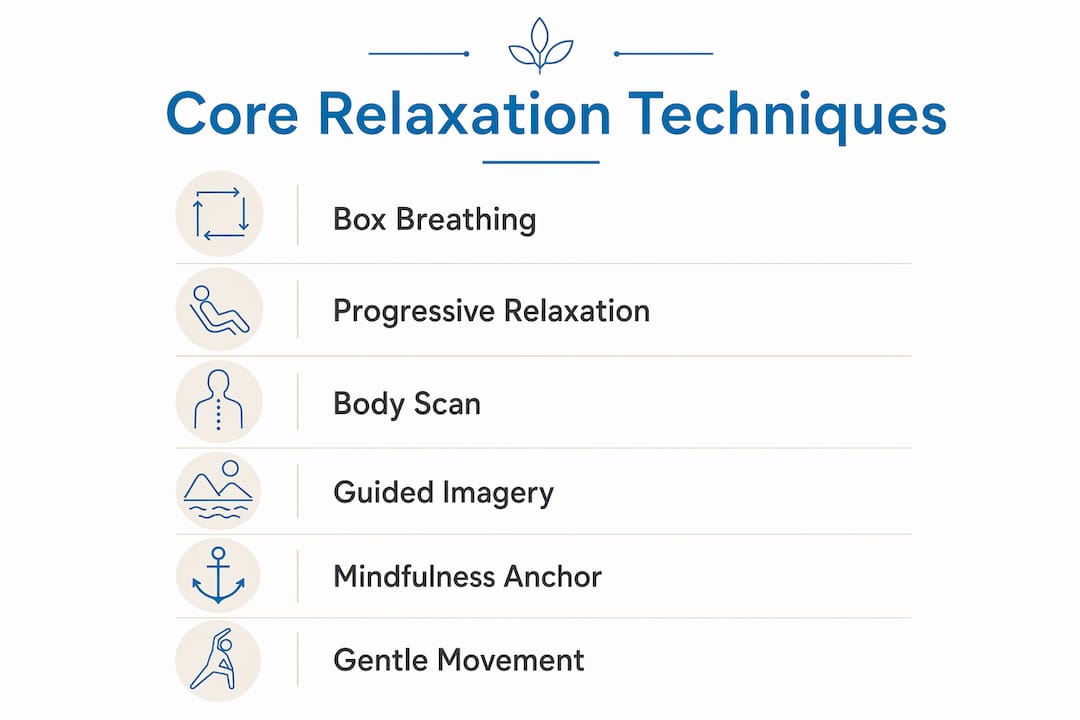
Each technique below has a distinct mechanism and a different time-to-effect. Learning all of them gives you a full toolkit; knowing when to reach for each one is what makes the difference.
Diaphragmatic and extended-exhale breathing
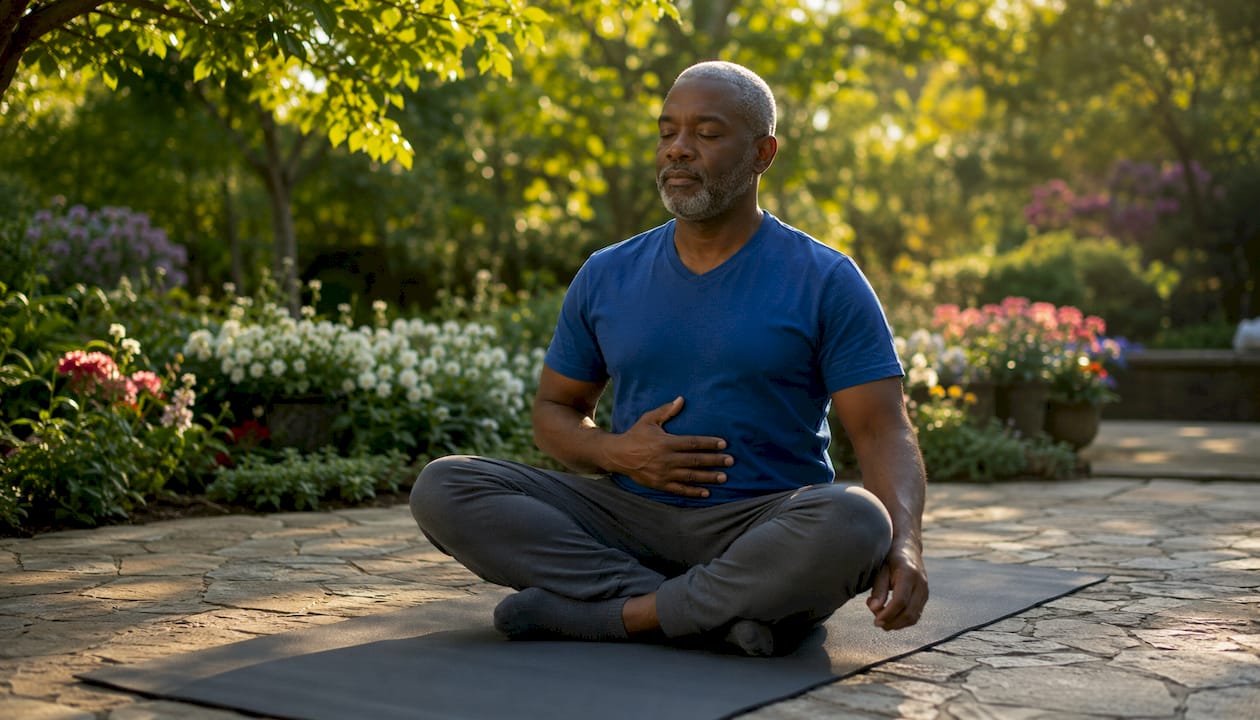
Sit or lie down. Place one hand on your chest, one on your belly. Inhale through your nose for 4 counts, letting your belly rise. Exhale through pursed lips for 6–8 counts. Repeat for 1–3 minutes. The extended exhale is the key: it lengthens the exhalation phase, which is when vagal tone increases and heart rate slows. Slow diaphragmatic breathing can shift autonomic balance within roughly 60–90 seconds, making it the fastest non-pharmacological method to downregulate acute stress.
Box breathing is a structured variant: inhale 4 counts, hold 4, exhale 4, hold 4. It is especially useful before a high-stakes meeting or performance because the symmetrical rhythm is easy to count under pressure.
Progressive Muscle Relaxation (PMR)
Start lying down or seated in a chair. Beginning at your feet, tense each muscle group firmly for 5–7 seconds, then release completely for 20–30 seconds. Notice the contrast. Move upward: calves, thighs, abdomen, hands, arms, shoulders, face. A full session runs 10–20 minutes. A head-to-head lab study found that PMR and guided imagery produced linear, steady decreases in physiological arousal, while deep breathing showed a curvilinear pattern with an initial arousal spike before settling. That makes PMR the better first choice when you need predictable, progressive calming rather than a fast jolt.
Body scan
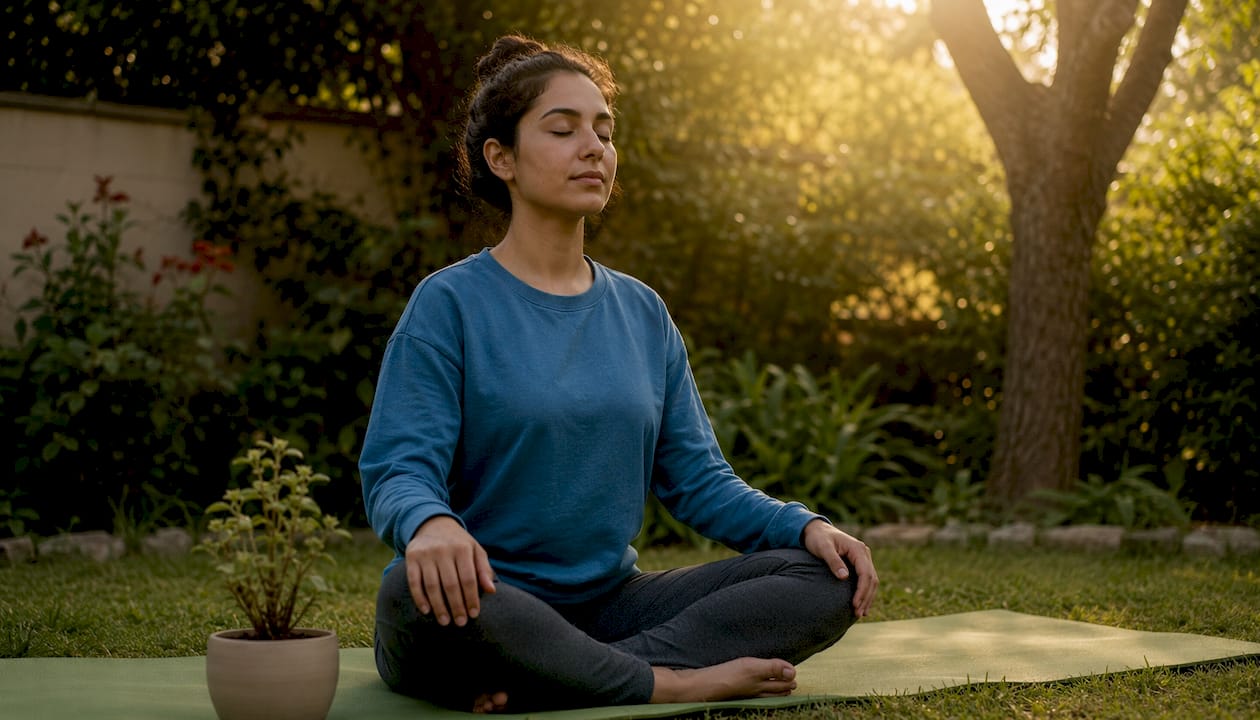
Lie flat. Close your eyes and bring attention to the top of your head. Slowly move awareness downward through your scalp, neck, shoulders, chest, and so on to your feet. You are not trying to change anything, just noticing. A body scan takes 10–20 minutes in full but can be compressed to 5 minutes by moving faster through regions. It blends breath awareness with body awareness, which is why it anchors the pre-sleep routine particularly well.
Guided imagery and visualization
Sit or lie comfortably. Close your eyes and picture a place that feels genuinely safe and calm to you: a beach, a forest, a quiet room. Engage all five senses in the image. What do you hear? What does the air smell like? What is the temperature? Spend 5–10 minutes there. Guided imagery works via cognitive behavioral principles: when you replace intrusive thoughts with a constructed calming scene, the emotional consequence shifts. Free audio recordings are available through apps like Calm, Insight Timer, and the UCLA Mindful app.
Short mindfulness anchor
Pick one sensory anchor: the feeling of your feet on the floor, the sound of your breath, or the weight of your hands in your lap. Set a timer for 2–5 minutes. When your mind wanders, return to the anchor without judgment. This is not a full meditation session; it is a brief attention reset. For a deeper look at mindful relaxation practices, Evergreenbliss covers the evidence and integration steps in detail.
Gentle movement and self-massage
Five minutes of slow neck rolls, shoulder circles, and forward folds lowers muscle tension and signals safety to the nervous system. Self-massage, such as pressing your thumbs into the base of your skull or kneading your forearms, adds a tactile grounding layer. Touch-based techniques activate the same social-bonding circuits as interpersonal contact, which is why they work even when practiced alone.
Pro Tip: Practice every technique at least three times in a calm state before you need it under stress. The Cleveland Clinic specifically recommends this “off-line” approach because learning during acute distress rarely transfers to accessible skill.
How do you combine relaxation techniques for stronger results?
Think of stress management as an operating system with five channels, not a list of isolated tips. Each channel targets a different mechanism, and stacking across channels produces effects that a single technique cannot.
The five-channel framework
| Channel | What it targets | Representative techniques | Time to effect | Best use case |
|---|---|---|---|---|
| Physical | Vagus nerve, HPA axis, muscle tension | Breathing, PMR, yoga, cold exposure | Seconds–minutes | Acute stress, panic, muscle tension |
| Cognitive | Prefrontal cortex, amygdala reappraisal | Mindfulness, cognitive reappraisal, journaling | 2–4 weeks consistent | Rumination, worry, negative self-talk |
| Behavioral | Habit loops, task load, boundaries | Task batching, scheduling, digital limits | 1–2 weeks | Work stress, overwhelm, procrastination |
| Environmental | Baseline arousal, sensory load | Lighting, noise, clutter reduction | Immediate to days | Chronic low-grade stress, sleep issues |
| Social | Oxytocin, perceived support | Social connection, peer support, therapy | Variable | Loneliness, social anxiety, burnout |
Combining techniques from different channels consistently outperforms relying on a single method because each channel addresses a distinct stress trigger. Pairing box breathing (physical) with task batching (behavioral), for example, handles both the physiological spike and the cognitive overload that caused it.
Pairing rules
- Stack across channels, not within one. Two breathing techniques in a row hit the same pathway twice and produce diminishing returns. One physical plus one cognitive is more efficient.
- One immediate technique plus one daily practice. The immediate technique handles the acute moment; the daily practice builds baseline resilience over weeks.
- Add an environmental tweak as a low-effort multiplier. Dimming lights, silencing notifications, or removing visual clutter often reduces baseline stress more than adding another active technique.
Recommended pairings
- Extended-exhale breathing + cognitive reappraisal (physical + cognitive): ideal for panic or pre-performance anxiety
- PMR + guided imagery (physical + cognitive, different modalities): best for evening wind-down or insomnia
- Box breathing + task batching (physical + behavioral): the go-to for acute work stress
- Body scan + environmental adjustment (physical + environmental): pre-sleep stack
- Breath anchor + social support activation (physical + social): social anxiety or post-conflict recovery
Sequencing: physical first, cognitive second
Start with the physical technique. You cannot reframe a stressor clearly when your amygdala is running the show. Spend 2–5 minutes on breathing or PMR to bring arousal down, then move to the cognitive layer. The exception: if breathwork increases your anxiety (which does happen for some people, particularly those with PTSD or panic disorder), skip directly to a behavioral grounding technique like the 5-4-3-2-1 sensory method or gentle movement.
Pro Tip: Rotate your pairings across sessions every 2–3 weeks. Nervous systems habituate to repeated stimuli. Switching from PMR + guided imagery to box breathing + journaling keeps the response fresh and prevents the technique from losing its edge.
Ready-to-use session templates for any time budget
5-minute emergency reset
- Extended-exhale breathing (90 seconds): 4 counts in, 6 counts out
- Grounding (60 seconds): name 3 things you see, 2 you hear, 1 you feel physically
- Micro-movement (90 seconds): slow shoulder rolls, jaw drop, two deep sighs
Use this at your desk, in a bathroom stall before a meeting, or in your car. No equipment, no quiet room required.
15-minute daily stack
| Step | Technique | Duration |
|---|---|---|
| 1 | Box breathing (4-4-4-4) | 3 minutes |
| 2 | PMR (feet to shoulders) or guided imagery | 7 minutes |
| 3 | Cognitive reappraisal: write the stressor + what you control | 5 minutes |
This is the core daily practice. Morning works well for most people because it sets a lower arousal baseline for the day. Evening works if you carry tension home from work.
30-minute resilience session
- Aerobic warm-up or gentle movement (8 minutes): brisk walking, light yoga, or dynamic stretching. Exercise produces acute mood benefits after a single session and structural brain changes after 4–8 weeks of consistent practice.
- Mindfulness or guided imagery (18 minutes): seated breath meditation or a full guided imagery audio
- Sleep hygiene cue (4 minutes, if pre-bed): dim the lights, set your phone to Do Not Disturb, write tomorrow’s top three tasks to clear your working memory
Pre-sleep routine
- Body scan (10 minutes): lying flat, slow attention from head to feet
- Progressive relaxation (10 minutes): tense-and-release from feet upward
- Environmental adjustments: room temperature 65–68°F, blackout curtains or sleep mask, white noise if needed
For more on reducing nighttime anxiety, Evergreenbliss has a dedicated guide with additional pre-sleep protocol variations.
Personalizing any template: If you have less time, cut the middle step, not the breathing opener. If a technique spikes your arousal instead of lowering it, substitute the behavioral grounding step from the 5-minute reset. Posture matters less than consistency: lying down, sitting, or standing all work.
Which technique combo fits your specific situation?
Matching the stack to your dominant stress channel first gets you results faster than picking techniques at random.
Insomnia
- Stack: Evening body scan + PMR + environmental adjustments (darkness, cool temperature, device-free bedroom)
- Why: The body scan interrupts the hypervigilant thought loop that keeps you awake; PMR releases the physical tension that signals danger to your nervous system; the environmental layer removes sensory triggers that sustain arousal.
Panic attacks
- Stack: Extended-exhale breathing (immediately) + 5-4-3-2-1 grounding
- Why: Extended exhale is the fastest vagal brake available. Grounding anchors attention to the present and interrupts catastrophic thought spirals. Do not attempt cognitive reappraisal during a panic attack; the prefrontal cortex is offline. Save reappraisal for the recovery phase, 10–15 minutes after the peak.
Acute work stress
- Stack: Box breathing (2–3 minutes) + task batching + one boundary micro-habit (e.g., closing email for 45 minutes)
- Why: Box breathing handles the physiological spike; task batching reduces the cognitive load that caused it; the boundary habit prevents re-escalation. This is a physical + behavioral cross-channel pair.
Muscle tension
- Stack: PMR + self-massage (neck, forearms, scalp) + posture adjustment
- Why: PMR teaches the contrast between tension and release; self-massage adds direct tactile input that the nervous system reads as safe; posture adjustment (shoulders back, chin neutral) reduces the proprioceptive signals that maintain tension. A minimalist environmental design approach to your workspace, such as clearing your desk and adjusting your chair height, can also reduce the postural load that feeds muscle tension.
Social anxiety
- Stack: Breath anchor (30–60 seconds before the situation) + cognitive reframing (one realistic counter-thought) + social support activation (brief check-in with a trusted person afterward)
- Why: The breath anchor lowers pre-event arousal; the reframe replaces catastrophic prediction with a realistic one; the post-event social contact activates oxytocin pathways that buffer the stress response. For the cognitive reframing component, cognitive-behavioral therapy techniques provide a structured framework that goes well beyond a single counter-thought.
Pro Tip: Identify your dominant stress channel before choosing a stack. If you feel it mostly in your body (tight chest, tense shoulders), start physical. If you feel it mostly as racing thoughts, start cognitive. The dominant channel is your entry point; the secondary channel is your reinforcement.
How often should you practice, and when will you notice results?
Consistency matters more than session length. Three short daily resets plus three to five longer weekly sessions is a realistic prescription that most people can sustain.
Timeline by technique type
| Technique | Typical time to first effect | Recommended weekly dose |
|---|---|---|
| Extended-exhale / box breathing | 60–90 seconds (acute) | Daily; 2–5 minutes per reset |
| PMR | 10–20 minutes per session | 3–5 sessions per week |
| Guided imagery | 5–10 minutes per session | 3–5 sessions per week |
| Mindfulness meditation | Minutes (acute calm); weeks for trait change | Daily; 5–20 minutes |
| Exercise / movement | Single session for mood; 4–8 weeks for structural brain changes | 3–5 sessions per week, 20–30 minutes |
| Cognitive reappraisal | 2–4 weeks for noticeable baseline shift | Daily journaling or structured reflection |
When you combine an immediate technique with a longer-term daily practice, many people notice a meaningful reduction in baseline anxiety within 2–4 weeks of regular practice.
Simple progress tracking checklist
Track these three markers weekly:
- Sleep quality: Did you fall asleep within 30 minutes most nights? Did you wake fewer than twice?
- Perceived stress: On a scale of 1–10, what was your average stress level this week compared to last week?
- Muscle tension diary: Note where you hold tension (jaw, shoulders, lower back) and whether it decreased after sessions.
If two weeks pass with no change in any marker, that is a signal to adjust your stack, not to abandon the practice. Try switching channels: if you have been doing mostly physical techniques, add a cognitive or behavioral layer.
Building the habit: Attach your daily stack to an existing anchor. Breathing after your morning coffee, PMR before you brush your teeth at night, a mindfulness anchor at your lunch break. Routine-based stress reduction works because the environmental cue triggers the behavior before motivation is required.
Common mistakes, safety notes, and when to get professional help
The most common errors
- Learning during crisis. Attempting to master PMR or guided imagery for the first time during a panic attack almost never works. The skill has to exist before the crisis arrives.
- Stacking within one channel. Doing box breathing, then extended-exhale breathing, then breath counting is three physical techniques in a row. You are hitting the same pathway repeatedly with diminishing returns.
- Pushing breathwork too hard. Hyperventilation-style breathing or breath retention beyond your comfort level can spike arousal rather than lower it. If a breathing technique makes you feel dizzy, lightheaded, or more anxious, stop and switch to PMR or grounding.
- Expecting an immediate cure for chronic stress. Acute techniques handle acute moments. Chronic stress requires consistent daily practice over weeks, plus behavioral and environmental changes.
- Adding too many techniques at once. Beginners who attempt multiple complex methods simultaneously tend to abandon all of them. Learn one immediate technique and one daily practice first. Add a third only after the first two feel automatic.
Safety and contraindications
- PTSD and trauma history: Some breathwork techniques, particularly those involving breath retention or hyperventilation, can trigger dissociation or flashbacks. Start with gentle extended-exhale breathing only, and consult a trauma-informed therapist before adding more intensive techniques.
- Respiratory conditions: People with asthma, COPD, or heart failure should check with their physician before starting breath-focused practices. Body scan and PMR are generally safer alternatives.
- PMR and recent injury or surgery: Tensing a muscle group near a surgical site or injury can cause pain or damage. Skip that region and work around it.
- Breathwork arousal spike: As research confirms, some people experience an initial increase in arousal when starting breathwork. This is not failure; it is a physiological signal to switch channels. Move to PMR or behavioral grounding instead.
When to consult a professional
Seek clinical support if you experience persistent high arousal that does not respond to two or more weeks of consistent practice, a trauma history that makes certain techniques feel unsafe, panic disorder with frequent attacks, or severe insomnia lasting more than three weeks. A licensed therapist, particularly one trained in cognitive-behavioral therapy or MBSR, can tailor a protocol to your specific history. The techniques in this article are general wellness practices, not a substitute for clinical care.
Why does combining techniques work? The science behind stacking
The short answer: different techniques target different hardware in your nervous system, and hitting multiple targets simultaneously produces effects that no single technique can replicate alone.
The mechanisms
- Vagal activation: Slow breathing stimulates the vagus nerve, which signals the parasympathetic nervous system to lower heart rate and cortisol. This is the fastest pathway to acute calm.
- Amygdala downregulation: Mindfulness meditation and cognitive reappraisal reduce amygdala reactivity over time, making you less likely to escalate in the first place. Chronic stress specifically damages the amygdala and prefrontal cortex, the regions governing emotion regulation and decision-making.
- BDNF and neuroplasticity: Exercise increases brain-derived neurotrophic factor (BDNF), which supports neuroplasticity and mood regulation. These structural changes take 4–8 weeks to accumulate but are among the most durable stress-management benefits available.
- Oxytocin buffering: Social connection and touch activate oxytocin pathways that directly buffer the HPA axis stress response. This is why the social channel is not optional for people dealing with burnout or chronic isolation.
Neuroscience research maps these distinct pathways and confirms that deliberately stacking techniques across them can produce additive, and in some cases synergistic, effects.
Key finding: In a controlled head-to-head comparison, PMR and guided imagery produced steady, linear decreases in physiological arousal across a session, while deep breathing showed a curvilinear pattern with an initial arousal spike. This means the techniques are not interchangeable: the right choice depends on your starting arousal level and your goal for the session.
Why rotating channels prevents habituation
The nervous system adapts to repeated stimuli. A technique that produces strong relaxation in week one may produce a weaker response by week four if you use it identically every session. Rotating across channels, such as switching from a physical-cognitive stack to a behavioral-environmental one, keeps the nervous system responding fully. Think of it as cross-training for your stress response rather than running the same route every day.
Key Takeaways
Stacking one immediate physical technique with one daily cognitive or behavioral practice, matched to your dominant stress channel, is the most efficient way to build both acute relief and lasting resilience.
| Point | Details |
|---|---|
| Stack across channels | Pair a physical technique with a cognitive or behavioral one to target multiple stress pathways at once. |
| Practice when calm | Build each technique off-line first; skills learned during crisis rarely transfer to accessible use. |
| Expect a timeline | Breathing works in 60–90 seconds; cognitive and behavioral changes typically take 2–4 weeks of consistent practice. |
| Track three markers | Monitor sleep quality, perceived stress, and muscle tension weekly to know when to adjust your stack. |
| Evergreenbliss supports your practice | Evergreenbliss offers stress-relief and sleep-aid products that complement these routines without replacing the habit itself. |
The part most guides skip
There is a version of relaxation advice that treats techniques like apps: download enough of them and your stress disappears. That framing misses something important.
The research on stacking techniques is genuinely compelling, but the mechanism that makes it work is not the technique itself. It is the repeated, deliberate return to a calmer state. Every time you practice extended-exhale breathing when you are already calm, you are not just breathing. You are strengthening the neural pathway that makes calm accessible under pressure. The technique is the vehicle; the repetition is the road.
What most people underestimate is how little time this actually requires. Three two-minute breathing resets per day and one 15-minute PMR session before bed is a total of 21 minutes. That is less than the average American spends checking email after dinner. The barrier is not time. It is the belief that something this simple cannot possibly be doing much. It is.
The other thing worth saying plainly: if you have tried consistent practice for four weeks and your stress levels have not shifted, that is clinical information, not personal failure. Some stress loads require professional support, and recognizing that is its own form of good judgment.
Start with one technique. Practice it until it feels boring. Then add one more.
Tools that support a consistent practice
The routines in this article require nothing but your attention and a few minutes. That said, the right tool can lower the friction enough to make a habit stick.
Evergreenbliss curates a selection of products specifically designed to support the kind of daily practice described here. For sleep-focused stacks, the sleep and relaxation aids collection includes sleep masks, white-noise devices, and sleep supplements that reinforce the environmental layer of a pre-sleep routine. For movement and muscle-tension stacks, the home fitness recovery equipment collection covers massage devices and recovery tools that pair directly with PMR and self-massage steps. For breathing and sensory support, the mental wellness and stress-relief collection includes breathing trainers and calming accessories worth exploring.
The guiding principle for choosing any tool: pick the one that removes a step from your routine, not one that adds a new obligation. A sleep mask that makes your bedroom darker costs you nothing in effort. A complex biofeedback device that requires setup and calibration might not. Prioritize simplicity, and let the habit do the work.
Useful sources for further reading
The following primary sources informed this article. Each covers a distinct aspect of relaxation science and practice.
- Effectiveness of Progressive Muscle Relaxation, Deep Breathing, and Guided Imagery — PMC peer-reviewed head-to-head comparison of PMR, breathing, and guided imagery with physiological arousal data.
- Relaxation Techniques: Try These Steps to Lower Stress — Mayo Clinic overview of benefits, technique descriptions, and beginner guidance.
- How to Relax — Cleveland Clinic practical guide emphasizing off-line practice and technique selection.
- Stress Management Techniques Backed by Neuroscience — Neurosity’s mechanistic mapping of techniques to neural pathways (vagus nerve, amygdala, BDNF).
- Stress Management Techniques: A Complete Framework for Relief — Goals & Progress five-channel operating-system framework and cross-channel pairing recommendations.
- Relaxation Techniques for Mental Wellness — American Psychiatric Association overview of evidence-based techniques and when to seek professional support.
- Relaxation Techniques — StatPearls, NCBI Bookshelf — Clinical reference covering step-by-step technique instructions, contraindications, and physiological mechanisms.
- Stress Management — StatPearls, NCBI Bookshelf — Clinical review of Mindfulness-Based Stress Reduction (MBSR), body scan, and structured mindfulness interventions.
- Managing Stress — CDC Mental Health — CDC public health guidance on building a personal stress-management combination and physical activity recommendations.
- Six Relaxation Techniques to Reduce Stress — Harvard Health — Harvard Medical School summary of the relaxation response and six evidence-based techniques, including practice duration guidance.
For persistent stress, anxiety disorders, or trauma-related symptoms, these sources are a starting point, not a substitute for evaluation by a licensed mental health professional.