Stress relief effectiveness is defined by how quickly and sustainably a technique reduces your body’s stress response. The best stress relief methods fall into three categories: immediate calming, same-day recovery, and long-term resilience building. Stress relief techniques ranked effectiveness research from the CDC, NHS, and Harvard Health all point to the same foundation: consistent daily practice of personalized techniques outperforms any single method used in isolation. This article ranks the top approaches by scientific evidence so you can match the right tool to your stress type and timing.
1. Stress relief techniques ranked by effectiveness: the core framework
Ranking stress relief methods requires a framework. The most useful one classifies techniques by the timing of their impact: immediate calming within minutes, same-day recovery within hours, and long-term resilience built over weeks. This structure comes directly from meta-analytic research on stress reduction interventions and gives you a practical way to choose what to use and when.
No single technique wins across all three categories. The CDC confirms that everyone manages stress differently, which means a combination of techniques practiced daily is the most effective stress management strategy. The ranked list below follows this three-tier framework.
2. Deep breathing: the fastest-acting calming method
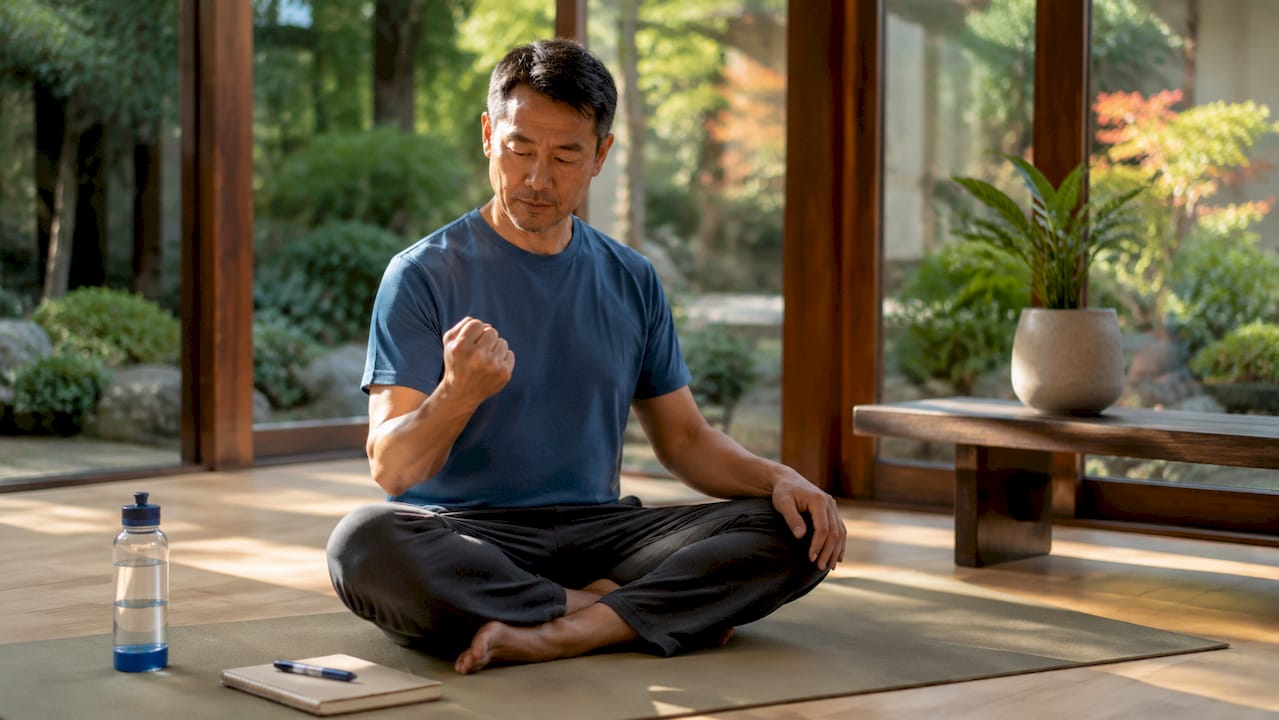
Deep breathing is the highest-ranked technique for immediate stress relief. It slows your heart rate and reduces stress hormones within minutes, making it the most accessible tool you have. You need no equipment, no appointment, and no prior training.
The NHS recommends practicing breathing exercises regularly until they become automatic stress responses. That shift from effortful to automatic is what makes breathing so powerful long-term. A technique you can run on autopilot during a tense meeting or a difficult phone call is worth more than one that requires setup.
- Try box breathing: inhale for 4 counts, hold for 4, exhale for 4, hold for 4
- Use 4-7-8 breathing for sleep-related stress: inhale 4, hold 7, exhale 8
- Practice diaphragmatic breathing lying down to feel the full effect first
Pro Tip: Pair your breathing practice with a sensory relaxation tool like an acupressure mat. The physical sensation anchors your attention and deepens the calming effect.
3. Progressive muscle relaxation: releasing physical tension fast
Progressive muscle relaxation (PMR) ranks second for immediate stress relief. It works by systematically tensing and releasing muscle groups from your feet to your face, which interrupts the physical stress cycle. Most people feel a measurable drop in tension within 15 minutes.
PMR is especially effective when stress shows up as headaches, jaw clenching, or shoulder tightness. The technique gives your nervous system a concrete task, which pulls attention away from anxious thoughts. You can learn the full sequence in one session and practice it independently from then on.
Guided imagery pairs well with PMR. Visualizing a calm scene while releasing muscle tension creates a mental distraction that interrupts the stress response at two levels simultaneously. Apps like Calm and Insight Timer offer guided PMR sessions if you prefer audio instruction.
4. Social connection: same-day emotional recovery
Social contact is the most underrated same-day recovery technique. A conversation with a trusted person offers distraction, perspective, and emotional support in one interaction. Research consistently shows that social connection reduces cortisol and improves mood faster than solitary activities.
The key word is “trusted.” Venting to someone who amplifies your stress makes things worse. The goal is a conversation that shifts your perspective or simply makes you feel less alone with the problem.
- Call a friend or family member rather than texting
- Meet someone in person when possible; face-to-face contact has stronger calming effects
- Join a group activity like a class or team sport for regular social contact built into your week
5. Physical exercise: the most evidence-backed mood reset
Exercise is the top-ranked same-day recovery technique for stress. It reduces cortisol directly, releases endorphins, and improves mood within a single session. A 20-minute walk is enough to produce measurable stress reduction.
The CDC lists physical activity as a core daily stress management step. That recommendation is not about fitness goals. It is about using movement as a daily emotional reset. Even low-intensity activity like stretching or yoga counts.
For people dealing with physical tension from stress, a foam roller after exercise helps release residual muscle tightness and extends the recovery effect. The combination of movement and physical release addresses both the mental and physical dimensions of stress simultaneously.
6. Journaling: turning stress into something you can manage
Journaling ranks as the most effective solo same-day recovery technique. Writing about your stress helps you identify triggers, process emotions, and shift from reactive to reflective. That shift is what makes it more than just venting on paper.
The NHS recommends keeping a stress diary for 2–4 weeks to identify patterns in your stress triggers and coping responses. That data transforms vague feelings into specific, manageable problems. Once you know your triggers, you can match techniques to them with much greater accuracy.
Journaling does not require a special format. Write for 10 minutes after a stressful event. Note what happened, how you felt, and what helped or did not help. Over two weeks, patterns become obvious.
7. Mindfulness-based stress reduction (MBSR): the gold standard for long-term resilience
Mindfulness-based stress reduction is the most rigorously studied long-term stress management program. Meta-analytic evidence shows that MBSR significantly reduces perceived stress compared to control groups in U.S.-based studies. It is the highest-ranked technique for building sustained resilience.
MBSR is an 8-week structured program combining meditation, body scanning, and mindful movement. Jon Kabat-Zinn developed it at the University of Massachusetts Medical School in the 1970s, and it has since become the benchmark for clinical stress reduction research.
The evidence has important nuances worth understanding:
- MBSR produces significant short-term reductions in emotional exhaustion, particularly among high-stress professionals like nurses
- Effects attenuate over time without continued practice, meaning MBSR is a starting point, not a permanent fix
- MBSR improves quality of life and reduces pain-related distress, but its effect on physical pain severity is limited compared to active controls
- Benefits vary by demographic factors and whether the program includes a full-day retreat component
Pro Tip: When selecting an MBSR program, look for one that includes a full-day silent retreat session. Research shows this component contributes meaningfully to outcomes. Online programs that skip the retreat tend to produce weaker results.
8. Acupressure and massage: physical tools for stress relief
Acupressure ranks as a practical, accessible technique for both immediate and same-day stress relief. Applying pressure to specific points on the body activates the parasympathetic nervous system, which is the system responsible for the “rest and digest” state that counters stress.
Acupressure mats deliver this effect passively. You lie on the mat for 15–20 minutes, and the pressure points do the work. Many people report a deep relaxation response similar to a massage session. The effect is physical first, then mental.
For people whose stress manifests as poor sleep, combining acupressure with sleep supplements addresses both the physical tension and the sleep disruption that stress causes. Sleep deprivation amplifies stress reactivity, so treating both together produces better results than addressing either alone.
9. How to personalize your stress relief approach
Personalizing your stress relief plan is what separates people who manage stress well from those who cycle through techniques without lasting results. The CDC states that personalized daily combinations are the foundation of effective stress management. That means knowing your triggers, your stress type, and which techniques fit your lifestyle.
Use a stress diary for 2–4 weeks before committing to a routine. Track when stress peaks, what triggered it, and how your body responded. That data tells you whether you need more immediate calming tools, same-day recovery strategies, or long-term resilience work.
- Acute stress from specific events responds best to deep breathing and PMR
- Chronic low-grade stress responds best to MBSR, regular exercise, and journaling
- Emotional stress responds best to social connection and journaling
- Physical stress responds best to exercise, acupressure, and massage
Pro Tip: Start with one technique from each timing tier: one immediate, one same-day, one long-term. Practice each for two weeks before adding more. Building three reliable habits beats having ten techniques you use inconsistently.
Key takeaways
The most effective stress relief plan combines immediate calming techniques, same-day recovery methods, and a long-term resilience practice like MBSR, all chosen based on your specific triggers and stress type.
| Point | Details |
|---|---|
| Rank by timing, not popularity | Match techniques to immediate, same-day, or long-term needs for best results. |
| Deep breathing is the fastest tool | Regular practice makes it automatic, so it works even under high pressure. |
| MBSR leads for long-term resilience | Effects are strongest short-term and require ongoing practice to sustain. |
| Journaling reveals your triggers | A 2–4 week stress diary turns vague stress into specific, manageable patterns. |
| Combine techniques daily | The CDC confirms that personalized daily combinations outperform any single method. |
What I’ve learned from years of watching people fight stress the wrong way
Most people treat stress relief like a fire extinguisher. They grab whatever is closest when things get bad, use it once, and put it back on the shelf. That approach explains why so many people feel like nothing works. The technique is not the problem. The timing and consistency are.
What I have found genuinely useful is the three-tier framework. When you know that deep breathing is for right now, exercise is for today, and MBSR is for the next three months, you stop expecting one method to do everything. That clarity alone reduces the frustration of feeling like you are not making progress.
The other thing most articles skip: MBSR is not a magic program. The meta-analytic evidence shows real reductions in perceived stress, but notable stress levels remain after the program ends. That is not a failure of the method. It is a signal that stress management is ongoing work, not a course you complete. The people who do best treat it like exercise: something you do regularly, not something you finish.
Track your results. A simple note after each week about what helped and what did not is enough. Over a month, you will have a personal effectiveness ranking that is more accurate than any generic list, including this one.
— Cadence
Evergreenbliss products that support your stress relief routine
Techniques work better when you have the right physical tools to support them. Evergreenbliss carries a curated range of stress-relief and wellness products designed to complement the methods ranked in this article, from acupressure mats that deliver deep physical relaxation to sleep aids that address the sleep disruption stress causes.
The Evergreenbliss collection includes acupressure mats and pillow sets, massage devices, sleep supplements, and recovery tools that pair directly with techniques like PMR, breathing practice, and post-exercise recovery. Every product ships free, with easy returns and secure checkout. If you are building a daily stress relief routine, having the right physical support makes consistency easier and results faster.
FAQ
What is the most effective stress relief technique?
Deep breathing is the most immediately effective technique because it reduces stress hormones within minutes and requires no equipment. For long-term resilience, mindfulness-based stress reduction (MBSR) has the strongest meta-analytic evidence.
How long does it take for stress relief techniques to work?
Deep breathing and progressive muscle relaxation produce noticeable effects within 10–15 minutes. MBSR programs show significant stress reduction after 8 weeks of consistent practice, though some benefits attenuate without ongoing use.
How do I know which stress relief technique is right for me?
Keep a stress diary for 2–4 weeks to identify your specific triggers and stress patterns. Acute stress responds best to breathing and PMR, while chronic stress responds better to MBSR, exercise, and journaling.
Does MBSR work for everyone?
MBSR significantly reduces perceived stress in most people, but its effectiveness varies by stress outcome. It shows stronger results for emotional exhaustion and quality of life than for physical pain severity, and benefits require ongoing practice to sustain.
Can combining stress relief techniques improve results?
Yes. The CDC recommends combining multiple techniques practiced daily rather than relying on a single method. A combination of one immediate, one same-day, and one long-term technique gives you coverage across all stress situations.