Mindful relaxation is defined as the practice of bringing full, deliberate attention to the present moment while consciously allowing the body and mind to release tension. Unlike passive rest or distraction, it combines two distinct skills: present-moment awareness (the core of mindfulness) and the physiological release of stress. The result is a state where your nervous system shifts from fight-or-flight into rest-and-digest mode, not by force, but by noticing. Research supports daily relaxation practice as a way to stay healthier, think more clearly, and maintain higher energy. This guide breaks down the techniques, the science, and how to make this practice stick.
What is mindful relaxation and how does it work?
Mindful relaxation sits at the intersection of two well-studied approaches: relaxation techniques and mindfulness meditation. Relaxation techniques, such as Progressive Muscle Relaxation and diaphragmatic breathing, target the body’s autonomic nervous system. Mindfulness meditation trains the brain to observe thoughts and sensations without reacting. Mindful relaxation uses both at once.
The key mechanism is parasympathetic activation. When you pay deliberate attention to your breath, your body, or your senses without judgment, the vagus nerve signals the body to lower heart rate and reduce muscle tension. This is not a metaphor. It is a measurable physiological shift. The practice works because awareness itself, when applied with ease rather than effort, removes the mental fuel that keeps stress running.
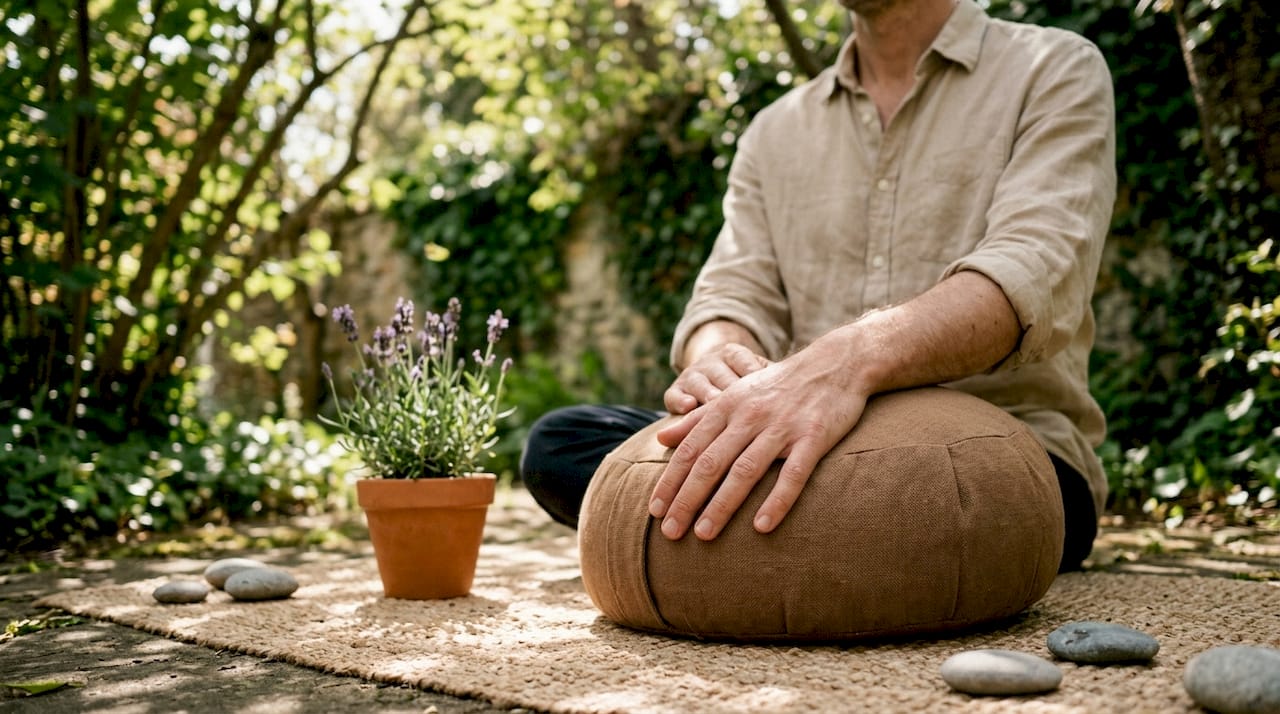
A common misconception is that mindful relaxation requires a blank mind. It does not. The goal is checking in with present experience, not checking out. Thoughts will arise. The practice is noticing them and returning attention gently, without frustration.
What are the core mindful relaxation techniques?
The following techniques are ordered from longer structured sessions to quick daily practices. Each one targets a different entry point into the relaxed, aware state that defines mindful relaxation.
-
Quiet sitting or free-floating relaxation (20 minutes). Sit or lie in a comfortable position. Close your eyes and allow attention to rest on the breath without controlling it. Practitioners recommend once or twice daily to produce lasting cognitive and physical benefits. This session length is long enough to shift the nervous system into a sustained calm state.
-
Body scan (10–15 minutes). Move attention slowly from the top of your head to your feet. Notice areas of tension without trying to fix them. Body scanning activates the parasympathetic nervous system by allowing the brain to register tension and release it naturally. The key is observation, not correction.
-
Box breathing (3–5 minutes). Inhale for 4 counts, hold for 4, exhale for 4, hold for 4. Repeat 5 times. This technique interrupts the stress loop quickly and works well before meetings, difficult conversations, or sleep. You can read more about why deep breathing produces these effects at a physiological level.
-
5-senses anchoring (2–3 minutes). Identify 5 things you see, 4 you can touch, 3 you hear, 2 you smell, and 1 you taste. This micro-practice interrupts stress loops by pulling attention out of rumination and into the present environment. It requires no equipment and works anywhere.
Pro Tip: Consistency beats duration. Short daily sessions produce more lasting stress regulation than long sessions done once a week. Even 5 minutes of box breathing every morning builds the neural habit faster than an occasional 45-minute session.
How does mindful relaxation differ from other practices?
Relaxation and mindfulness are not the same thing, and confusing them leads to frustration. Relaxation is outcome-oriented: the goal is physiological calm, lower heart rate, reduced muscle tension, and mental recovery. Mindfulness is process-oriented: the goal is training the brain to observe internal states without reacting. Mindful relaxation combines both, which is what makes it uniquely effective for stress relief.
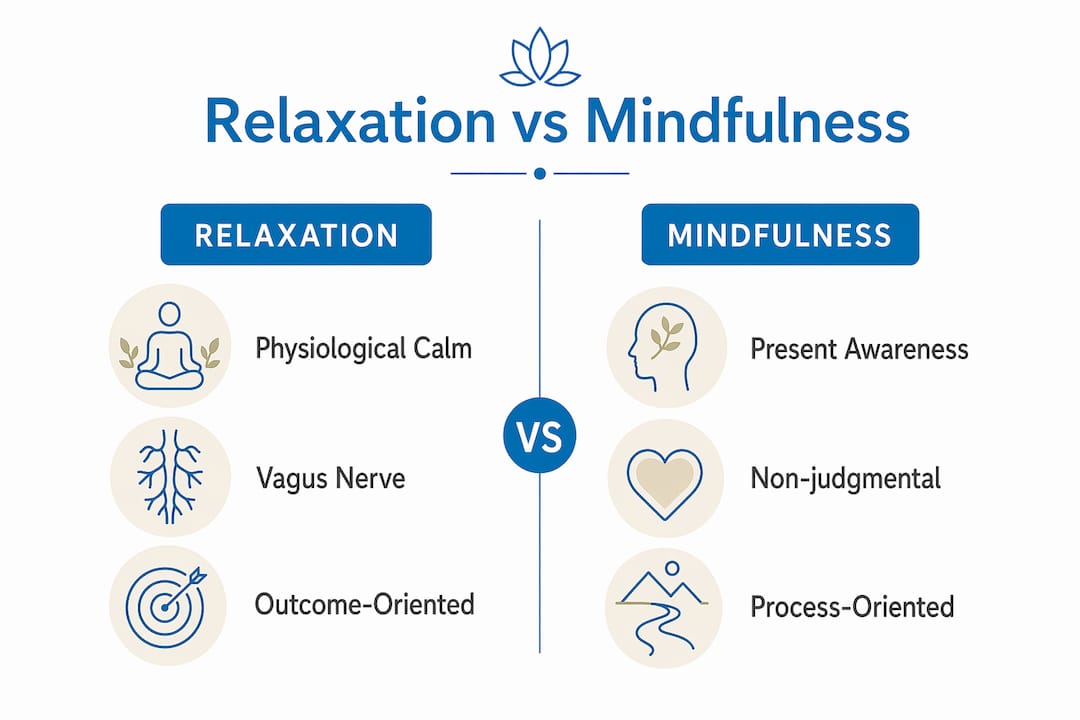
| Practice | Primary Goal | Mechanism | Outcome |
|---|---|---|---|
| Relaxation | Physiological calm | Vagus nerve stimulation | Lower heart rate, reduced tension |
| Mindfulness | Mental training | Prefrontal cortex engagement | Better stress tolerance, awareness |
| Mindful relaxation | Both simultaneously | Awareness plus ease | Calm body and trained mind |
The most common pitfall is trying to force relaxation. Forcing relaxation increases tension because effort itself is a form of stress. The better approach is curiosity. Notice what is happening in the body without demanding it change. That nonjudgmental noticing is what allows the nervous system to settle on its own.
Mindfulness meditation, by contrast, does not require a relaxed state at all. You can practice mindfulness while anxious, in pain, or in a noisy environment. The practice trains the brain to tolerate discomfort rather than escape it. Mindful relaxation adds the intention to release, making it better suited for stress relief specifically.
Pro Tip: If you find yourself frustrated during a session, that frustration is the practice. Notice it, name it (“I’m feeling impatient”), and return to your breath. The noticing is the skill, not the silence.
What are the scientific benefits of mindful relaxation?
The evidence for mindful relaxation spans both cognitive and physiological domains. On the cognitive side, regular practice improves mental clarity, builds stress resilience, and reduces emotional reactivity. On the physical side, it lowers cortisol, reduces heart rate, and decreases muscle tension through direct action on the autonomic nervous system.
“Daily relaxation drills help people remain healthier, increase energy, and maintain sharper mental clarity. The body and brain both benefit when the nervous system is given regular, intentional recovery time.” — Dr. Frank Staggers Jr., as cited in Mindful.org research on deep rest
Mindfulness exercises improve well-being and relax both body and mind, even when practiced during everyday tasks like walking or eating. The Mayo Clinic notes that using senses, breathing, and awareness enhances calmness and focus throughout the day. This means the benefits are not limited to formal sessions.
The distinction between mindfulness and relaxation matters here. Relaxation lowers physiological arousal, while mindfulness increases meta-awareness regardless of tension level. Combining them produces a person who is both calmer in the moment and better equipped to handle future stress. That dual effect is why mindful relaxation outperforms either practice alone for long-term stress management. For a deeper look at how stress affects sleep and recovery, the connection is well documented in stress and sleep quality research.
How to incorporate mindful relaxation into daily life
Building a sustainable practice requires fitting it into your actual schedule, not an idealized one. The following strategies work for people with full calendars and limited patience for lengthy rituals.
- Anchor sessions to existing habits. Practice box breathing right after your morning coffee or a body scan before bed. Attaching a new behavior to an existing one removes the friction of remembering to do it.
- Use micro-practices during transitions. The 5-senses anchoring technique takes under 3 minutes. Use it between work tasks, before a phone call, or while waiting in line. Micro-moments of mindful awareness interspersed throughout the day produce sustained stress relief more effectively than isolated long sessions.
- Integrate awareness into movement. Walking, eating, and stretching all become mindful relaxation practices when you bring deliberate attention to physical sensation. Notice the weight of your feet on the floor. Notice the temperature of your food. These are not trivial exercises. They train the same neural pathways as formal meditation.
- Use physical tools to support the practice. Acupressure mats, neck massagers, and massage foam rollers create tactile sensory input that makes it easier to anchor attention in the body. Physical sensation is one of the fastest routes into present-moment awareness.
- Track consistency, not perfection. Missing a day is not failure. The goal is a general pattern of regular practice. Mindfulness meditation can be adapted to individual preference and schedules, from 3 minutes to 30 or more.
Pro Tip: Watch for the “relaxation trap”: feeling like you need to be in a perfectly quiet space before you can practice. The ability to find calm in imperfect conditions is exactly what the practice builds. Start where you are.
Key Takeaways
Mindful relaxation works because it combines present-moment awareness with intentional physical ease, producing both immediate physiological calm and long-term stress resilience.
| Point | Details |
|---|---|
| Core definition | Mindful relaxation pairs present-moment awareness with conscious release of physical tension. |
| Best techniques | Body scans, box breathing, and 5-senses anchoring each target stress through different entry points. |
| Key distinction | Relaxation calms the body; mindfulness trains the mind; mindful relaxation does both at once. |
| Science-backed benefits | Regular practice lowers cortisol, reduces heart rate, and improves cognitive clarity over time. |
| Daily integration | Micro-practices and habit anchoring build consistency faster than long, infrequent sessions. |
What I’ve learned from practicing this imperfectly for years
Most people approach mindful relaxation the way they approach a productivity task: they want to do it correctly and see results fast. That mindset is the first obstacle. The practice is not about achieving a state. It is about developing a relationship with your own nervous system.
What I have found is that the sessions where nothing seems to happen are often the most useful. You sit, your mind races, you notice the racing, you return to your breath. That cycle, done 50 times in 20 minutes, is the training. The calm is a side effect, not the point.
Beginners consistently underestimate how much physical support matters. A body that is uncomfortable cannot relax, no matter how focused the mind is. Posture, surface, temperature, and tactile input all affect how quickly the nervous system settles. This is not an excuse to buy equipment before you practice. It is a reminder that the body is part of the equation.
The most durable advice I can offer is this: treat curiosity as the technique. When you notice tension, get curious about it instead of trying to fix it. When your mind wanders, get curious about where it went. That orientation, curious and nonjudgmental, is what the research actually describes when it talks about mindfulness. Everything else is a delivery method.
— Cadence
Wellness tools that support your relaxation practice
Physical tools do not replace mindful relaxation practice, but they make it easier to get into the right state, especially when stress is high and the body is tight.
Evergreenbliss carries a curated range of stress-relief and mental wellness products designed to complement the techniques covered here. Acupressure mats, neck massagers, and sleep and relaxation aids create the physical conditions that make present-moment awareness easier to access. When your body has less to fight against, your mind settles faster. Browse the full collection at Evergreenbliss to find tools that fit your practice and your daily routine.
FAQ
What is mindful relaxation in simple terms?
Mindful relaxation is the practice of paying deliberate attention to the present moment while allowing the body to release tension naturally. It combines awareness with ease, rather than forcing calm or trying to empty the mind.
How long does it take to feel the benefits?
Many people notice a reduction in tension after a single session of body scanning or box breathing. Lasting cognitive and physiological benefits, such as improved stress resilience and lower cortisol, build over weeks of consistent daily practice.
Is mindful relaxation the same as meditation?
Mindful relaxation and mindfulness meditation overlap but are not identical. Meditation trains the brain to observe thoughts without reacting, while mindful relaxation adds the specific intention to release physical tension. Mindful relaxation is better suited for immediate stress relief.
Can I practice mindful relaxation without any experience?
Yes. Techniques like 5-senses anchoring and box breathing require no prior experience and take under 5 minutes. The Mayo Clinic notes that mindfulness exercises can be adapted to any schedule and skill level.
What is the best time of day to practice?
Morning sessions help set a calm baseline for the day, while evening sessions support sleep by lowering cortisol before bed. Practitioners recommend once or twice daily, but consistency across any time of day matters more than the specific hour.