Touch is defined as one of the most direct biological pathways for reducing stress, working through measurable hormonal and neurological changes that calm the body within seconds of contact. The role of touch in stress relief operates primarily through oxytocin release, cortisol suppression, and nervous system regulation. Regular affectionate touch lowers cortisol and blood pressure while boosting immune function. That means physical contact is not just comforting. It is a physiological intervention with effects comparable to other established stress relief methods. Whether you are exploring massage, hugging, or self-soothing techniques, understanding how touch works gives you a real advantage in managing stress.
How does touch biologically reduce stress?
Touch reduces stress through two primary biological systems: the hormonal system and the nervous system. When skin receptors detect contact, they send signals to the brain that trigger oxytocin release, particularly in the prefrontal cortex. Oxytocin then suppresses cortisol, the body’s main stress hormone, and slows heart rate and blood pressure. This chain reaction is fast, measurable, and repeatable.
The neurological side is equally important. Social touch reduces cortisol and heart rate during stress by enhancing oxytocin signaling in the brain. Stress itself suppresses neuronal activity in regions responsible for emotional regulation. Touch reverses that suppression, restoring the brain’s ability to process and manage stress effectively.

Different types of touch activate distinct neurological pathways. Cutaneous afferents are the sensory nerve fibers in your skin, and they respond differently depending on the pressure, speed, and temperature of contact. Slow, gentle stroking activates C-tactile afferents, which are specifically wired for social bonding and emotional comfort. Firm, sustained pressure activates different fibers linked to pain modulation and deep relaxation. This is why a light caress and a firm massage feel completely different and serve different purposes.
Here is a summary of the key biological effects triggered by touch:
- Oxytocin release: Triggered by skin contact, especially gentle stroking, promoting calm and social connection.
- Cortisol suppression: Oxytocin directly inhibits cortisol production, reducing physiological stress markers.
- Heart rate reduction: Parasympathetic nervous system activation slows the heart and lowers blood pressure.
- Neuronal restoration: Touch reverses stress-induced suppression of brain regions that regulate emotion.
- Immune support: Reduced cortisol levels allow the immune system to function more effectively.
| Biological Effect | Triggered By | Outcome |
|---|---|---|
| Oxytocin release | Gentle, slow stroking | Reduced anxiety, social bonding |
| Cortisol suppression | Sustained affectionate touch | Lower physiological stress |
| Heart rate reduction | Hugging, firm pressure | Calmer cardiovascular state |
| Neuronal restoration | Social touch | Improved emotional regulation |
Pro Tip: If you want the fastest stress response from touch, focus on slow, deliberate contact rather than quick pats. C-tactile afferents respond best to a stroking speed of roughly 1–10 centimeters per second, which is the pace of a calm, intentional caress.
What forms of touch best promote stress relief?
Not all touch produces the same result. Intentionality and mode of touch matter greatly for therapeutic outcomes. Gentle stroking promotes social bonding and reduces anxiety. Firm, static pressure is more effective for pain management and producing a grounded, calm state. Knowing which type to use and when makes touch a far more effective tool.
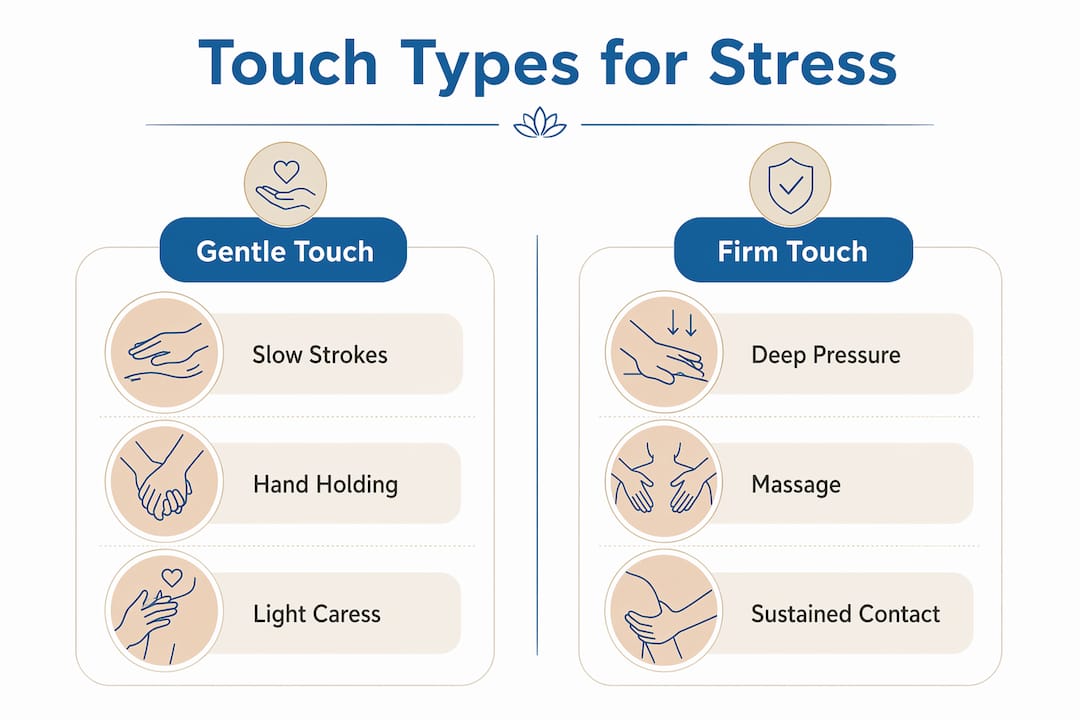
Gentle touch and social bonding
Gentle touch, including slow stroking, light hand-holding, and soft caresses, activates the social bonding pathway. This type of contact is most effective for reducing anxiety and building feelings of safety and connection. Hugging falls into this category and carries well-documented benefits. The effects of hugging on anxiety include a measurable drop in heart rate and blood pressure, making it one of the simplest and most accessible stress relief tools available.
Firm pressure and deep relaxation
Firm, sustained pressure, such as that used in Swedish massage or deep tissue work, targets a different set of nerve fibers. This type of touch is more effective for physical tension, pain relief, and producing a state of deep calm. Professional massage therapy falls into this category, as does the use of weighted blankets and foam rollers. The sensory relaxation tools that combine pressure and texture work through these same pathways.
Self-soothing touch
Self-touch is often overlooked, but the evidence for it is strong. Self-soothing touch reduces momentary stress and fatigue at a level comparable to brief meditation. Placing a hand on your chest, rubbing your arms, or applying gentle pressure to your temples activates the same oxytocin pathways as touch from another person. This makes self-touch a practical, private option for stressful moments when social contact is not available.
| Touch Type | Primary Effect | Best Used For |
|---|---|---|
| Gentle stroking | Oxytocin release, social bonding | Anxiety, emotional distress |
| Firm pressure | Pain modulation, deep calm | Muscle tension, chronic stress |
| Hugging | Heart rate and cortisol reduction | Acute stress, social anxiety |
| Self-soothing touch | Stress and fatigue reduction | Solo stress management |
How does touch regulate emotions and manage stress psychologically?
Touch works as an active emotion regulation tool, not just a passive comfort mechanism. Touch helps reappraise stress by redirecting attention from distressing thoughts to safe, grounding physical sensations. This process directly downregulates the fight-or-flight response, which is the nervous system state responsible for most of the physical symptoms of stress.
“Touch serves as a nonverbal signal of safety. When the body receives that signal, the brain shifts out of threat mode and into a state where rational thinking and emotional processing become possible again.”
The psychological benefits of touch extend beyond the moment of contact. Touch buffers both acute and chronic stress responses, meaning it helps in a crisis and also builds resilience over time. Greater frequency of affectionate touch correlates with lower self-reported stress and less vulnerability to stress disorders. People who avoid touch, by choice or circumstance, show higher stress vulnerability across multiple studies.
Touch also builds the psychological conditions that make stress easier to manage:
- Trust: Consistent, gentle touch from a trusted person signals safety and reduces threat perception.
- Connection: Social touch reinforces feelings of belonging, which directly counteracts the isolation that amplifies stress.
- Emotional safety: Touch communicates care without words, making it effective in situations where verbal reassurance falls short.
- Stress reappraisal: Physical grounding through touch helps shift the mental frame from “I am overwhelmed” to “I am safe right now.”
One particularly striking finding: imagined or recalled supportive touch reduces perceived stress more effectively than verbal reassurances. The brain responds to the memory of safe touch in ways that verbal comfort cannot fully replicate. This has real implications for people who are physically isolated or managing stress alone.
Pro Tip: During a stressful moment, try placing one hand flat on your sternum and breathing slowly. This combines self-soothing touch with diaphragmatic breathing, activating two separate calming pathways at the same time. You can learn more about how deep breathing reduces stress to pair these techniques effectively.
How to incorporate touch into daily stress relief routines
The importance of touch therapy becomes clearest when you build it into regular habits rather than treating it as a crisis response. Consistent, low-intensity touch throughout the day produces more sustained cortisol reduction than occasional intense contact. The goal is frequency, not just intensity.
Practical ways to build touch into your daily routine:
- Start with intentional hugging. Aim for hugs that last at least 20 seconds. Short, perfunctory hugs do not produce the same oxytocin response as sustained contact. Hug a partner, friend, or family member with intention each day.
- Use self-soothing touch during stress peaks. When you feel tension rising at work or during a difficult conversation, place a hand on your chest or gently rub your forearms. This takes seconds and activates the calming response immediately.
- Schedule regular massage. Professional massage therapy, whether Swedish, deep tissue, or acupressure, delivers firm pressure benefits that are difficult to replicate alone. Even monthly sessions produce measurable reductions in stress hormones.
- Incorporate tactile tools at home. Acupressure mats, massage rollers, and textured relaxation devices bring the benefits of physical touch into your daily routine without requiring another person. These tools activate pressure-sensitive nerve fibers and support the same stress-relief pathways.
- Combine touch with mindfulness. Paying deliberate attention to the sensation of touch, its temperature, pressure, and texture, amplifies its calming effect. Mindful touch keeps your nervous system anchored in the present rather than cycling through stress triggers.
- Use touch in conflict situations. A partner’s soothing touch during conflict de-escalates tension more effectively than verbal reassurance by signaling safety nonverbally. A hand on the shoulder or a brief hold can shift the emotional tone of a difficult conversation.
People who receive affectionate touch before stress tasks show significantly reduced cortisol and heart rate compared to those who receive only verbal support. That finding suggests touch should come before stressful events, not just after them. Proactive touch, not just reactive comfort, is the more effective strategy.
Key Takeaways
Touch reduces stress through direct hormonal and neurological mechanisms, making it one of the most accessible and evidence-backed tools for daily stress management.
| Point | Details |
|---|---|
| Oxytocin is the key hormone | Touch triggers oxytocin release, which suppresses cortisol and calms the nervous system. |
| Touch type determines the effect | Gentle stroking targets anxiety and bonding; firm pressure targets pain and deep calm. |
| Self-touch works alone | Self-soothing touch reduces stress and fatigue comparably to brief meditation. |
| Frequency matters more than intensity | Regular affectionate touch builds stress resilience over time, not just in the moment. |
| Touch outperforms verbal reassurance | Recalled or imagined supportive touch reduces perceived stress more than words alone. |
Touch therapy: what the research actually changed for me
I spent years treating touch as a passive comfort, something that happened rather than something you could deploy with intention. Reading the research on C-tactile afferents and oxytocin pathways changed that completely. The speed and specificity of the biological response to touch is genuinely surprising. This is not a soft wellness concept. It is a measurable physiological mechanism.
What I find most underused is proactive touch. Most people reach for physical contact after stress has already peaked. The evidence points clearly in the other direction: touch before a stressful event, a hug before a difficult meeting, a hand on the shoulder before a hard conversation, produces better outcomes than touch used only as recovery. That shift in timing is small but the difference in effect is significant.
The other thing worth saying plainly: self-touch is not a consolation prize for people without social support. It activates the same pathways. For anyone managing stress in isolation, that is not a minor point. It is the whole game. A hand on your chest during a stressful moment is a real intervention, not a placeholder.
— Cadence
Evergreenbliss wellness tools for touch-based stress relief
Physical touch is most effective when it is consistent and accessible. Evergreenbliss carries a curated selection of stress-relief wellness products designed to bring the benefits of tactile therapy into your daily routine, no appointment required. From acupressure mats that deliver firm, sustained pressure to massage rollers that target muscle tension, each product activates the same nerve pathways that make professional touch therapy effective. You can also browse sleep and relaxation aids that pair tactile comfort with better rest, since reduced cortisol from regular touch directly supports deeper sleep. Free shipping and easy returns make it straightforward to find what works for your body.
FAQ
What is the role of touch in stress relief?
Touch reduces stress by triggering oxytocin release in the brain, which suppresses cortisol and slows heart rate. This hormonal shift calms the nervous system and lowers both physical and psychological stress markers.
How does hugging reduce anxiety?
Hugging activates oxytocin release and stimulates the parasympathetic nervous system, which lowers heart rate and blood pressure. Studies show affectionate touch before or during stress tasks significantly reduces cortisol compared to verbal support alone.
Can self-touch reduce stress without another person?
Yes. Randomized controlled trials confirm that self-soothing touch, such as placing a hand on your chest or rubbing your arms, reduces momentary stress and fatigue at a level comparable to brief meditation.
What type of touch is most effective for stress relief?
Gentle, slow stroking is most effective for anxiety and emotional distress because it activates C-tactile afferents linked to social bonding. Firm, sustained pressure is more effective for muscle tension and producing deep physical calm.
Does touch help with long-term stress or only in the moment?
Touch helps with both. Greater frequency of affectionate touch correlates with lower chronic stress levels and reduced vulnerability to stress disorders, making it a tool for building resilience, not just managing acute stress.