Deep breathing reduces stress by activating the parasympathetic nervous system, which shifts your body from a tense, high-alert state into genuine physical calm. This is not a wellness trend or a vague relaxation tip. Harvard Medical School confirms that slow, deep breathing triggers measurable physiological changes within minutes, including lower heart rate and reduced blood pressure. The science behind deep breathing is specific, well-documented, and accessible to anyone willing to practice. You do not need equipment, a prescription, or a gym membership to use it.
Why deep breathing reduces stress: the body’s response
Deep breathing works because it directly stimulates the vagus nerve, the longest nerve in your body and the primary switch for your parasympathetic nervous system. When you breathe slowly and deeply, your diaphragm contracts and expands in a way that sends a signal through the vagus nerve telling your brain the threat has passed. Your brain responds by lowering cortisol output, slowing your heart rate, and widening your blood vessels.
Prolonged exhalation is the key mechanism here. When you exhale longer than you inhale, your heart rate drops and your blood vessels dilate. This is the shift from fight-or-flight to what physiologists call the rest-and-digest state. Your body stops preparing for danger and starts recovering from it.
Karolinska Institutet researcher Peter Lindholm explains that breathing rhythm tricks the brain into reducing its focus on stressors while simultaneously signaling the heart to lower its beats per minute. That dual action, mental and cardiovascular, is what makes breathwork so effective compared to other quick stress interventions.
Nasal breathing adds another layer of benefit. Nasal breathing produces nitric oxide, a molecule that dilates blood vessels and improves oxygen delivery throughout the body. Mouth breathing, by contrast, sustains the stress response by bypassing this mechanism entirely. Breathing through your nose during deep breathing exercises is not optional. It is the part that makes the chemistry work.
- The diaphragm acts as a pump for the lymphatic system, supporting physical detoxification alongside stress relief
- Vagus nerve stimulation reduces cortisol and adrenaline output
- Prolonged exhalation lowers heart rate faster than inhalation does
- Nasal breathing triggers nitric oxide release, improving oxygen delivery
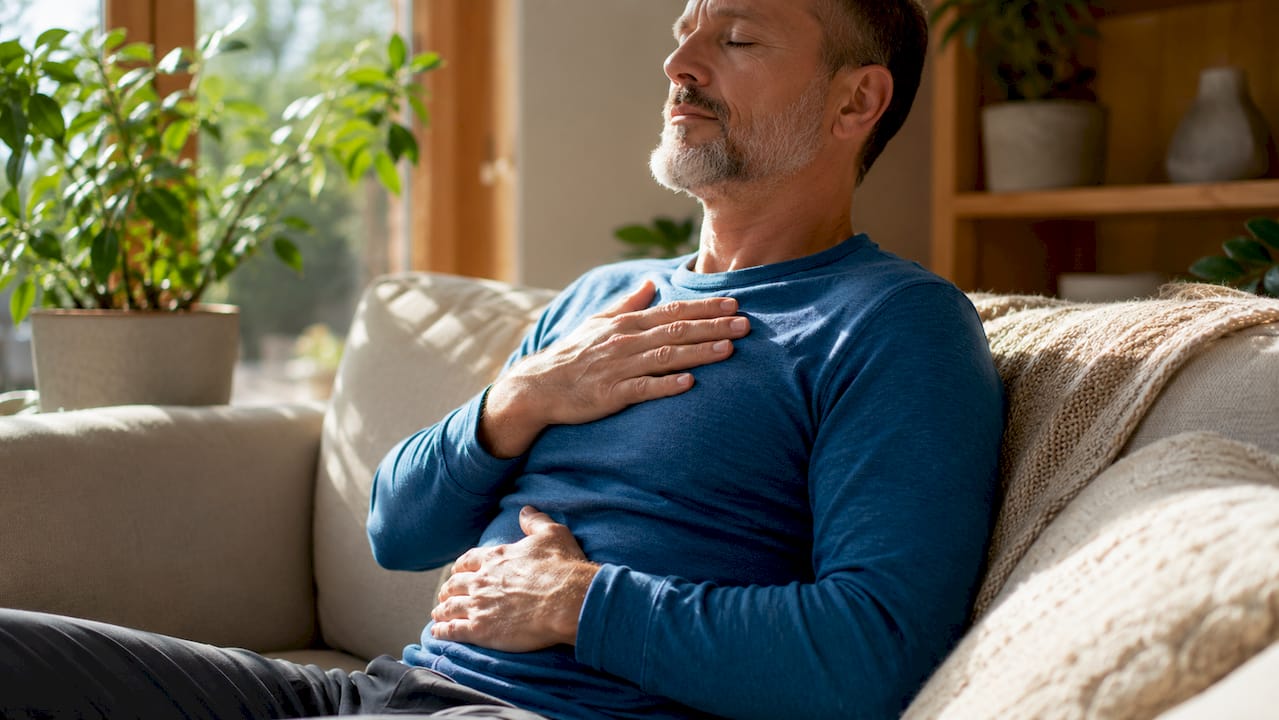
Pro Tip: Place one hand on your chest and one on your belly before you start. If only your chest moves, you are not engaging your diaphragm. Real deep breathing makes your belly rise first.
Which deep breathing techniques work best for stress relief?
Several evidence-backed methods exist, and each suits a different situation. The right technique depends on how much time you have and what kind of stress you are managing.
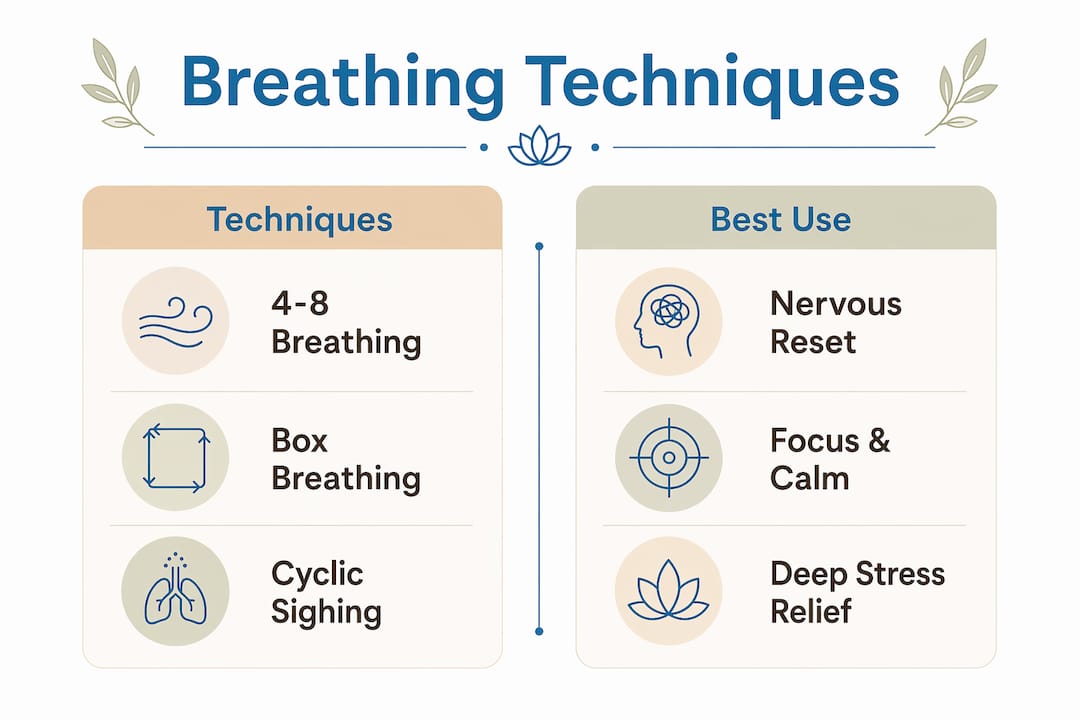
4-8 breathing (nervous system reset)
A psychotherapist-recommended technique involves inhaling for 4 seconds and exhaling for 8 seconds for 10 cycles, completing the full practice in about one minute. The extended exhale is the active ingredient. It forces the parasympathetic system to engage even when your mind is still racing. This is the fastest documented method for breaking a fight-or-flight cycle mid-stress.
Diaphragmatic breathing
Diaphragmatic breathing, also called belly breathing, focuses on using the diaphragm rather than the chest. You breathe in slowly through the nose, letting the abdomen expand, then exhale fully. Practicing this for 3–5 minutes daily builds the habit and strengthens the diaphragm over time. The UT MD Anderson Cancer Center notes that diaphragmatic breathing also assists lymphatic drainage by pumping lymph fluid through the diaphragm, adding a detox benefit most people do not expect.
Box breathing
Box breathing uses four equal counts: inhale for 4 seconds, hold for 4 seconds, exhale for 4 seconds, hold for 4 seconds. The U.S. Navy SEALs use this method for performance under pressure. The symmetrical structure gives your mind a concrete task, which interrupts anxious thought loops. It works particularly well before high-stakes situations like presentations or difficult conversations.
Cyclic sighing
Cyclic sighing involves a double inhale through the nose followed by a long, slow exhale through the mouth. Stanford University researchers identified this pattern as one of the fastest ways to reduce physiological arousal. The double inhale fully inflates the lungs, and the extended exhale deflates them completely, maximizing the vagal response.
| Technique | Duration | Best for | Exhale focus |
|---|---|---|---|
| 4-8 breathing | 1 minute | Acute stress, panic | Yes, 8-second exhale |
| Diaphragmatic breathing | 3–5 minutes | Daily practice, anxiety | Moderate |
| Box breathing | 4–8 minutes | Focus, pre-performance | Equal counts |
| Cyclic sighing | 1–2 minutes | Fast arousal reduction | Long mouth exhale |
Pro Tip: If you want to breathe better throughout the day, start with diaphragmatic breathing in the morning before checking your phone. Setting the pattern early makes it easier to access under pressure.
How quickly does deep breathing reduce stress, and how often should you practice?
The effects of deep breathing on stress are not slow or gradual. Most people notice a measurable drop in tension within 1–5 minutes of starting a session. Heart rate slows, muscle tension decreases, and the mental noise quiets. This speed is one of the strongest arguments for making breathwork your first response to stress rather than scrolling, snacking, or venting.
For longer-term benefits, consistency matters more than session length. 15 minutes of daily practice can reduce systolic blood pressure by up to 10 points in people with hypertension. That is a clinically meaningful number, achieved without medication or equipment.
Here is a practical framework for building the habit:
- Start with 3 minutes daily. Three minutes of diaphragmatic breathing each morning is enough to begin rewiring your stress response. Do not aim for perfection. Aim for consistency.
- Practice when you are calm, not only when you are stressed. Experts at BBC Future warn that attempting breathwork only during stress can paradoxically increase anxiety in beginners. Regular calm-state practice builds the automatic regulation you need when things go wrong.
- Add a midday reset. One minute of 4-8 breathing at lunch interrupts the cortisol buildup that peaks in the afternoon for most people.
- Use box breathing before known stressors. Practice it before meetings, difficult calls, or any situation you already know triggers anxiety.
- Track your resting heart rate. After two weeks of daily practice, most people see a measurable drop. That number is your proof the technique is working.
Lightheadedness is common for beginners and is not dangerous. Changes in blood CO2 during deep breathing temporarily affect circulation, causing mild dizziness. Slow down, breathe less forcefully, and the sensation passes. If it persists beyond a few seconds or feels severe, consult a doctor.
What other benefits does deep breathing offer beyond stress relief?
Stress relief through deep breathing is the headline benefit, but the supporting cast is just as compelling.
Sleep quality improves significantly. Slow breathing before bed activates the same parasympathetic response that reduces stress, making it easier to fall asleep and stay asleep. Pairing breathwork with sleep relaxation aids creates a stronger pre-sleep routine than either approach alone.
Anxiety and depression symptoms decrease with regular practice. Research published in 2026 found that breathing exercises match mindfulness in managing perceived stress and goal regulation. The advantage is that breathwork requires no app, no instructor, and no cost. You carry the tool with you at all times.
Focus and cognitive performance sharpen. Controlled breathing increases oxygen delivery to the brain and reduces the cortisol that impairs memory and decision-making. Many high-performance professionals, from surgeons to athletes, use structured breathwork before demanding tasks for exactly this reason.
Physical detoxification gets a boost. The diaphragm sits directly above the lymphatic system’s main drainage pathways. Deep diaphragmatic breathing acts as a mechanical pump, moving lymph fluid more efficiently and supporting the body’s natural detox process. This is a benefit that most stress-relief articles skip entirely.
Cardiovascular health improves over time. Regular practice strengthens the heart’s ability to recover from stress, improving heart rate variability (HRV), a key marker of cardiovascular resilience. Higher HRV is associated with better long-term health outcomes across multiple organ systems.
Key Takeaways
Deep breathing reduces stress by stimulating the vagus nerve, lowering heart rate, and shifting the body from fight-or-flight to rest-and-digest within minutes of practice.
| Point | Details |
|---|---|
| Core mechanism | Prolonged exhalation stimulates the vagus nerve and drops heart rate fast. |
| Fastest technique | 4-8 breathing (inhale 4 sec, exhale 8 sec) resets the nervous system in one minute. |
| Daily practice target | 3–15 minutes daily builds long-term stress resilience and can lower blood pressure. |
| Practice timing | Train when calm so the technique works automatically under real stress. |
| Added benefits | Better sleep, sharper focus, lymphatic support, and improved cardiovascular health. |
What I have learned from making breathwork a daily habit
The most common mistake I see is treating deep breathing like a fire extinguisher. People grab it only when the fire is already out of control, then feel frustrated when it does not work instantly. The technique is not broken. The timing is wrong.
I started practicing diaphragmatic breathing every morning before I looked at my phone. Not because I was stressed at 7 a.m., but because I wanted the habit wired in before I needed it. Within two weeks, I noticed I was catching my own stress response earlier in the day, before it became a problem. That early-warning ability is what regular calm-state practice actually builds.
The other thing nobody tells beginners: your first few sessions will feel awkward. You will feel self-conscious breathing slowly and deliberately. You might feel slightly dizzy. Push through the first week. The awkwardness disappears, and what replaces it is a reliable, portable tool that costs nothing and works anywhere.
Breathwork pairs well with other recovery practices. An acupressure mat or massage device used alongside a breathing session deepens the relaxation response more than either does alone. The body responds to layered inputs. Give it more than one signal that it is safe to relax.
Consistency beats perfection every time. Three minutes done daily beats a 20-minute session done once a week. Start small, stay consistent, and let the physiology do the work.
— Cadence
Support your breathwork practice with the right tools
Deep breathing is free, but the right environment and tools make it easier to stay consistent.
Evergreenbliss carries a curated selection of stress relief and wellness products designed to complement breathwork and build a stronger daily relaxation routine. From acupressure mats and neck massagers to sleep supplements and respiratory aids, each product is chosen to support the same physiological shift that deep breathing initiates. If you want to go further than breath alone, explore the full wellness and recovery collection at Evergreenbliss. Free shipping, easy returns, and products built for people who take their recovery seriously.
FAQ
What is the fastest way to reduce stress with breathing?
The 4-8 technique, inhaling for 4 seconds and exhaling for 8 seconds for 10 cycles, is a psychotherapist-recommended reset that takes about one minute and directly interrupts the fight-or-flight response.
How does deep breathing help anxiety specifically?
Deep breathing lowers cortisol, slows heart rate, and shifts the nervous system into a parasympathetic state. Research confirms it is as effective as mindfulness for managing perceived stress and anxiety symptoms.
Should I breathe through my nose or mouth during deep breathing?
Breathe in through your nose. Nasal breathing produces nitric oxide, which dilates blood vessels and improves oxygen delivery. Mouth breathing bypasses this process and can sustain the stress response instead of reducing it.
Why do I feel dizzy when I practice deep breathing?
Lightheadedness is a normal beginner response caused by shifts in blood CO2 levels. Slow down, breathe less forcefully, and the sensation passes within seconds. Persistent or severe dizziness warrants a conversation with your doctor.
How long before deep breathing produces lasting stress relief?
Immediate effects appear within 1–5 minutes. Long-term benefits, including lower resting blood pressure and improved heart rate variability, build with daily practice. 15 minutes daily can reduce systolic blood pressure by up to 10 points in people with hypertension.