Breathing better throughout the day means practicing slow, nasal, diaphragmatic breathing patterns that directly support relaxation, sustained energy, and lower blood pressure. Most adults breathe 12 to 18 times per minute using their chest and neck muscles instead of their diaphragm, which creates low-grade tension and reduces oxygen efficiency. The good news: retraining your diaphragm to work correctly improves respiratory efficiency and reduces the effort your body spends just staying oxygenated. This article gives you the techniques, daily habits, and practical tools to make better breathing automatic.
How to breathe better throughout the day: the foundation
Before any technique works, your body needs the right conditions. Posture is the single most overlooked factor in daily breathing quality. Postural slumping reduces inspiratory volume by 25 to 30%, which forces faster, shallower breaths and keeps your nervous system in a mild stress state. Sitting or standing tall with your shoulders back and your chest open gives your diaphragm the room it needs to fully contract.
Nasal breathing is the second non-negotiable. Your nose filters, warms, and humidifies air before it reaches your lungs, and it produces nitric oxide that helps dilate blood vessels for better oxygen delivery. Mouth breathing bypasses all of that. If you struggle to keep your mouth closed during the day due to congestion, nasal strips can physically open your nasal passages and make nasal breathing far more comfortable.
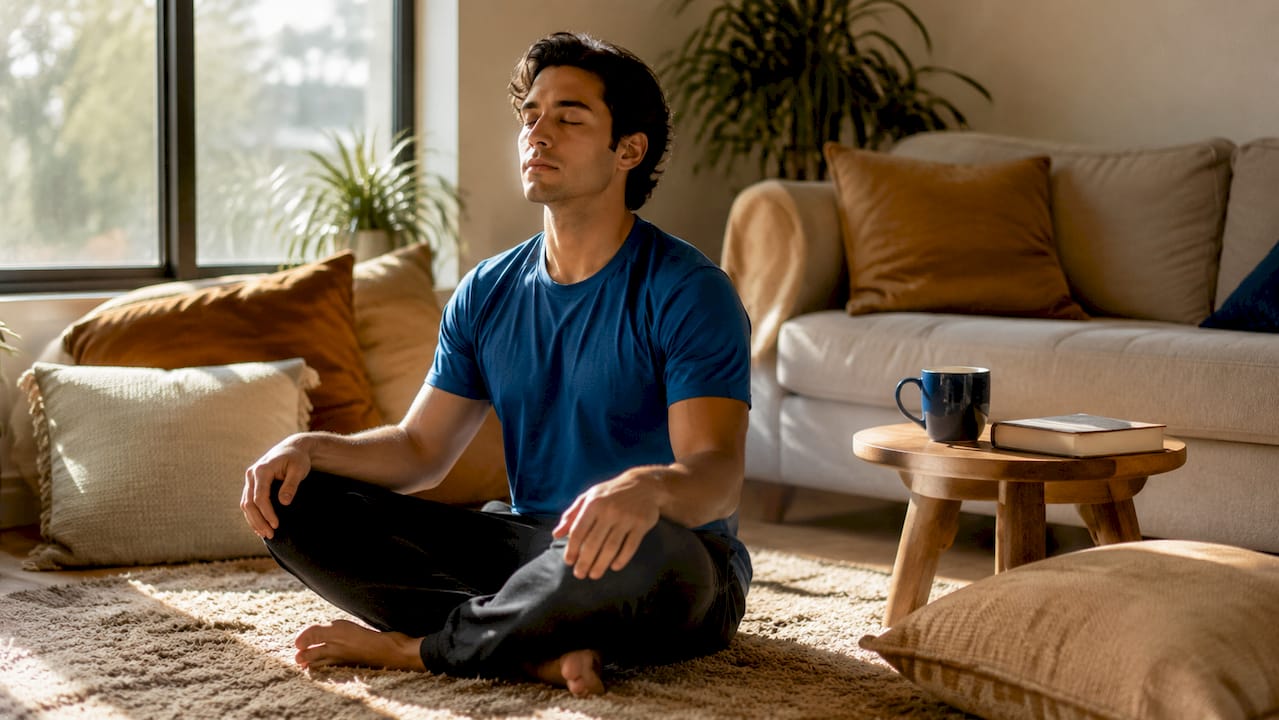
Posture and tool options compared
| Approach | What it does | Best for |
|---|---|---|
| Upright seated posture | Opens diaphragm, increases lung volume | Desk workers, long sitting periods |
| Nasal strips | Widens nasal passages physically | Congestion, mouth breathers |
| IMST device | Strengthens inspiratory muscles with resistance | Blood pressure, lung capacity |
| Lumbar support cushion | Maintains spinal curve to prevent slumping | Office chairs, car seats |
An inspiratory muscle strength training (IMST) device is worth knowing about. Using one for 30 breaths per day, six days a week, reduces systolic blood pressure by 9 points in six weeks. Devices cost under $20 and take less than five minutes daily. You can find IMST tools and similar recovery equipment designed to support respiratory muscle strength.
Pro Tip: Set a posture check alarm on your phone every 90 minutes. When it goes off, take one slow nasal breath and reset your spine. This single habit prevents the postural slumping that silently degrades your breathing all day.
Which breathing exercises are most effective for all-day improvement?
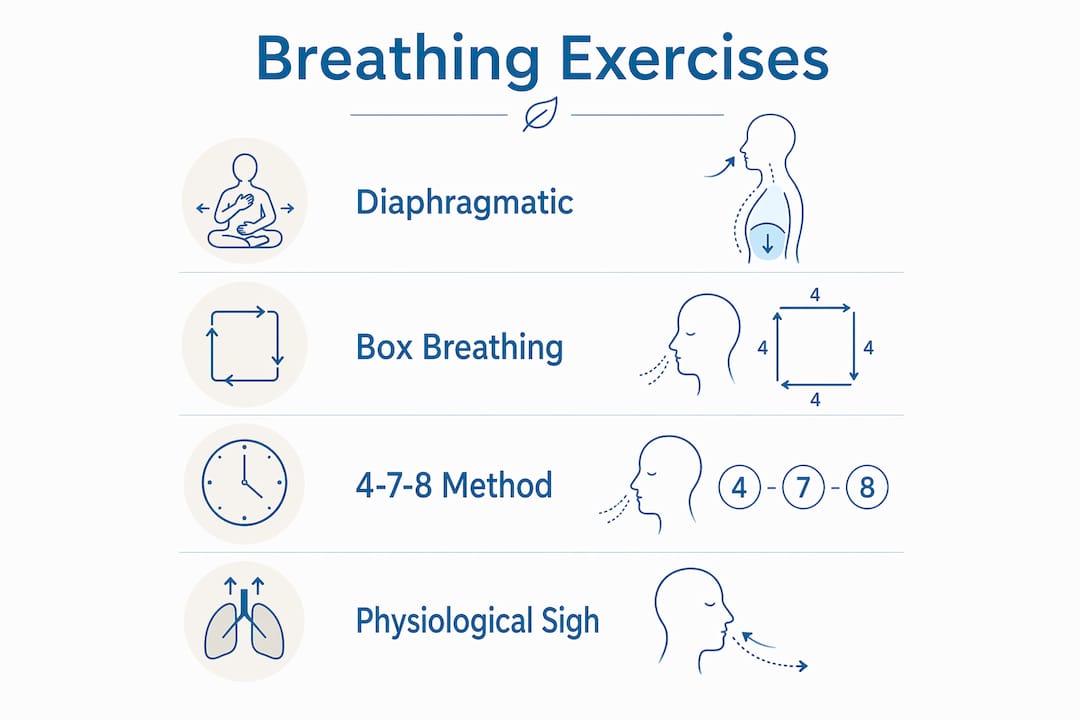
The most effective daily breathing exercises are diaphragmatic breathing, box breathing, 4-7-8 breathing, and physiological sighs. Each serves a different purpose, and rotating between them throughout the day covers stress relief, focus, and sleep preparation. Ideal breathing targets 6 to 10 breaths per minute to promote calm and better oxygenation. That is roughly half the rate most people breathe at rest.
Diaphragmatic breathing
This is the baseline technique every other method builds on. Place one hand on your chest and one on your belly. Inhale slowly through your nose for four counts, letting your belly rise while your chest stays relatively still. Exhale for six counts through pursed lips or your nose. Slow diaphragmatic breathing improves lymph flow, reduces stress hormones, and supports relaxation at any point in the day. Practice this for five minutes each morning to build the muscle memory.
Box breathing, 4-7-8, and physiological sighs
Box breathing is the technique used by Navy SEALs and emergency responders to stay calm under pressure. Inhale for four counts, hold for four, exhale for four, hold for four. Repeat four to six cycles. It works because the structured pause interrupts the stress response and forces your attention onto the breath.
The 4-7-8 method, developed by Dr. Andrew Weil, is better suited for winding down. Inhale for four counts, hold for seven, exhale for eight. The extended exhale activates the parasympathetic nervous system more aggressively than box breathing, making it ideal before sleep or after a difficult meeting.
Physiological sighs are the fastest reset available. Take a normal inhale through your nose, then sniff in a second short burst of air on top of it, then release a long, slow exhale. This double inhale re-inflates collapsed alveoli and rapidly offloads carbon dioxide. One or two cycles can visibly reduce acute stress within 30 seconds.
Breathing exercise quick reference
| Technique | Pattern | Primary benefit | Best time to use |
|---|---|---|---|
| Diaphragmatic breathing | 4-count inhale, 6-count exhale | Baseline efficiency, stress reduction | Morning, hourly resets |
| Box breathing | 4-4-4-4 | Focus, calm under pressure | Before meetings, mid-afternoon |
| 4-7-8 breathing | 4-7-8 | Deep relaxation, sleep prep | Evening, post-stress |
| Physiological sigh | Double inhale + long exhale | Rapid acute stress relief | Any moment of tension |
| Paced breathing | 5.5 breaths/min | Heart rate variability, parasympathetic activation | Dedicated practice sessions |
Paced breathing at 5.5 to 6 breaths per minute enhances heart rate variability and activates the parasympathetic nervous system. This is the sweet spot that researchers consistently identify for maximum cardiovascular and relaxation benefit. Apps like Insight Timer or Breathwrk include guided pacing tools if you want external support.
Pro Tip: Learn every technique during a calm moment, not during a stressful one. Muscle memory built when calm is what allows you to use these tools automatically when stress hits. Trying to learn box breathing mid-crisis is like reading a fire escape map while the building burns.
How to integrate breathing exercises into your daily routine
The most common reason people fail at daily breathwork is that they treat it as a separate activity requiring dedicated time. Embedding short sessions into existing habits removes that friction entirely. This approach is called habit stacking, and it is the most reliable method for building any new behavior.
Here is how to structure breathing micro-sessions across a full day:
- Morning reset (2 minutes): Practice diaphragmatic breathing while your coffee brews or before you check your phone. This sets your respiratory baseline for the day.
- Hourly desk reset (30 seconds): One physiological sigh or three slow nasal breaths every hour. Anchor this to standing up or refilling your water.
- Pre-meeting calm (1 minute): Four cycles of box breathing before any high-stakes conversation or presentation.
- Afternoon energy dip (2 minutes): Paced breathing at 5.5 breaths per minute. This is more effective than a second cup of coffee for restoring focus without the cortisol spike.
- Evening decompression (5 minutes): 4-7-8 breathing while lying down or sitting quietly. Pair this with your existing wind-down routine, such as after brushing your teeth.
Most people notice improved energy and focus within two to four weeks of consistent daily practice, with immediate benefits from hourly resets starting on day one. That two-week timeline matters because it means you will feel results before the habit is fully automatic, which reinforces the behavior.
Nasal-only breathing during work periods is worth prioritizing separately. Keeping your mouth closed while reading, typing, or in low-demand conversations trains your body to default to nasal breathing without conscious effort. Over time, this reduces the work your respiratory system does and keeps your nervous system calmer throughout the workday. You can also read about how these daytime habits carry over into better sleep breathing at night.
Pro Tip: Put a small sticky note on your monitor that says “nose.” It sounds trivial, but visual cues are one of the most effective behavior change triggers available. Within two weeks, you will stop needing the note.
What mistakes make it harder to breathe better throughout the day?
The most damaging mistake is trying to breathe more air, not better air. Forcing deep, large breaths actually increases carbon dioxide washout, which can cause lightheadedness and anxiety. Effective breathing focuses on lighter, quieter breaths and slow nasal exhalation rather than maximum air volume. If you feel dizzy during any exercise, slow down and reduce the depth of your inhale.
Common pitfalls to watch for:
- Practicing under acute stress: New techniques require calm to learn properly. Attempting box breathing for the first time during a panic moment usually makes anxiety worse, not better.
- Ignoring posture lapses: You can practice perfect breathing technique for five minutes and then spend the next hour slumped at your desk, undoing the benefit. Check your posture every time you change tasks.
- Mouth breathing during exercise: Nasal breathing during low to moderate intensity exercise trains your respiratory system more effectively than mouth breathing and reduces post-exercise recovery time.
- Skipping the exhale: Most people focus on the inhale. The exhale is where relaxation actually happens. A longer exhale than inhale activates the vagus nerve and drops heart rate.
For nasal congestion that makes nasal breathing difficult, a warm shower, saline rinse, or nasal strips can clear the airway quickly. For acute breathlessness, cooling the face with a fan or cold water directed at the nose area relieves breathlessness rapidly by stimulating the trigeminal nerve. This is a clinically recognized technique, not a folk remedy.
Breathing better is not about doing more. It is about doing less, more slowly, through your nose. The body already knows how to breathe efficiently. Your job is to stop interfering with it.
Key takeaways
Consistent nasal, diaphragmatic breathing practiced at 6 to 10 breaths per minute is the single most effective daily habit for improving relaxation, energy, and cardiovascular health.
| Point | Details |
|---|---|
| Posture first | Slumped posture cuts lung volume by 25 to 30%; sit tall before any technique works. |
| Use habit stacking | Anchor breathing micro-sessions to existing triggers like coffee, meetings, and brushing teeth. |
| Exhale longer than you inhale | Extended exhales activate the parasympathetic nervous system and lower heart rate. |
| Learn techniques when calm | Muscle memory built during calm moments is what makes techniques usable under stress. |
| IMST devices deliver results | Thirty breaths per day on a sub-$20 device reduces systolic blood pressure by 9 points in six weeks. |
Why I think most breathing advice misses the point
People come to breathwork looking for a technique. They want the one exercise that fixes stress, fixes sleep, fixes energy. What they actually need is a shift in default behavior, not a new skill to perform occasionally.
I spent the first few weeks of my own practice treating breathing exercises like a supplement. Five minutes of 4-7-8 at night, done. What changed everything was noticing how I breathed the other 23 hours and 55 minutes. Mouth open at my desk. Chest rising instead of belly. Holding my breath while reading difficult emails. That is where the real problem lived.
The techniques matter. But the bigger win is simply breathing through your nose, slowly, for more of your waking hours. That single shift, not a new exercise, is what produced the clearest changes in my energy and stress levels within the first two weeks. The formal exercises then became tools for specific moments rather than the whole strategy.
My advice for anyone starting out: do not try to add five new habits at once. Pick one anchor, the morning coffee breath, the pre-meeting box breathing, and do that one thing consistently for two weeks before adding another. The compounding effect is real, but only if you actually build the foundation first. Combining posture work with breathing practice accelerates results faster than either alone, and that combination is worth prioritizing from day one.
— Cadence
Support your breathing practice with the right tools
Good breathing habits are built with consistency, and the right tools make consistency easier. Evergreenbliss carries a curated selection of wellness and recovery products designed to support exactly this kind of daily practice. From nasal strips that keep your airways open during sleep and work, to acupressure mats and stress-relief tools that complement your evening decompression routine, the collection is built around the same principles covered in this article. Browse the personal care gadgets collection to find products that fit your routine, with free shipping and easy returns on every order.
FAQ
What is the best breathing technique for daily stress relief?
Box breathing (four counts in, four hold, four out, four hold) is the most practical technique for daily stress relief because it works in under two minutes and can be done anywhere. Physiological sighs offer an even faster reset when you need relief in under 30 seconds.
How many breaths per minute is considered healthy?
Healthy resting breathing falls between 6 and 10 breaths per minute for optimal calm and oxygenation. Most adults breathe at 12 to 18 breaths per minute, which is faster than ideal and associated with higher baseline stress.
Can breathing exercises actually lower blood pressure?
Yes. Practicing slow breathing for 15 minutes daily reduces systolic blood pressure by approximately 10 points in people with hypertension. IMST devices produce a similar 9-point reduction in just six weeks of daily use.
How long before I notice results from daily breathing practice?
Hourly breathing resets produce noticeable calm the same day you start. Sustained improvements in energy, nasal breathing ease, and focus typically appear within two to four weeks of consistent daily practice.
Is nasal breathing really better than mouth breathing?
Nasal breathing filters and humidifies air, produces nitric oxide for better oxygen delivery, and keeps the nervous system calmer than mouth breathing. Mouth breathing bypasses all of these benefits and is linked to higher resting stress levels and poorer sleep quality.