Your sleep position is the single most controllable factor affecting how rested, pain-free, and healthy you feel each morning. Most people pick a position in childhood and never reconsider it, even as their body changes. This choose right sleep position guide covers the three main sleep postures, how your health conditions should shape your choice, and the practical pillow adjustments that make any position sustainable. No universal healthiest sleep position exists; the best one for you depends entirely on your individual health needs and how well your body is supported.
What are the most common sleep positions and their benefits?
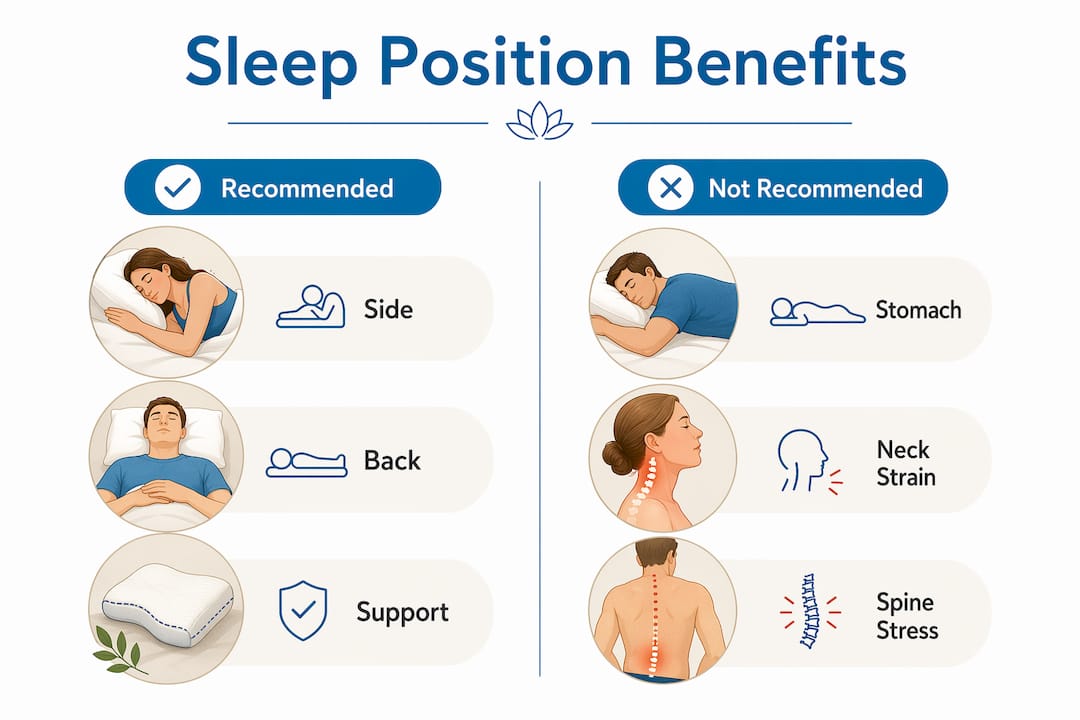
Sleep posture, the term clinicians use for how your body is aligned during sleep, falls into three broad categories: side, back, and stomach. Each has real advantages and real trade-offs. Understanding them is the first step in any honest guide to sleep positions.
Side sleeping
Side sleeping is the most widely practiced posture among adults. It reduces snoring, eases sleep apnea symptoms, and keeps the airway open by preventing the tongue from falling back. Left-side sleeping specifically reduces acid reflux and is the recommended posture during pregnancy. The downside is shoulder and hip pressure, which builds up over a full night without proper support.

Back sleeping
Back sleeping distributes body weight evenly and supports natural spinal alignment when the mattress is firm enough. It can relieve neck and hip pain because no single joint bears concentrated pressure. The significant drawback is that gravity pulls soft tissue toward the airway, which worsens snoring and can trigger obstructive sleep apnea episodes. People with breathing concerns should treat back sleeping as a last resort, not a default.
Stomach sleeping
Stomach sleeping is the least recommended posture by sleep specialists. It forces the neck into a sharp rotation and flattens the lumbar curve, placing strain on the lower back and cervical spine. That said, some people find it easier to fall asleep on their stomach, and a thin pillow under the pelvis can reduce lumbar stress. Transitioning away from stomach sleeping takes time, but the long-term payoff for spinal health is significant.
| Position | Main benefit | Main drawback |
|---|---|---|
| Side (left) | Reduces snoring, aids digestion | Shoulder and hip pressure |
| Side (right) | Comfortable, widely tolerated | May worsen acid reflux |
| Back | Even weight distribution | Worsens snoring and apnea |
| Stomach | Easy sleep onset for some | Strains neck and lower back |
Pro Tip: If you wake up with a stiff neck or numb arm, your position is cutting off circulation or compressing a nerve. That is your body telling you to adjust, not to push through.
Most people shift positions naturally during the night, which is normal. The goal is not to stay locked in one posture but to start the night in the one that serves your health best.
How do you select the right position for your health needs?
The best sleep position balances easy breathing with physical comfort, and your health history is the clearest filter for making that call. Work through these considerations in order.
-
Check your breathing first. If you snore regularly or have been diagnosed with obstructive sleep apnea, back sleeping makes symptoms worse. Side sleeping keeps the airway open and is the first-line posture recommendation from sleep specialists. A snoring relief aid can complement positional changes when snoring persists.
-
Address acid reflux and GERD. Left-side sleeping is recommended for GERD because it positions the stomach below the esophagus, reducing the chance of acid traveling upward. Right-side sleeping does the opposite and can worsen nighttime reflux significantly.
-
Factor in pregnancy. Left-side sleeping improves blood flow to the placenta and reduces pressure on the inferior vena cava, the large vein that returns blood to the heart. Obstetric guidelines consistently favor the left side from the second trimester onward.
-
Manage back and joint pain. Side sleeping with a pillow between the knees reduces hip rotation and takes pressure off the lumbar spine. Back sleeping with a pillow under the knees flattens the lower back against the mattress and relieves lumbar strain. Both approaches work; the right one depends on where your pain originates.
-
Consider shoulder injuries. If one shoulder is injured or recovering, avoid sleeping on that side. Back sleeping or sleeping on the unaffected side with good arm support is the safer choice.
Pro Tip: Spend one week sleeping in your target position and note your morning pain level on a scale of 1–10. If the number drops, you have found your direction. If it rises, adjust the support rather than abandoning the position.
For a deeper look at sleeping with chronic pain, the connection between posture and pain relief is more specific than most people realize.
How do pillows and supports improve your sleep posture?
Proper pillow placement is a functional necessity, not a comfort luxury. The right support keeps your spine in a neutral curve through the night, which means less morning stiffness and fewer pain flare-ups.
- Side sleepers: Place a firm pillow between your knees. This prevents the top leg from pulling the pelvis forward and rotating the lumbar spine out of alignment. Your head pillow should be thick enough to fill the gap between your ear and the mattress, keeping your neck level.
- Back sleepers: Slide a pillow under your knees. This slight bend in the knee reduces the pull on your lower back and maintains the natural lumbar curve. Your head pillow should be medium thickness, not so high that your chin drops toward your chest.
- Stomach sleepers: Use a thin pillow under your pelvis, not under your head. This reduces the arch in your lower back. Removing the head pillow entirely or using a very flat one reduces neck rotation strain.
- Elevated sleeping: Elevating the head of the bed between 25 and 40 degrees reduces airway collapse and snoring. Wedge pillows and adjustable bed frames both achieve this. Sleep specialists recommend this approach when side sleeping alone does not resolve breathing issues.
Small pillow adjustments can fundamentally improve spine and joint support, making a new position sustainable within one to two weeks. The body adapts quickly when the support is right.
Pro Tip: Roll a bath towel and place it inside your pillowcase along the bottom edge. This creates a custom cervical roll that supports the neck curve without buying a specialty pillow.
For more on designing your sleep environment to complement your posture work, the bedroom setup matters as much as the position itself.
What sleep habits reinforce your chosen sleep position?
Sleep hygiene, the set of behavioral and environmental practices that support consistent, quality sleep, directly affects how well your chosen posture works. A good position in a poor environment still produces poor sleep.
- Control bedroom temperature. Keep your bedroom between 59°F and 66°F. A cool room lowers core body temperature, which signals the brain that it is time to sleep. Overheating causes restlessness and frequent position changes that disrupt your alignment work.
- Dim lights before bed. Low light encourages melatonin release and prepares the body for rest. Bright overhead lights and screen exposure within 60 minutes of bedtime suppress melatonin and delay sleep onset.
- Limit bedroom activities. Reserve the bedroom for sleep and intimacy only. Working, watching TV, or scrolling in bed trains the brain to associate the space with wakefulness, making it harder to settle into your target position and stay there.
- Build a wind-down routine. A consistent 20-to-30-minute pre-sleep routine, whether that is light stretching, reading, or a warm shower, reduces cortisol and makes the transition to sleep faster. Faster sleep onset means less time tossing through positions before settling.
More than 14% of American adults report trouble falling asleep, which makes these environmental controls more than optional extras. They are the foundation that makes positional changes stick. For a full breakdown of sleep hygiene fundamentals, the habits compound quickly when applied consistently.
Key Takeaways
Your sleep position is not fixed. Matching it to your health needs and supporting it with the right tools produces measurable improvements in pain, breathing, and sleep quality.
| Point | Details |
|---|---|
| No single best position | The right posture depends on your health conditions, not a universal rule. |
| Left side for reflux and pregnancy | Left-side sleeping reduces acid reflux and improves circulation during pregnancy. |
| Pillow placement is functional | A pillow between the knees or under the knees maintains spinal alignment through the night. |
| Elevate for breathing issues | Raising the head 25–40 degrees reduces snoring and airway collapse when side sleeping is not enough. |
| Sleep hygiene reinforces posture | A cool room (59–66°F) and a dim pre-sleep routine make any position more effective. |
What I’ve learned from years of watching people get sleep wrong
Most sleep advice focuses on duration: get eight hours, go to bed earlier, wake up at the same time. Position gets treated as an afterthought. That is a mistake I see play out constantly.
The people who genuinely improve their sleep quality are the ones who treat their position as adjustable, not fixed. Sleep positions evolve with age and health changes. A position that worked at 30 may be the source of your shoulder pain at 50. Muscle tone shifts. Joint health changes. The position that felt natural for decades may now be working against you.
What I tell people is this: your body already knows the answer. If you wake up with pain, numbness, or a dry throat, your position is the first variable to examine, not your mattress or your stress levels. Those matter, but position is the one you can change tonight.
The other thing most guides skip is the transition period. Changing a sleep position feels unnatural for one to two weeks. People give up too early and conclude the new position “doesn’t work for them.” What actually happened is they did not give their body enough time to adapt. Stick with it, adjust your pillow support, and track your morning pain score. The data will tell you whether to continue or recalibrate.
Breathing ease and minimal pain are the only two metrics that matter. Ignore the idealized diagrams and listen to what your body reports each morning.
— Cadence
Sleep better with Evergreenbliss

Evergreenbliss carries a curated collection of sleep and relaxation aids built for people who take their rest seriously. Whether you need positional support tools, breathing aids, or stress-relief products to wind down before bed, the collection covers the practical side of better sleep. Every product ships free, with easy returns if it does not fit your routine. Improving your sleep posture is one decision. Having the right tools to support it is another. Evergreenbliss makes the second part straightforward.
FAQ
What is the best sleeping position for back pain?
Side sleeping with a pillow between the knees is the most effective posture for lower back pain. It reduces hip rotation and keeps the lumbar spine in a neutral position through the night.
Is it bad to sleep on your stomach?
Stomach sleeping strains the neck and flattens the lumbar curve, making it the least recommended posture by sleep specialists. A thin pillow under the pelvis reduces the strain if changing positions is difficult.
How does sleep position affect snoring?
Back sleeping worsens snoring because gravity pulls soft tissue into the airway. Side sleeping keeps the airway open and is the first-line posture recommendation for reducing snoring and sleep apnea symptoms.
Can my sleep position change as I get older?
Yes. Muscle tone and joint health shift with age, meaning the position that felt comfortable at one stage of life may cause pain or breathing issues later. Periodic reassessment of your sleep posture is a practical habit, not an overreaction.
How long does it take to adjust to a new sleep position?
Most people adapt to a new sleep position within one to two weeks when they use proper pillow support. Discomfort in the first few nights is normal and not a sign that the position is wrong.