Sensory relaxation is defined as the intentional reduction or regulation of external sensory input to shift the nervous system into a calmer, restorative state. Unlike passive rest, it is a deliberate practice that targets what your brain receives through sight, sound, touch, smell, and taste. Techniques range from Restricted Environmental Stimulation Therapy (REST) and flotation tanks to sensory modulation rooms and multisensory mindfulness. Each method works by lowering the volume of incoming stimuli so your nervous system stops scanning for threats and starts recovering. The benefits of sensory relaxation include reduced anxiety, better sleep, and measurable pain relief.
What is sensory relaxation and how does it work?
Sensory relaxation is the practice of deliberately managing what your senses take in to produce a physiological calming response. The standard clinical term for the most studied form is Restricted Environmental Stimulation Therapy, or REST. REST works by minimizing sensory prediction errors, which are the constant low-level threat signals your nervous system generates when it processes unpredictable or overwhelming input.
Relaxation is not something you force. The brain enters a relaxed state when it perceives safety and fewer incoming threats, not when you try harder to calm down. Sensory relaxation creates that perception of safety by removing or controlling the stimuli that keep your nervous system on alert. That is why it often works faster than mental techniques like counting breaths or repeating affirmations.
What are sensory experiences in this context? They are any signals your brain processes from the outside world. When those signals are reduced, consistent, or gentle, your autonomic nervous system shifts from sympathetic activation (fight or flight) toward parasympathetic dominance (rest and digest). That shift is the core mechanism behind every sensory relaxation practice.

What are the main sensory relaxation techniques?
Sensory relaxation techniques fall into three broad categories: full sensory reduction, sensory modulation, and multisensory mindfulness. Each targets the nervous system differently, and each suits different goals.
-
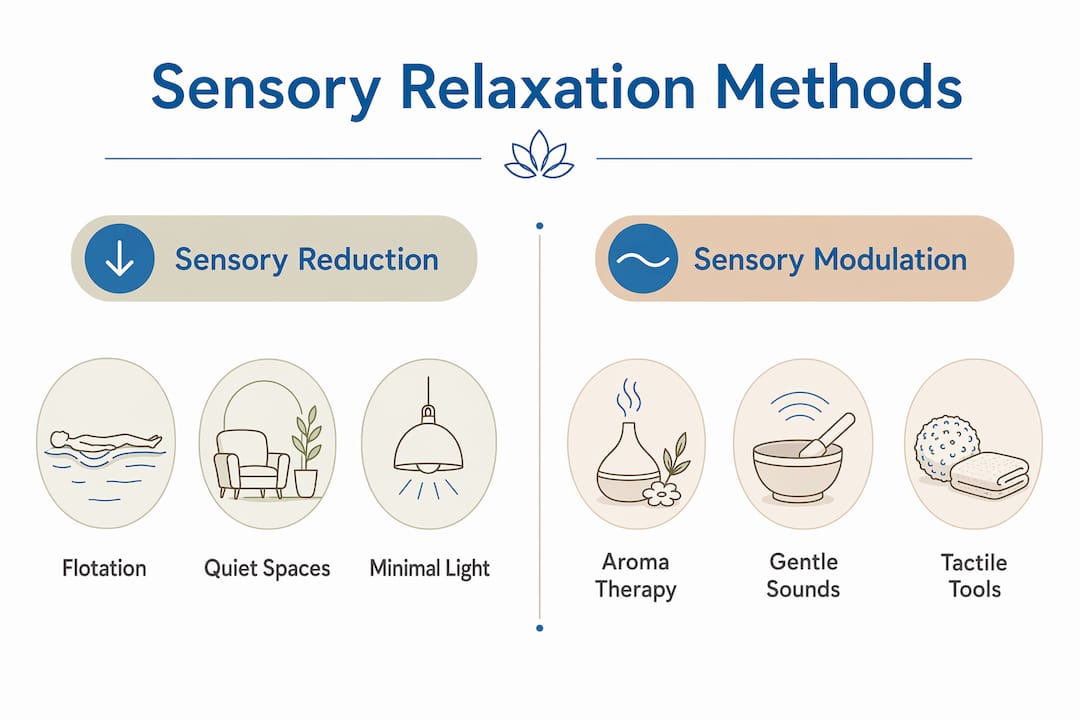
Flotation-REST: You float in a soundproof, lightproof chamber filled with body-temperature water saturated with Epsom salt. The buoyancy removes gravitational pressure. The silence and darkness remove visual and auditory input. Flotation-REST immerses individuals in the most complete sensory reduction available outside a laboratory.
-
Sensory modulation rooms: These are rooms equipped with adjustable lighting (often fiber optic or LED color therapy), gentle sounds, aromatherapy diffusers, and weighted blankets or tactile panels. Rather than eliminating stimuli, they replace chaotic input with calm, predictable input.
-
Multisensory mindfulness: This practice engages all five senses intentionally for 5–10 minutes. You might hold a warm cup, notice three sounds, identify one scent, and observe colors in your environment. Intentional sensory engagement strengthens present-moment awareness and supports emotional regulation.
-
VR-based sensory interventions: A 2025 Nature study found that brief VR mindfulness sessions produced significant reductions in anxiety and depression symptoms, with effects persisting for one week. This shows that technology can deliver sensory relaxation experiences without access to a flotation center.
Pro Tip: Start with multisensory mindfulness if you are new to sensory relaxation practices. It requires no equipment, takes under ten minutes, and gives you a clear baseline for how your nervous system responds before you invest in flotation sessions or sensory room visits.
What are the benefits of sensory relaxation for stress, pain, and sleep?
The clinical evidence for sensory relaxation is stronger than most people realize. A 2025 systematic review of 63 studies covering 1,838 participants found that flotation-REST reduces anxiety, stress, and pain and improves mental well-being. That is a large evidence base for a therapy that many still consider niche.
The Cleveland Clinic reports that float therapy benefits can last up to six months after a session, describing the effect as a full mind-body reset. That duration makes it one of the most cost-effective stress interventions available.
Pain relief is one of the most consistent findings. Flotation-REST reduces muscle tension by removing gravitational load and eliminating the sensory triggers that amplify pain perception. For people managing chronic tension or stress-related pain, this is a meaningful clinical outcome, not just a wellness trend. Pain management strategies increasingly include sensory-based approaches for exactly this reason.
Sleep improvements are also reported, though the evidence is less uniform than anxiety reduction. The likely mechanism is that sensory relaxation lowers cortisol and increases parasympathetic tone before bed, making it easier to fall and stay asleep. Sensory modulation rooms show a related effect: a 2025 pilot randomized controlled trial found that sensory rooms raise vagal tone, a measurable marker of parasympathetic nervous system activity. Higher vagal tone correlates with better emotional regulation and lower resting heart rate.
The key takeaway from the research is that sensory relaxation works on the body first. Mood and subjective calm often follow the physiological shift, not the other way around.
Sensory reduction vs. sensory modulation: which should you choose?
These two approaches share the same goal but use opposite strategies. Understanding the difference helps you pick the right tool for your situation.
| Feature | Sensory Reduction (REST/Flotation) | Sensory Modulation (Sensory Rooms) |
|---|---|---|
| Core method | Eliminates nearly all external stimuli | Replaces chaotic stimuli with calm, controlled input |
| Best for | Deep relaxation, anxiety reset, chronic stress | Everyday stress, sensory sensitivity, workplace use |
| Physiological effect | Rapid drop in nervous system alertness | Gradual vagal tone increase |
| Mood change timeline | Often immediate subjective calm | Physiological calm precedes mood shift |
| Accessibility | Requires flotation center or tank | Can be created at home with basic tools |
| Session length | Typically 60–90 minutes | 15–45 minutes |
Sensory reduction is the stronger intervention for acute stress or deep nervous system reset. Choosing between sensory reduction and modulation depends on your desired outcome: flotation suits a full reset, while sensory rooms suit daily maintenance. One important nuance from the 2025 pilot RCT is that physiological calming in sensory rooms appears before subjective mood changes. You may feel physically relaxed before you feel emotionally better. That is normal and expected.
Sensory relaxation techniques also lack a single standardized protocol. The evidence is strongest for flotation-REST, but individual responses vary. A person with claustrophobia may find flotation counterproductive. Someone with sensory processing sensitivity may find a modulation room more tolerable than total silence.
Pro Tip: When building a home sensory modulation space, prioritize stimulus predictability over intensity. Consistent, low-threat sounds like a white noise machine or a fan work better than varied playlists. Predictable input signals safety to your nervous system faster than pleasant but unpredictable input.
How to achieve sensory relaxation in your daily routine
You do not need a flotation tank or a clinical sensory room to practice sensory relaxation at home. The most effective home sensory relaxation methods focus on controlling sensory quality rather than adding more stimulation.
Here is a practical starting framework:
-
Set a sensory window. Choose a 10–20 minute block each day with no screens, no notifications, and no background noise you did not choose. Consistency matters more than duration.
-
Use scent as an anchor. Lavender and chamomile essential oils activate the olfactory system in ways that directly influence the limbic system. Diffuse one scent consistently so your brain begins to associate it with safety and calm.
-
Control your lighting. Bright overhead lights keep your nervous system alert. Dim, warm-toned lighting (2700K or lower) signals the brain that the day is winding down. A simple lamp swap costs under $20 and produces a measurable shift.
-
Add gentle tactile pressure. Weighted blankets, acupressure mats, or a firm self-massage tool provide the kind of consistent touch pressure that activates the parasympathetic nervous system. This is the tactile equivalent of a sensory modulation room.
-
Try a 5-sense grounding exercise. Sit quietly and name five things you see, four you can touch, three you hear, two you smell, and one you taste. Multisensory mindfulness practices like this take under ten minutes and measurably reduce acute stress.
-
Book a flotation session quarterly. If a flotation center is accessible to you, one session every three months provides a deep nervous system reset that daily practices cannot fully replicate.
The goal is not perfection. It is building a sensory environment your nervous system recognizes as safe, so relaxation becomes the default rather than the exception.
Key takeaways
Sensory relaxation works because it removes or controls the stimuli that keep your nervous system in a state of alert, allowing the body to shift into genuine physiological rest.
| Point | Details |
|---|---|
| Core definition | Sensory relaxation intentionally reduces or regulates sensory input to calm the nervous system. |
| Top techniques | REST, flotation-REST, sensory modulation rooms, and multisensory mindfulness each target the nervous system differently. |
| Proven benefits | A 2025 review of 63 studies confirms reductions in anxiety, stress, and pain from flotation-REST. |
| Reduction vs. modulation | Flotation suits deep resets; sensory rooms suit daily maintenance and are easier to replicate at home. |
| Daily practice | Controlling sensory quality through consistent, predictable stimuli is more effective than adding more input. |
Why sensory relaxation changed how i think about stress
I used to believe stress relief was mostly a mental discipline. Meditate harder. Think more positively. Reframe the situation. What I found, after spending years reading the research and experimenting personally, is that the nervous system does not respond well to being told what to do. It responds to evidence.
What shifted my thinking was learning that relaxation is a physiological state the brain enters when it perceives safety, not a mindset you achieve through willpower. Once I understood that, sensory relaxation stopped feeling like a luxury and started feeling like a tool with a clear mechanism. Removing chaotic sensory input gives the brain the evidence it needs to downshift.
The detail most people miss is stimulus predictability. A quiet room with one consistent sound is more calming than a silent room with occasional unpredictable noises. Your nervous system is always scanning. Predictable input tells it there is nothing to scan for.
Sensory relaxation also pairs well with other wellness practices. A short sensory grounding exercise before meditation deepens the session. A warm bath with consistent scent and dim lighting before bed prepares the nervous system for sleep better than any supplement alone. These practices stack.
The accessibility of sensory relaxation is also underrated. You do not need a $100 flotation session to start. A lamp, a diffuser, and ten minutes of intentional quiet are enough to begin shifting your baseline. Start there, stay consistent, and the results will follow.
— Cadence
Bring sensory relaxation home with Evergreenbliss
Evergreenbliss curates wellness tools specifically designed to support the kind of sensory environment your nervous system needs to recover and reset.
From sleep and relaxation aids like weighted tools and sleep supplements to massage devices that deliver consistent tactile pressure, the Evergreenbliss catalog covers the core pillars of sensory modulation at home. The deep sleep neck massager is a standout for anyone using tactile pressure as part of a nightly wind-down routine. For a broader look at tools that support daily stress relief, browse the full mental wellness collection. Every product ships free, with easy returns, so experimenting with your sensory setup carries no risk.
FAQ
What is sensory relaxation in simple terms?
Sensory relaxation is the practice of reducing or controlling what your senses take in so your nervous system can shift from alert to calm. It includes techniques like flotation tanks, sensory rooms, and mindfulness exercises.
How long does it take to feel the effects of sensory relaxation?
Effects vary by technique. Flotation-REST often produces calm within 20–30 minutes of a session, and the Cleveland Clinic notes benefits can last up to six months. Sensory modulation rooms show physiological changes before subjective mood shifts.
Can i practice sensory relaxation at home without special equipment?
Yes. Dim lighting, a consistent scent like lavender, a white noise machine, and a 5-sense grounding exercise are enough to begin. These low-cost adjustments target the same nervous system mechanisms as clinical sensory rooms.
Is sensory relaxation the same as sensory deprivation?
Sensory deprivation is one form of sensory relaxation, specifically the complete removal of stimuli as in flotation-REST. Sensory relaxation also includes sensory modulation, which uses gentle, controlled stimuli rather than eliminating them entirely.
Who benefits most from sensory relaxation practices?
People managing chronic stress, anxiety, pain, or poor sleep show the strongest documented benefits. A 2025 systematic review of 1,838 participants confirmed positive outcomes across these areas, particularly with flotation-REST.