You should generally avoid mixing alcohol with any sleep supplement or prescription sleep medication because the combination can cause additive sedation and, in rare but serious cases, life-threatening respiratory depression. If someone has trouble breathing, can’t be woken up, or seems severely confused after combining alcohol and a sleep aid, call 911 immediately. Don’t drive, don’t take more of anything sedating, and don’t wait it out at home.
TL;DR:
- Drinking alcohol regularly or heavily increases the risk of severe respiratory depression when combined with sedative sleep aids and prescription medications.
- Melatonin can be unpredictably metabolized in the presence of alcohol, especially with time-release formulations, raising overdose and interaction concerns.
- Combining alcohol with prescription sleep drugs like benzodiazepines or Z-drugs dramatically elevates the danger of slowed breathing, unconsciousness, and overdose death.
- The risk of adverse effects from mixing alcohol with sleep aids worsens with age, female sex, liver conditions, or the presence of sleep apnea, requiring tailored caution.
- Using non-sedating tools like white noise, sleep masks, or respiratory supports offers safer alternatives for better sleep after drinking without increasing sedative risk.
Table of Contents
- Why alcohol and sleep supplements are a dangerous mix
- Is it safe to take melatonin with alcohol?
- Can you take prescription sleep medication after drinking?
- How long after drinking is it safe to take a sleep aid?
- Which supplements are riskiest for your liver when you drink?
- Does alcohol make sleep apnea worse when combined with sedatives?
- When should you call for emergency help?
- Does drinking regularly change how risky this combination is?
- What happens if you keep mixing alcohol with sleep supplements long-term?
- Do age, sex, and health status change your risk?
- How does Evergreenbliss approach sleep safety without relying on sedatives?
- Non-sedating ways to support your sleep tonight
- Sources
Why alcohol and sleep supplements are a dangerous mix
The core problem is additive CNS depression. Alcohol and most sleep aids, whether that’s melatonin, a prescription hypnotic, or an over-the-counter antihistamine, all slow down activity in the central nervous system. Taken separately, each one causes a manageable degree of sedation. Taken together, the effects don’t just add up in a simple way. They compound, sometimes unpredictably, which is why Johns Hopkins Well Being and other medical authorities specifically warn against the combination.
Here’s the part that surprises a lot of people: alcohol doesn’t actually improve sleep, even though it feels like it knocks you out fast. It fragments sleep architecture. You fall asleep quickly, but alcohol suppresses REM sleep in the first half of the night and then causes rebound wakefulness later, as your body metabolizes it and blood alcohol drops. That’s why people who drink before bed often wake up at 3 a.m. and can’t get back to sleep. Adding a sleep supplement on top doesn’t fix that broken architecture. It just masks the sensation of being awake while the underlying disruption continues.
The CDC’s data on alcohol use backs this up: alcohol independently damages sleep quality, separate from anything you take alongside it. So you’re not just risking an interaction, you’re stacking a sedative on top of a substance that’s already sabotaging your sleep cycle.
Risks generally fall into two tiers:
- Mild to moderate: excessive drowsiness, grogginess the next morning, impaired coordination, higher fall risk, and dangerously impaired judgment if you get behind the wheel.
- Severe: slowed or shallow breathing, extreme sedation to the point of being unresponsive, and in the worst cases, respiratory depression that can be fatal, particularly when alcohol is combined with prescription sedatives.
An NCBI review of dietary supplements and sleep notes that evidence for many popular sleep ingredients is inconsistent, and product purity varies widely from one brand to the next. That inconsistency matters more once alcohol is in the picture, because you can’t always predict how much sedative effect you’re actually getting from a supplement whose dosing may not be tightly controlled.
Is it safe to take melatonin with alcohol?
No, and the reasoning is more specific than “both make you sleepy.” The Sleep Foundation advises against combining melatonin and alcohol because alcohol can interfere with your body’s natural melatonin production, on top of amplifying the drowsiness from a supplement dose. Drugs classifies alcohol and melatonin as a moderate interaction, recommending you avoid or limit alcohol and watch for excessive CNS depression when the two are used together.
Time-release melatonin formulations add another wrinkle. Alcohol changes how your liver metabolizes compounds, and that can make a slow-release supplement release unpredictably, sometimes hitting you with a bigger dose than intended later in the night.
A few practical points worth keeping in mind:
- If you’re going to use melatonin at all on a night you’ve had a drink, start with the lowest available dose, not your usual amount.
- Product quality varies a lot across the melatonin market, so don’t assume every bottle delivers what the label says.
- If you have obstructive sleep apnea, skip the combination entirely. Both alcohol and melatonin can relax airway muscles further, worsening breathing pauses during sleep.
- People with liver sensitivity or existing liver conditions should be especially cautious, since both alcohol and melatonin metabolism run through the liver.
Our guide on how sleep supplements actually work goes deeper into mechanisms and safe dosing if you want the full picture beyond melatonin.
Can you take prescription sleep medication after drinking?
This is where the risk profile jumps sharply. Benzodiazepines (like temazepam or lorazepam), Z-drugs (zolpidem, eszopiclone), sedating antidepressants sometimes prescribed off-label for sleep (like trazodone), and even sedating antihistamines (diphenhydramine, doxylamine) all carry a much higher danger when combined with alcohol than melatonin does.
These medications are more potent CNS depressants by design. Alcohol doesn’t just add to that effect, it can push it into a range where breathing slows dangerously, blood pressure drops, and a person becomes difficult or impossible to wake. Overdose deaths involving sedative-alcohol combinations are a well-documented risk in emergency medicine, which is why prescribers routinely ask patients about drinking habits before writing a sleep prescription.
The safety guidance here is not nuanced: never combine prescription sleep medication with alcohol. If you’re finding it hard to avoid drinking while on one of these medications, that’s a conversation to have with your prescriber, not something to manage on your own. Stopping a prescription sedative abruptly can also carry its own risks (particularly with benzodiazepines), so any change in use should happen under medical supervision rather than as a sudden decision after a bad night.
A few things worth doing regardless of which medication you’re on:
- Tell every prescriber and pharmacist about your alcohol habits, even if it feels awkward.
- Keep an updated list of every medication and supplement you take, including over-the-counter sleep aids.
- Ask directly whether a medication interacts with alcohol before you fill the prescription, not after.
Pro Tip: Keep your medication list on your phone, not just in your head. In an emergency, that list is often the fastest way for a doctor to figure out what’s interacting with what.
How long after drinking is it safe to take a sleep aid?
There’s no single safe number of hours that applies to everyone, and any article that gives you one flat rule is oversimplifying. Alcohol amount, body size, liver function, and whether your supplement is immediate-release or time-release all shift the equation. Johns Hopkins Medicine suggests avoiding alcohol for at least three hours before bed as a general guideline, but that’s a floor, not a guarantee of safety if you’ve had several drinks.
A more reliable approach:
- Wait until you feel fully sober, not just “less drunk,” before taking anything sedating.
- After moderate drinking, that usually means several hours at minimum; after heavy drinking, plan on considerably longer.
- Check for dizziness, slurred thinking, or unsteady balance. If any of those are present, don’t take a sleep aid yet.
- When in doubt, skip the supplement for that night entirely rather than guessing at timing.
Which supplements are riskiest for your liver when you drink?
Sedation isn’t the only concern. Some sleep-adjacent supplements stress the liver directly, and alcohol adds to that load through a completely separate pathway. Kava, often marketed for anxiety and sleep, has documented case reports of liver injury, and pairing it with regular drinking compounds the risk. High-dose green tea extract, sometimes included in “recovery” or metabolism supplements that overlap with sleep stacks, has similarly been linked to liver stress at concentrated doses. Niacin, used in some sleep and relaxation blends, can also strain the liver at higher doses.
None of these need to be sedating to be a problem. The liver has to process both the alcohol and the supplement, and running both loads simultaneously, especially on a regular basis, is where the real risk builds.
- Check for a third-party Certificate of Analysis before buying, which confirms what’s actually in the bottle.
- Favor reputable manufacturers with transparent sourcing over cheap unverified brands.
- Skip high-dose formulations of any of the above if you drink regularly.
Pro Tip: If you drink several times a week and take supplements regularly, ask your doctor about periodic liver function testing. It’s a simple blood test and it catches problems long before symptoms show up. You can also learn how to verify a supplement’s Certificate of Analysis before you buy.
Does alcohol make sleep apnea worse when combined with sedatives?
Yes, and this is one of the more underappreciated risks in this whole topic. Alcohol and sedating supplements both relax the muscles that keep your airway open. In someone with untreated obstructive sleep apnea, that relaxation can turn manageable breathing pauses into longer, more dangerous ones. In severe cases, it contributes to nocturnal hypoventilation, where breathing becomes too shallow to clear carbon dioxide properly.
People who should avoid this combination without exception:
- Anyone diagnosed with sleep apnea, treated or untreated.
- People taking opioid medications, which independently suppress breathing.
- Older adults, whose airway muscle tone and drug metabolism are both reduced.
- People with obesity, a known risk factor for airway collapse during sleep.
If you fall into any of these groups and struggle with sleep, talk to a sleep clinician about non-sedating options before reaching for a supplement.
When should you call for emergency help?
Some situations don’t leave room for a wait-and-see approach. Dial 911 immediately if someone shows difficulty breathing, can’t be woken up, is severely confused, or has slow or irregular breathing after combining alcohol with a sleep aid.
- Call 911 right away. Don’t wait to see if symptoms improve on their own.
- If the person is breathing but unresponsive, place them in the recovery position on their side to protect their airway.
- Call Poison Control at 1-800-222-1222 if you’re unsure whether the combination is dangerous but the person is still conscious and stable.
For non-urgent follow-up: stop combining alcohol and sleep aids going forward, tell your prescriber what happened, and ask about liver testing if this has been a regular pattern. A referral to a sleep medicine specialist is worth pursuing if insomnia keeps pushing you toward alcohol or supplements as a fix.
Does drinking regularly change how risky this combination is?
Tolerance complicates this more than most people expect. Someone who drinks occasionally and takes melatonin once in a while faces a different risk profile than someone who drinks nightly and relies on a sleep supplement as part of the routine. That doesn’t mean regular drinkers are somehow protected, though. It’s closer to the opposite.
Frequent alcohol use changes liver enzyme activity over time, which affects how quickly your body clears both alcohol and many supplements or medications. In some cases, that means a regular drinker metabolizes a sedative faster, but it also means their liver is under more sustained stress from processing both substances repeatedly. Tolerance to alcohol’s sedative effects can develop too, which sometimes leads people to drink more to get the same feeling, increasing the total sedative load in their system before a supplement is even added.
Frequency also shapes patterns of use. Someone who drinks most nights and takes a sleep aid most nights isn’t dealing with an occasional interaction. They’re running a chronic combination, and the additive impairment from alcohol and sedating supplements can behave in a nonlinear way, meaning even small amounts of alcohol paired with a sedative can produce disproportionate impairment compared to either alone. This effect tends to be more pronounced in older adults or anyone on multiple CNS-active substances.
What happens if you keep mixing alcohol with sleep supplements long-term?
A single instance of combining alcohol and a sleep aid carries acute risk. A pattern of doing it regularly builds a different kind of problem, one that develops quietly over months.
Chronic combined use tends to erode natural sleep architecture further. Alcohol already fragments REM sleep and causes rebound wakefulness; layering supplements on top night after night doesn’t restore that pattern, it just changes how you experience the disruption. Many people end up needing higher doses of whatever they’re taking to feel the same effect, a tolerance pattern that applies to melatonin, sedating antihistamines, and prescription hypnotics alike.
There’s also a liver consideration for repeated use, particularly with supplements that carry their own hepatic burden. Processing alcohol and a sedative supplement night after night asks more of the liver than either substance alone, and that cumulative load is part of why clinicians want visibility into both alcohol habits and supplement use before prescribing anything for sleep. Beyond the physical toll, there’s a behavioral trap worth naming directly: reaching for alcohol and a supplement as a nightly ritual to fall asleep often masks an underlying issue, whether that’s untreated anxiety, sleep apnea, or a sleep schedule that needs actual correction rather than chemical suppression. If you can’t picture falling asleep without either drink at bedtime, that’s worth mentioning to a clinician rather than treating as normal.
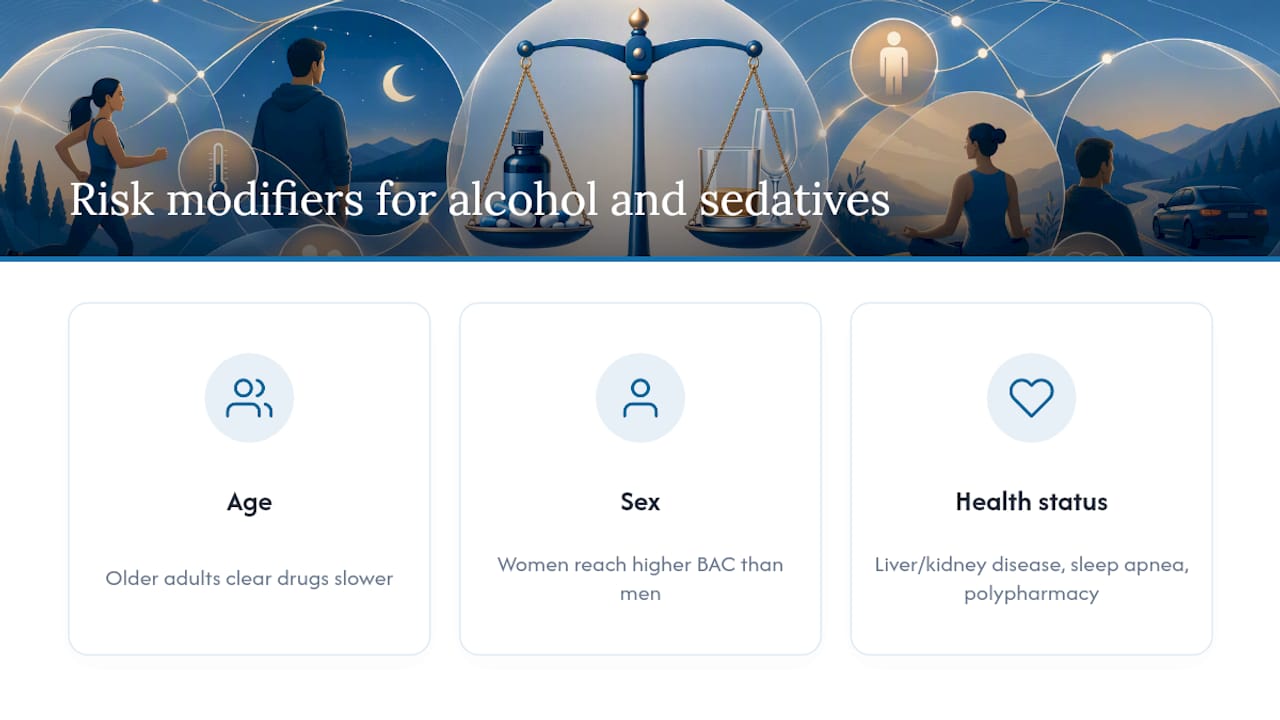
Do age, sex, and health status change your risk?
Risk isn’t evenly distributed across every person who drinks and takes a sleep aid. A few factors shift the math meaningfully.
Age matters a lot. Older adults process alcohol and sedatives more slowly due to changes in liver and kidney function, and they’re more sensitive to CNS depression at lower doses than younger adults. A dose that a 30 year old tolerates without issue can hit a 70-year-old much harder, and the NCBI review on supplements and sleep points to age, polypharmacy, and existing liver disease as key modifiers clinicians should account for when reviewing sedative use.
Sex differences show up too, largely through body composition and alcohol metabolism. Women generally reach higher blood alcohol concentrations than men after the same amount of alcohol, given similar body weight, which can shift how strongly a sedative combination hits.
Health status is arguably the biggest modifier of all. People with liver disease, kidney impairment, sleep apnea, or anyone taking multiple CNS-active medications face substantially higher risk from any alcohol-sedative combination, regardless of age or sex. Polypharmacy, meaning several medications at once, is its own risk multiplier, since interactions can stack in ways that are hard to predict without a full medication review.
How does Evergreenbliss approach sleep safety without relying on sedatives?
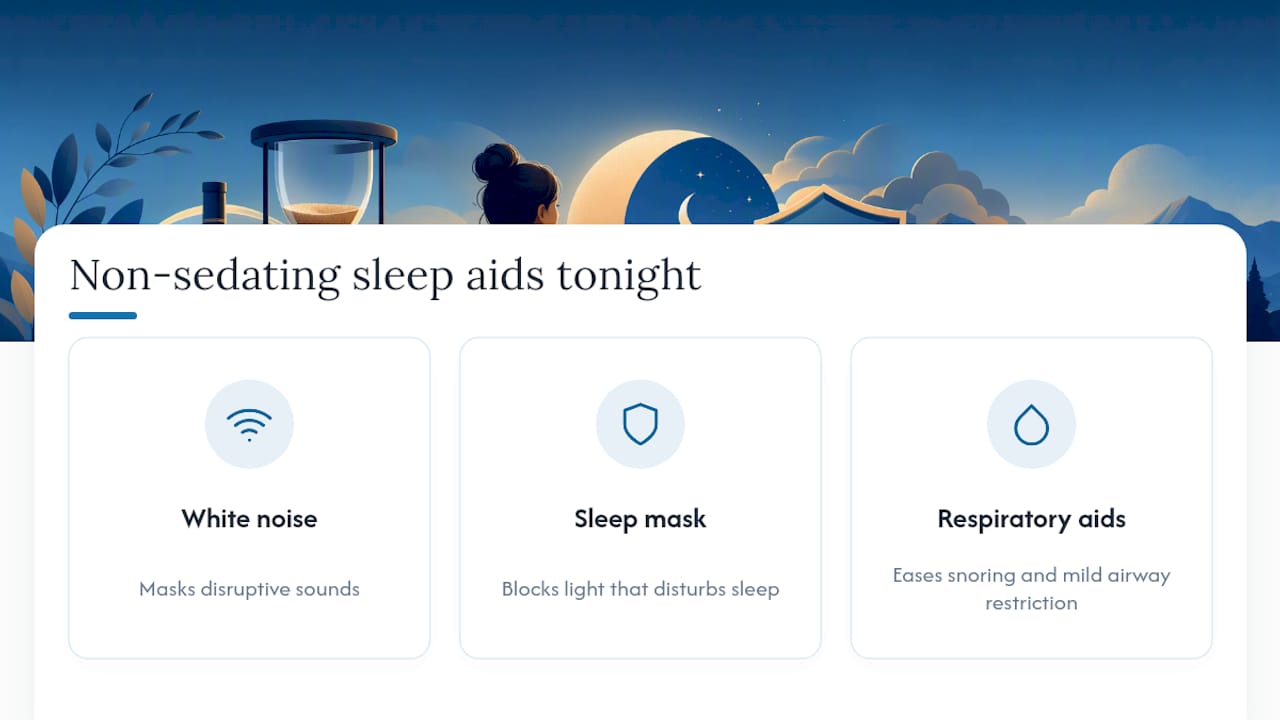
Evergreenbliss curates products with an emphasis on non-sedating support rather than anything designed to chemically knock you out. That includes white noise machines, sleep masks, and respiratory aids built to improve sleep conditions without touching your central nervous system.
These tools work alongside, not instead of, medical guidance. If you’re on a prescription sleep medication or drink regularly, they’re not a replacement for talking to your clinician about supplement or medication use. Evergreenbliss’s educational content, including a practical guide to supplement categories, aims to help you make informed choices rather than push a one-size-fits-all fix. Anyone considering starting or stopping a sleep supplement or medication should loop in a clinician first.
— Cadence
Non-sedating ways to support your sleep tonight
If you’ve had a drink and want to improve your odds of a decent night’s sleep without adding another sedative into the mix, non-sedating tools are the safer lane. A white noise machine masks the disruptive sounds that make fragmented, alcohol-affected sleep even worse, without touching your nervous system at all. A well-fitted sleep mask blocks light that would otherwise pull you out of the lighter sleep stages alcohol already leaves you cycling through. Respiratory aids, designed to support easier breathing, can be especially useful if snoring or mild airway restriction tends to worsen after drinking.

None of these products are medical treatments, and they won’t undo what alcohol does to your sleep cycle. What they do is remove a few of the environmental factors that make a rough night rougher, without adding any sedation risk to the equation. Evergreenbliss’s personal care and hygiene gadget collection includes white noise machines, sleep masks, and respiratory support tools built for exactly this kind of adjunct use.
If you’re taking prescription sleep medication or drink regularly, talk to your clinician before changing anything about your routine. Otherwise, browse the collection and pick a tool that fits the specific problem keeping you up, whether that’s noise, light, or breathing comfort, and start using it tonight.
This article is general information, not a substitute for advice from a qualified doctor. Consult a qualified healthcare professional about your own circumstances before acting on anything here.
Sources
- Sleep well, do well | Johns Hopkins Well being
- What Happens if You Take Melatonin With Alcohol? | Sleep Foundation
- Dietary supplements and sleep: review | NCBI (PMC)
- About Alcohol Use | CDC