How GABA regulates your sleep cycle
GABA (gamma-aminobutyric acid) is the brain’s primary inhibitory neurotransmitter, and its role in sleep is straightforward: it quiets overactive neurons so your brain can shift from wakefulness into rest. Without adequate GABAergic activity, the excitatory signals that keep you alert simply don’t get turned off.
GABA works by binding to three receptor types in the central nervous system:
- GABAA receptors are fast-acting ion channels that promote slow-wave (non-REM) sleep by rapidly reducing neuronal firing.
- GABAB receptors are slower, metabotropic receptors that modulate REM sleep and help suppress wakefulness-promoting signals.
- GABAC receptors have the highest sensitivity to GABA of the three types and influence both slow-wave and REM sleep stages, making them a target of growing research interest.
Together, these receptors counterbalance excitatory neurotransmitters like glutamate, noradrenaline, serotonin, acetylcholine, orexin, and dopamine, all of which drive arousal. When GABA activity is sufficient, the brain transitions smoothly into non-REM sleep. When it isn’t, those excitatory signals dominate, and sleep becomes fragmented or elusive. Human studies confirm that GABA levels correlate directly with sleep quality, which is why supporting GABAergic function has become a central focus in evidence-based sleep wellness.
What does GABA supplementation actually do for sleep quality?
Oral GABA supplements have measurable effects on sleep, particularly at the onset stage. A randomized, placebo-controlled human study found that oral GABA shortened sleep latency and increased total non-REM sleep time, with subjects themselves reporting noticeable improvements on sleep questionnaires.
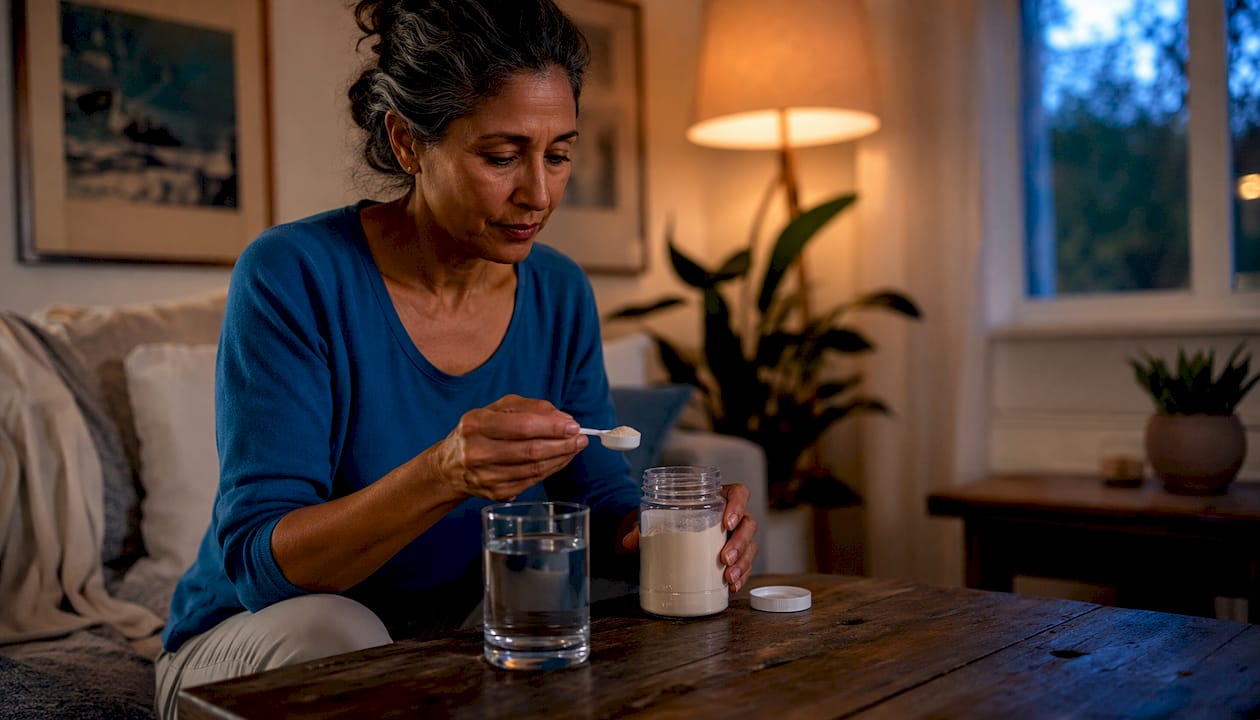
The absorption timeline matters here. GABA peaks in the bloodstream about 30 minutes after ingestion, which explains why its strongest effect is on sleep onset rather than deep sleep maintenance. Timing your dose roughly 30 minutes before bed aligns with that window.
| Parameter | Finding |
|---|---|
| Effective dosage range | Natural GABA is dosed within a range supported by clinical studies |
| Time to peak blood level | ~30 minutes post-ingestion |
| Minimum use period for effect | Consistent use over multiple days is needed before seeing improvements |
| Primary sleep benefit | Reduced sleep latency, increased non-REM sleep |
| Low-dose outcome | Lower doses may reduce time to fall asleep but have limited impact on maintaining sleep |
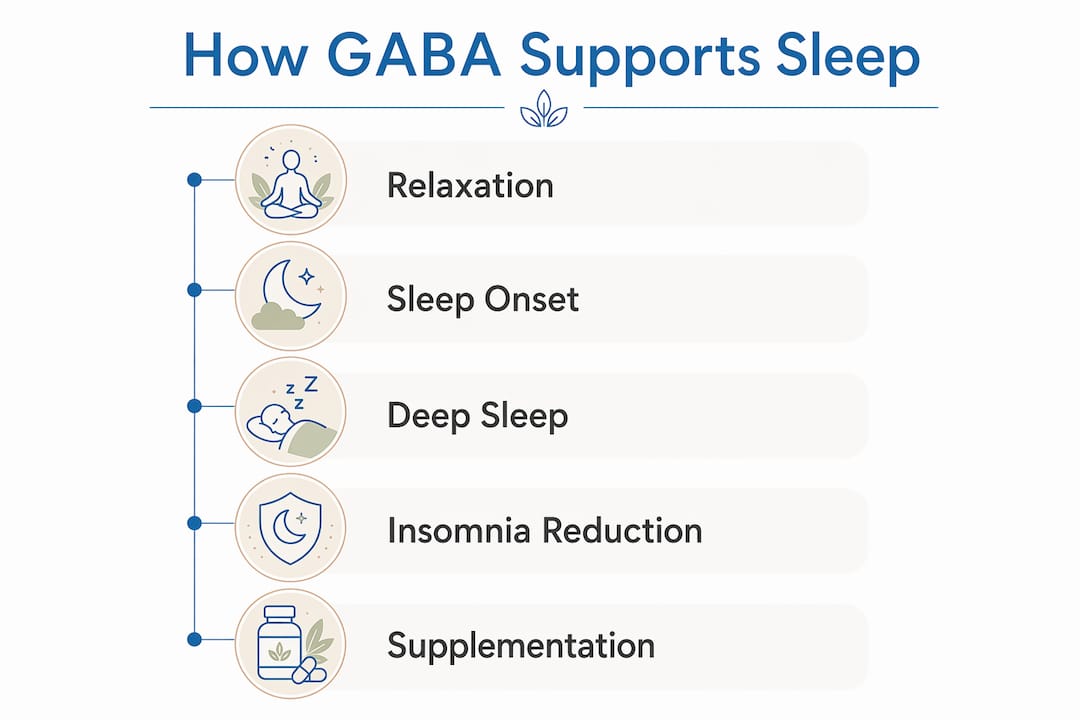
One clinical trial using low-dose natural GABA (75 mg) found it effective for sleep-onset insomnia, with no adverse events reported. Higher doses (300 mg) showed broader benefits including improved sleep efficiency, though two participants reported mild abdominal discomfort. The takeaway: start low, stay consistent, and give it at least a week before judging results. For a broader look at sleep supplement ingredients worth considering alongside GABA, Evergreenbliss covers the current science in detail.
How GABA dysfunction drives insomnia
Insomnia isn’t simply a matter of not feeling tired. At the neurological level, it reflects a dysfunction in the GABAergic system where excitatory neurotransmitters overpower inhibitory signals, leaving the brain in a state of hyperexcitability that resists sleep.
Several mechanisms contribute to this imbalance:
- Reduced GABA synthesis or release leaves fewer inhibitory signals available to quiet arousal circuits.
- Receptor downregulation means even normal GABA levels produce weaker effects, a pattern seen with chronic stress and aging.
- GABAA receptor dysfunction specifically disrupts slow-wave sleep, since GABAA activation promotes deep NREM sleep and sleep spindle generation.
- GABAB and GABAC receptor imbalances affect REM sleep and wakefulness states, altering overall sleep architecture.
Traditional pharmacological approaches, including benzodiazepines and non-benzodiazepine hypnotics, target GABAA receptors to force sedation. They work, but at a cost: dependence, cognitive impairment, and disrupted REM sleep are well-documented drawbacks. Newer wellness approaches aim to restore the natural inhibitory-excitatory balance rather than override it with sedation. That distinction shapes the entire conversation around natural GABA support.
The gut-brain axis: a new frontier for GABA and sleep
GABA’s influence on sleep doesn’t stop at the brain. Dietary GABA and GABA-producing probiotics improve sleep through the gut-brain axis by modulating neural, neuroendocrine, and immune pathways, a finding that has shifted how researchers think about sleep nutrition.
The gut-brain axis is a bidirectional communication network involving the vagus nerve, the hypothalamic-pituitary-adrenal (HPA) axis, and immune signaling. Gut dysbiosis triggers pro-inflammatory cytokines like IL-6 and TNF-α, which can inhibit GABAergic neuron activity and disrupt sleep. GABA-enriched foods and specific probiotic strains (including Lactiplantibacillus plantarum and Bifidobacterium species) counter this by:
- Increasing anti-inflammatory cytokines such as IL-10
- Restoring gut barrier integrity and reducing systemic inflammation
- Indirectly strengthening GABA’s inhibition of wake-promoting brain regions
- Modulating HPA axis activity to lower cortisol, a known sleep disruptor
Fermented foods naturally rich in GABA, including certain teas, fermented dairy, and legumes, are practical starting points. Herbal teas with GABAergic properties are one accessible option; herbal teas for sleep represent a well-studied category within this space.
Pro Tip: Combining a GABA-producing probiotic with dietary GABA sources may work synergistically. The probiotic supports gut GABA production and reduces inflammation, while dietary GABA provides direct substrate, addressing the sleep-wake balance from two angles simultaneously.
Safe and effective use of GABA supplements
Using GABA supplements well comes down to consistency, realistic expectations, and knowing when to be cautious.
Dosage and timing:
- Natural GABA doses of 75–300 mg daily are supported by clinical evidence.
- At least one week of consistent use is needed before meaningful sleep improvements appear; benefits accumulate over time.
- Take GABA approximately 30 minutes before bed to align with its absorption peak.
Potential side effects and cautions:
- Higher doses may cause mild gastrointestinal discomfort in some people.
- GABA supplements can interact with sedative medications, including benzodiazepines and sleep aids, potentially amplifying effects.
- Pregnant or breastfeeding individuals and those with neurological conditions should consult a physician before use.
Natural alternatives worth considering:
Herbal extracts like valerian and Zizyphus jujuba enhance endogenous GABA activity by increasing GABA synthesis and activating GABA receptors naturally. Being plant-derived, they are generally considered safer for long-term use than synthetic GABA products. GABA also interacts with melatonin: the two hormones regulate each other reciprocally, which is why combined GABA-melatonin approaches are gaining traction in sleep research. For people exploring non-habit-forming sleep aids, these natural modulators represent a practical middle ground.
Lifestyle factors that support endogenous GABA:
- Regular physical activity increases GABA synthesis.
- Magnesium-rich foods support GABA receptor function.
- Stress reduction practices like meditation and yoga raise GABA levels measurably.
- Fermented foods (kimchi, kefir, miso) provide dietary GABA and support gut microbiota that produce it.
Evergreenbliss curates sleep and relaxation aids designed to complement a GABA-supportive wellness routine, from supplements to recovery tools that help your nervous system wind down naturally.

Key Takeaways
GABA is the brain’s primary sleep switch, and supporting its activity through supplementation, diet, and lifestyle produces measurable improvements in sleep onset and quality.
| Point | Details |
|---|---|
| GABA’s core function | It reduces neuronal excitability via GABAA, GABAB, and GABAC receptors to enable non-REM sleep. |
| Supplementation timing | GABA peaks in blood ~30 minutes after ingestion, so take it 30 minutes before bed. |
| Minimum effective period | Consistent use over time is required before sleep improvements become apparent. |
| Gut-brain connection | GABA-producing probiotics and fermented foods improve sleep by reducing gut inflammation and supporting GABAergic signaling. |
| Safer long-term options | Herbal extracts like valerian and Zizyphus jujuba enhance endogenous GABA activity without the dependence risks of synthetic sedatives. |