Yes, everyday personal care measurably shifts mood. A 30-minute walk, 7–9 hours of consistent sleep, and even a 5-minute mindful grooming ritual can increase positive affect and lower stress hormones the same day you do them. The mechanisms are real: neurotransmitter release, cortisol regulation, circadian rhythm stabilization, and sensory signaling through the skin-brain axis all respond to daily self-care behaviors.
Three things you can do right now:
- Walk for 30 minutes. The National Institute of Mental Health (NIMH) lists this as one of the most accessible mood-boosting actions available.
- Set a consistent sleep and wake time tonight. Irregular sleep disrupts circadian regulation, which directly affects emotional stability.
- Spend 5 minutes on a mindful grooming or skincare ritual. Slow, intentional touch activates parasympathetic responses that down-regulate stress.
One important note: self-care supports mental health but does not replace professional treatment. If your mood has been severely low for two or more weeks, please reach out to a clinician or contact the 988 Suicide and Crisis Lifeline.
Table of Contents
- What personal care and self-care actually cover
- How personal care affects mood: the biology behind it
- Daily personal-care practices that genuinely boost mood
- How to build these habits and what to expect
- When personal care alone isn’t enough
- What the research actually shows
- Key Takeaways
- The part most guides skip
- Evergreen Bliss tools that support these routines
- Trusted sources and further reading
What personal care and self-care actually cover
People use “self-care” and “personal care” interchangeably, but there is a useful distinction. Personal care refers to physical maintenance behaviors: hygiene, grooming, skincare, sleep, nutrition, and movement. Self-care is the broader practice of deliberately tending to your physical, emotional, and social needs. Mental self-care narrows further to practices that directly target psychological well-being: mindfulness, journaling, social connection, and stress management.
This guide covers all three layers because they interact. Skipping a shower when you’re depressed isn’t just a hygiene issue; it removes a sensory cue that signals self-worth and readiness to the brain. The domains addressed here are:
- Sleep and circadian hygiene
- Grooming and skincare rituals
- Physical movement and exercise
- Nutrition and hydration
- Relaxation and breathing practices
- Social connection and touch
The CDC’s emotional well-being guidance lists all of these as contributors to emotional health, which is why the article treats them as a unified system rather than separate tips.
How personal care affects mood: the biology behind it
Neurochemical pathways
Exercise is the clearest example. Aerobic movement triggers serotonin and dopamine release, the same neurotransmitters targeted by antidepressant medications. Sleep matters just as much: consistent sleep timing anchors your circadian rhythm, and disrupted circadian regulation is directly linked to mood disorders. Relaxation practices, including deep breathing and progressive muscle relaxation, suppress cortisol, the body’s primary stress hormone.
Statistic callout: NIMH recommends 30 minutes of walking as an effective, evidence-backed way to improve mood and overall health — no gym membership required.
The skin-brain axis
This is where personal care gets genuinely surprising. The skin is not just a barrier; it is a sensory organ with direct neural connections to the brain. Skincare rituals can influence neurotransmission, cortisol regulation, and hedonic well-being through sensory stimulation and the tactile experience of the routine itself. Facial massage and gentle self-touch act as nonverbal signals that engage the parasympathetic nervous system, effectively telling your body it is safe.
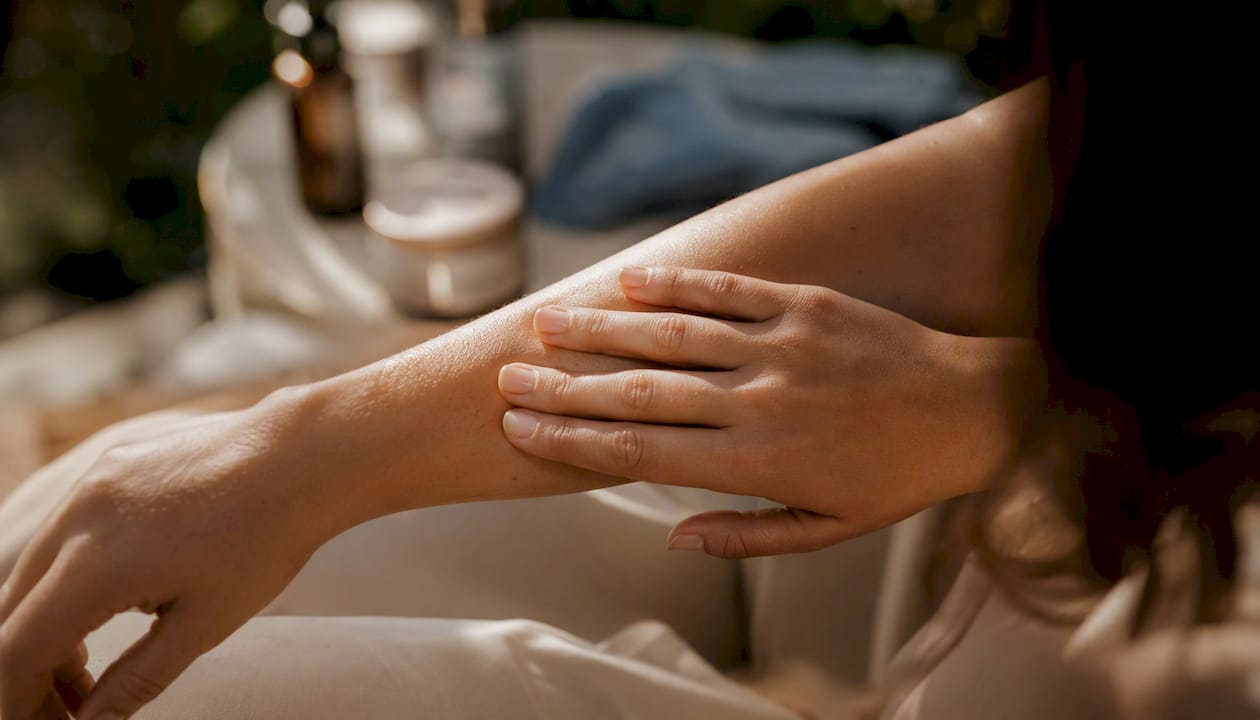
Research is also uncovering a skin-microbiome-brain link. Specific skin microbes, including Cutibacterium, correlate with reduced stress and better sleep quality, suggesting that maintaining healthy skin through regular cleansing and moisturizing may have effects that extend well beyond appearance.
Behavioral and cognitive pathways
Routines create predictability, and predictability reduces anxiety. When you follow the same morning or evening sequence, your brain registers it as a low-threat environment. That sense of agency, the feeling that you are actively caring for yourself, also improves self-perception, which is a meaningful driver of mood independent of any chemical effect. Research on touch and stress relief confirms that even brief tactile self-care practices produce measurable stress reduction.
Daily personal-care practices that genuinely boost mood
Each domain below comes with a suggested dose and a short note on what to expect.
- Sleep (7–9 hours, consistent timing). Go to bed and wake at the same time every day, including weekends. Within a week, most people notice less irritability and sharper emotional regulation. The CDC lists sleep as a foundational pillar of emotional well-being.
- Walking or aerobic movement (30 minutes, most days). You don’t need intensity; a brisk walk works. Mood benefits often appear within a single session, per NIMH guidance.
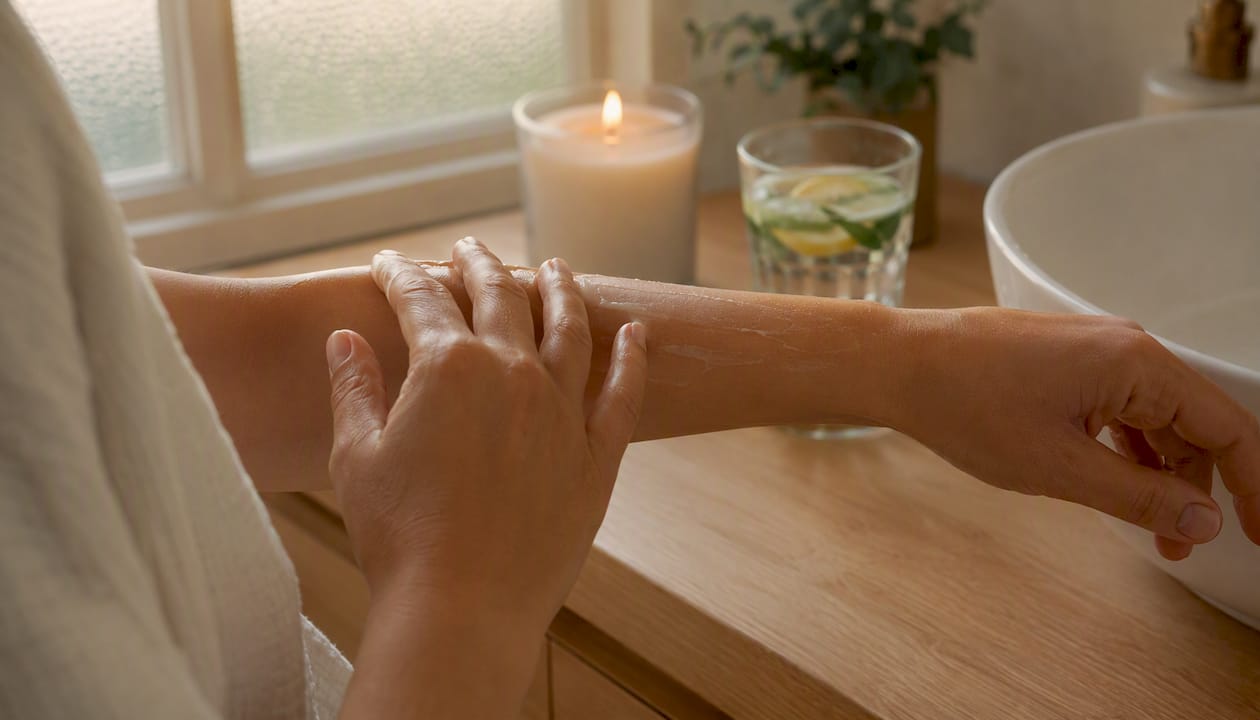
- Grooming and skincare ritual (5–10 minutes, daily). Cleansing, moisturizing, or any deliberate skin-care sequence activates the skin-brain axis and provides a sensory anchor for the day.
- Nutrition (3 balanced meals, consistent timing). The WHO’s healthy-diet guidance links diet quality to mood and reduced depression risk. Skipping meals destabilizes blood sugar and amplifies emotional reactivity.
- Relaxation practice (5–10 minutes, daily). Deep breathing, progressive muscle relaxation, or a short body scan. Why deep breathing reduces stress is well-documented: slow exhalations activate the vagus nerve and lower heart rate within minutes.
Pro Tip: Turn one routine into a ritual by removing distractions and focusing on the sensory experience. Wash your face slowly, notice the temperature of the water, and breathe deliberately. That intentional attention is what signals safety to the nervous system and amplifies the mood benefit beyond the mechanical act.
Diary studies show that self-care behaviors are associated with same-day increases in positive affect, but the effects require consistent daily engagement to become durable. One good day doesn’t rewire anything; a week of consistent practice starts to.
How to build these habits and what to expect
A realistic timeline
Most people notice something within the first few days of consistent practice: slightly better sleep, a small lift in energy, or less afternoon irritability. By weeks 2–4, mood improvements tend to become more stable and less dependent on any single good day. At 6–8 weeks of consistency, the behavioral patterns themselves become easier to maintain because the cue-routine-reward loop has solidified.
The cue-routine-reward framework
Attach a new personal-care habit to something you already do. Brushing your teeth is a reliable cue; add a 2-minute face massage immediately after. The reward doesn’t need to be external: the sensory pleasure of the routine itself, or a brief moment of quiet, is enough. A practical daily guide to routine and stress reduction walks through this framework in detail.
Common barriers and concrete fixes
Low motivation or fatigue is the most common obstacle. The fix is to shrink the habit until it feels almost too easy: a 5-minute walk instead of 30, one skincare step instead of five. Momentum matters more than dose in the early weeks.
Limited time responds well to habit stacking: pair your relaxation practice with an existing transition (morning coffee, commute, lunch break). You’re not adding time; you’re changing what you do with time you already have.
Inconsistency is usually a cue problem, not a willpower problem. If you keep forgetting, place a visual trigger (a yoga mat, a skincare product) somewhere you’ll see it at the right moment.
When personal care alone isn’t enough
Self-care is powerful, but it has limits. If any of the following apply, the next step is a conversation with a clinician, not a new routine:
- Persistent low mood or loss of interest lasting two or more weeks
- Significant changes in sleep, appetite, or concentration that don’t respond to basic adjustments
- Thoughts of self-harm or suicide
- Functional decline at work, in relationships, or in daily tasks that self-care hasn’t touched
These are NIMH-aligned screening signals for conditions like major depression or anxiety disorders that require professional assessment.
Where to go:
- Primary care provider: A first and accessible entry point for mental health screening and referral.
- SAMHSA’s National Helpline: 1-800-662-4357, free, confidential, 24/7. Find support and treatment locators at SAMHSA.gov.
- 988 Suicide and Crisis Lifeline: Call or text 988 in the U.S. for immediate crisis support.
Seeking help is itself a form of self-care. The two are not in competition.
What the research actually shows
| Source | What was studied | Main finding | Practical takeaway |
|---|---|---|---|
| NIMH | Self-care behaviors and mental health | 30-min walking and scheduled relaxation improve mood | Start with walking; schedule it like an appointment |
| Frontiers in Public Health | Self-care behaviors and daily affect (SASS-14) | Same-day increases in positive affect; consistency required for lasting change | Daily practice matters more than intensity |
| Psychology Today | Skin-brain axis and skincare rituals | Tactile skincare lowers cortisol and influences neurotransmission | Treat grooming as a sensory, not just cosmetic, practice |
| Psychiatrist.com | Skin microbiome and mental health | Specific skin microbes correlate with lower stress and better sleep | Regular skin hygiene may support mood indirectly |
| MDPI Cosmetics | Integrated care and neurocosmetics | Sensory-oriented wellness tools are emerging as experience-based clinical supports | Wellness tools can complement, not replace, therapy |
| CDC | Emotional well-being behaviors | Sleep, activity, diet, and social connection all contribute to emotional health | No single behavior; the combination is what works |
The pattern across these sources is consistent: personal care affects mood through multiple overlapping pathways, and no single practice is sufficient on its own. The skin-brain axis research from Psychology Today and Psychiatrist.com is particularly worth noting because it reframes grooming from vanity to neuroscience. The MDPI integrated care review goes further, framing sensory wellness tools as legitimate adjuncts to psychotherapy in emerging clinical models.
Key Takeaways
Personal care affects mood through real biological and behavioral mechanisms, and consistent daily practice produces measurably better emotional outcomes than sporadic effort.
| Point | Details |
|---|---|
| Start with walking | A 30-minute walk is NIMH-recommended and produces same-day mood benefits with no equipment needed. |
| Sleep timing is foundational | Consistent sleep and wake times stabilize circadian rhythm, which directly regulates emotional reactivity. |
| Grooming activates the skin-brain axis | A 5–10 minute mindful skincare ritual lowers cortisol through tactile sensory signaling. |
| Consistency beats intensity | Diary research shows self-care produces same-day positive affect, but durable change requires daily repetition over weeks. |
| Evergreen Bliss supports the routine | Sleep aids, massage devices, and relaxation tools from Evergreen Bliss directly support the practices shown to shift mood. |
The part most guides skip
Most self-care content treats mood improvement as a checklist problem: do these five things and feel better. The research tells a more interesting story. The mechanism matters as much as the behavior. Two people can take the same 30-minute walk, and the one who pays attention to their surroundings, breathes deliberately, and treats it as a restorative act will likely get more out of it than the one who scrolls their phone the whole time.
That’s what the intentionality research points to: ritualized attention turns a routine task into a signal to the nervous system. It’s not mystical. It’s the difference between a mechanical action and one that your brain registers as meaningful self-care. The skin-brain axis findings support the same idea: gentle facial massage during your skincare routine isn’t just pleasant; it actively engages parasympathetic pathways.
The practical implication is to pick one domain this week, not five, and do it with full attention. A single 5-minute grooming ritual done mindfully will likely do more for your mood than five half-hearted wellness behaviors done on autopilot. Start small, stay consistent, and add complexity only after the first habit feels effortless.
Evergreen Bliss tools that support these routines
The routines in this article work best when friction is low. A white-noise machine makes consistent sleep timing easier to maintain. A neck massager or acupressure mat turns a 10-minute relaxation practice into something you’ll actually look forward to. A sleep mask supports the circadian cues that anchor your mood through the night.
Evergreen Bliss carries a focused range of stress-relief and mood-support products designed for exactly these routines: devices that reduce the effort of showing up for your own self-care. The personal care and hygiene gadget collection includes tactile tools that support grooming rituals and sensory self-soothing. Browse both collections to find the one or two tools that fit the habits you’re building, and pair them with the practices above for the fastest path to a noticeable mood shift.
Trusted sources and further reading
The following sources were used throughout this article. Each is a primary or peer-reviewed reference worth bookmarking for deeper reading.
- Caring for Your Mental Health — National Institute of Mental Health (NIMH)
- The role of self-care activities (SASS-14) in depression — Frontiers
- Can Skincare Influence Your Brain and Mood? | Psychology Today
- MDPI — Integrated care and neurocosmetics perspective
- Emotional wellbeing — CDC
- Healthy diet — World Health Organization (WHO)
- Find support — SAMHSA