To activate life, start a focused 30-day habit sprint that combines one daily micro-action, short movement, and a nightly three-minute reflection. That’s the whole definition: intentional daily activation through small, repeatable actions instead of one big overhaul. The first move takes three minutes tomorrow morning.
Do this: two minutes of movement (stretch, walk to the mailbox, ten squats), one minute setting an intention for the day, and naming one “spark,” a small thing you’re curious about or looking forward to. Most people notice a shift in energy and mental clarity somewhere between day 7 and day 30, according to the Ignite Your Life 30-day sprint model’s design, which pairs daily audio drops with weekly activation sessions to drive that kind of identity shift.
- Morning: 2 minutes movement + 1 minute intention + name one spark
- Evening: 3-minute written reflection on what worked
- Track it daily, adjust weekly
Evergreenbliss built this framework the way we approach every wellness routine: strip out the friction, keep the inputs small, and let consistency do the work. Cadence, who wrote this guide, has spent years watching people quit ambitious 90-day overhauls by day 4 and succeed with three-minute habits that never felt like a burden.
Key Takeaways
Activation works because small, daily, trackable inputs sustained over 30 days build more durable change than occasional bursts of intense effort.
| Point | Details |
|---|---|
| Start with a 3-minute action | Combine 2 minutes of movement, 1 minute of intention, and one daily “spark” tomorrow morning. |
| Follow the weekly arc | Move through energy reset, routine building, connection and novelty, then consolidation over 30 days. |
| Track two numbers daily | Log an energy score from 1 to 10 and one line of reflection to catch plateaus early. |
| Fuel it with steady nutrition | A protein-forward breakfast and consistent hydration prevent the energy crashes that stall momentum. |
| Use supportive gear, not shortcuts | Evergreenbliss’s sleep aids, recovery tools, and posture supports remove friction from the routines above. |
Table of Contents
- The 30-Day Activation Framework, Week By Week
- Daily Practices That Actually Move Your Energy And Mood
- How To Turn Activation Into A Habit That Sticks
- What Successful Activation Actually Looks Like
- Why Nutrition Belongs In Your Activation Plan
- Why I Think Most Activation Advice Gets The Timeline Wrong
- Wellness Gear That Supports Your Activation Routine
- Sources
The 30-Day Activation Framework, Week By Week
Activation works better as a structured sprint than an open-ended resolution. A defined 30-day arc gives your brain a finish line, and finish lines are what turn intention into follow-through.
Here’s how the four weeks break down:
- Week 1: Energy reset. Focus entirely on sleep and movement. No new goals, no ambitious projects. Go to bed 30 minutes earlier, take a 10-minute walk daily, and cut one energy drain (doom scrolling before bed, a fourth coffee at 3 p.m.).
- Week 2: Build the routine. Layer in your morning micro-action and evening reflection until they run on autopilot. This is where habit stacking earns its keep, attaching the new behavior to something you already do without thinking.
- Week 3: Expand connection and novelty. Add one micro-adventure a week (a new route, a new recipe, a conversation with someone you haven’t talked to in months) and one deliberate social outreach a day.
- Week 4: Consolidate and scale. Drop anything that didn’t stick, double down on what did, and decide which one or two practices earn a permanent spot in your life.
Each week runs 5 to 20 minutes of daily input, split between movement, focused rest, a small novelty action, and reflection. That’s a deliberately low bar. Practitioners who design these sprints consistently find that small, repeatable inputs completed daily rewire habits more reliably than occasional intense sessions, because the brain responds to repetition, not effort spikes.
Checkpoints matter more than most people expect. At the end of each week, rate your energy from 1 to 10, log your average sleep hours, and note one micro-goal you actually hit. That’s three numbers and one sentence, nothing more.

If 30 days isn’t enough (and for a lot of people, it isn’t), extend to 90 days by repeating the cycle with one adjustment: swap out whichever week-3 novelty action stopped feeling fresh. Iterate when a checkpoint shows two flat weeks in a row. That’s the signal to change the input, not push harder on the same one.
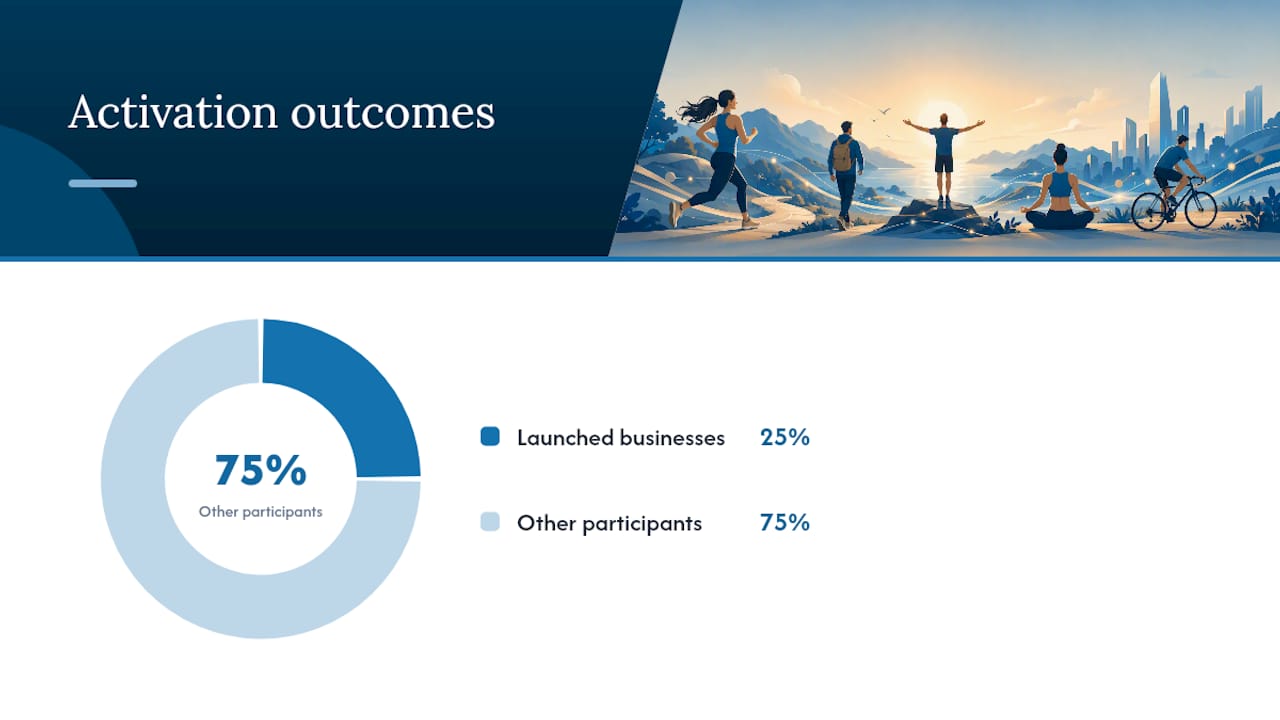
Group-based models back this structure up. Activate Your Life’s cohort programs have supported over 10,000 women through structured group activation, including more than 2,500 who went on to start small businesses, evidence that a defined timeline with checkpoints outperforms vague self-improvement.
Daily Practices That Actually Move Your Energy And Mood
Four categories do most of the heavy lifting: sleep, movement, attention, and connection. Skip any one of them for too long and the other three start to underperform.
Sleep comes first because everything else runs on it. Keep your room under 68°F, cut screens 30 minutes before bed, and use a consistent wind-down cue, the same three songs, the same herbal tea, whatever signals “we’re done for the day.” A white noise machine or sleep mask can help mask the noise variance that wakes light sleepers at 3 a.m., which matters more than most people realize since it’s the interruptions, not just total hours, that wreck next-day focus.
Movement doesn’t need a gym membership. Pick from:
- A 5-minute mobility flow (neck rolls, hip circles, ankle rotations)
- A 10-minute brisk walk outside
- 2 minutes of box breathing (4 counts in, 4 hold, 4 out, 4 hold) when you’re stuck at a desk
Attention gets trained the same way muscles do, through short, repeated reps. A 2-minute journaling prompt (“What’s one thing I’m avoiding today?”) does more for mental clarity than a 20-minute session you skip half the week. Guided audio prompts work for the same reason daily audio drops work in structured sprints: repetition reframes belief patterns more effectively than a single long session ever could.
Micro-adventures and social accountability round it out. Try a new coffee order, take an unfamiliar street home, text one person you’ve been meaning to check on. Small novelty and one daily outreach reliably lift mood and creativity, and neither takes more than a few minutes.
Pro Tip: Pair your hardest habit with your easiest one. If journaling feels like a chore, do it while your tea steeps. The existing habit carries the new one.
How To Turn Activation Into A Habit That Sticks
Motivation fades. Systems don’t. The difference between a great week 1 and a great month 3 comes down to mechanics, not willpower.
Start with habit stacking, tying a new action to something already locked into your day:
- After you brush your teeth, do 60 seconds of stretching.
- After your morning coffee, write one line naming today’s spark.
- Before you plug in your phone at night, jot your reflection.
Micro-commitments beat big promises. “I’ll journal for 10 minutes” gets skipped on a busy day. “I’ll write one sentence” doesn’t. Environment engineering does the rest of the work quietly: put your walking shoes by the door, remove the phone charger from your nightstand, leave a notebook open on your pillow. Cues you can see are cues you act on.
Tracking stays simple: a daily energy score from 1 to 10 and a one-line reflection. That’s it.
- A flat or dropping score for three days straight usually means overload, not laziness.
- A rising score paired with easier follow-through means you’re ready to add the next layer.
- A plateau after two solid weeks is your cue to iterate the routine, not abandon it.
Values-mapping helps here too. Identifying what you actually care about, strengths and priorities that make an action feel worth repeating, makes the difference between a habit you maintain and one you resent by day 12. If burnout signals show up (dread, flatlined scores, skipping the easy stuff), that’s the moment to scale back intensity or bring in outside support, whether that’s a friend, a coach, or a structured well-being plan built around long-term habits rather than short bursts.
What Successful Activation Actually Looks Like
Activation doesn’t usually announce itself with a dramatic before-and-after. It shows up as a string of unremarkable weeks that quietly stack into something different.
The clearest large-scale example comes from cohort-based reentry and entrepreneurship programs. Activate Your Life’s structured groups have moved over 10,000 women through a defined activation process, more than 2,500 of whom went on to launch small businesses. That number isn’t about raw willpower. It’s about a repeatable structure, weekly sessions, group accountability, defined milestones, that turned intention into action at scale.
Smaller, individual versions of this pattern follow the same logic. Someone struggling with chronic low energy who commits to a sleep reset in week one often reports better focus by week two, not because sleep alone fixed everything, but because one solid win created enough momentum to try the next thing. Coaching programs that offer free starter content and self-paced modules exist specifically because lowering the first step’s difficulty is what gets people past the point where most self-improvement attempts die: day 3.
The common thread across every version of this, cohort or solo, paid program or free framework, is the same: consistent small inputs, tracked and adjusted weekly, beat sporadic bursts of intensity every time.
Why Nutrition Belongs In Your Activation Plan
You can’t out-journal a bad diet. Energy, focus, and mood run partly on blood sugar stability, and a 30-day activation sprint built on skipped meals and sugar crashes will stall by week two.
Keep it practical rather than restrictive. Eat protein at breakfast (eggs, Greek yogurt, a protein shake) to avoid the mid-morning crash that kills momentum on your first micro-action. Hydrate before your movement block, since even mild dehydration blunts focus and mood. Cut the late-afternoon sugar spike-and-crash cycle, which tends to sabotage evening reflection time by leaving you too foggy to think clearly.
None of this requires a diet overhaul. The same principle that runs the whole activation framework applies here: small, consistent inputs (a protein-forward breakfast, a glass of water before your walk) outperform occasional strict eating followed by burnout. Nutrition isn’t a separate track from activation. It’s the fuel line for every other practice in the plan.
Why I Think Most Activation Advice Gets The Timeline Wrong
Most advice on activating your life either promises overnight transformation or demands a total lifestyle overhaul. Both miss what actually works.
The research on structured sprints, from cohort programs to daily audio-driven models, points to the same mechanism: small, boring, repeated inputs beat sporadic intensity almost every time. A single two-hour “activation session” feels productive, but it doesn’t rewrite anything. Thirty days of two-minute inputs does.
Products and tools help here, but only as scaffolding. A sleep mask won’t activate your life. It just removes one obstacle so your three-minute routine has a fair shot at sticking. Try the 30-day plan above, track your energy honestly, and lean on tools like the ones in Evergreenbliss’s wellness collection if they remove friction for you. They’re aides, not the engine.
— Cadence
Wellness Gear That Supports Your Activation Routine
Every practice in this plan gets easier with the right support underneath it, and that’s exactly where Evergreenbliss fits: not as another program to follow, but as the physical layer that removes friction from the routines you’re already building.

Sleep hygiene runs on consistency, and a white noise machine or sleep mask from our personal care collection helps you hit the same wind-down cue every night, even in a noisy apartment or an unfamiliar hotel room. Recovery matters just as much as output, and our home fitness recovery equipment, massage devices and recovery tools built for the days your 10-minute movement block leaves you sore, helps your body bounce back fast enough to show up again tomorrow. For the posture strain that comes from long desk stretches between micro-actions, a support brace keeps your movement practice from turning into a new source of pain.
Every order ships free, returns are simple, and checkout takes under a minute. If you’re ready to build out your activation kit, start with our personal care gadgets and see which piece fits your routine first.
Sources
- Home - Activate Your Life
- Ignite Your Life, 30-Day Sprint – The Flame
- 9 Ways to Activate Your Potential : Liz Jansen