Slow wave sleep is defined as the deepest stage of non-REM sleep, also called stage N3 or deep sleep, where the brain generates high-amplitude delta waves that drive the body’s most critical restorative processes. The American Academy of Sleep Medicine defines this stage as sleep epochs containing at least 20% delta waves within 0.5–2 Hz frequency and amplitude above 75 microvolts. If you want to improve your sleep quality, understanding what is slow wave sleep is the single most useful place to start. This stage is not just “deep sleep” in a casual sense. It is a precisely defined physiological state that determines how well your body and brain recover each night.
What is slow wave sleep and how does it work?
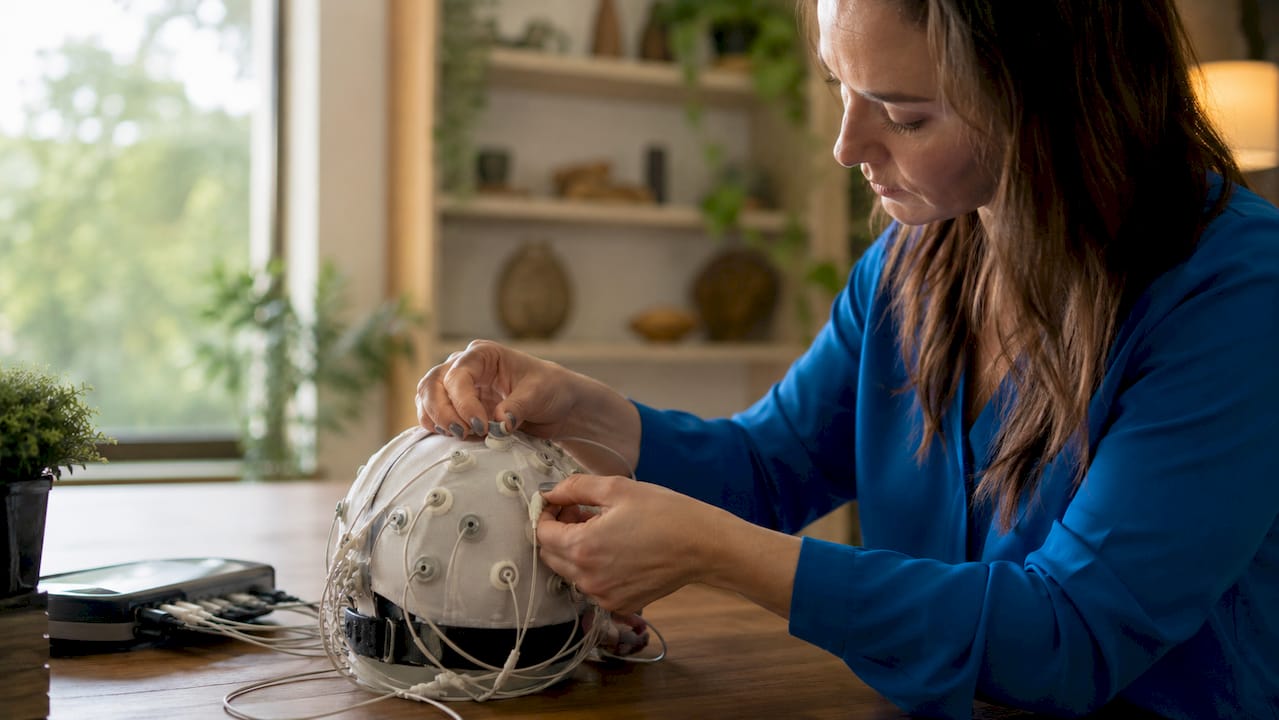
Slow wave sleep, the clinical term used by sleep researchers and the American Academy of Sleep Medicine, is stage N3 of the non-REM sleep cycle. During this stage, the neocortex produces synchronized delta waves, which reflect neurons firing together in rhythmic up and down states. These waves are measurable by polysomnography, the gold standard sleep study tool used in clinical settings. The result is a brain state that looks almost quiet on the surface but is running some of the most demanding biological maintenance your body performs.
SWS sits at the bottom of the non-REM sleep stages, following stage N1 (light sleep) and stage N2 (intermediate sleep). Each full sleep cycle lasts roughly 90 minutes, and slow wave sleep dominates the first two cycles of the night. This front-loading is not random. Your body prioritizes the most restorative sleep phase when sleep pressure is highest, right after you first fall asleep.
What are the main benefits of slow wave sleep?
Slow wave sleep drives physical restoration, memory consolidation, and immune defense simultaneously. No other sleep stage does all three at once. That is what makes it the most functionally dense phase of the entire sleep cycle.
The physical restoration benefits include:
- Growth hormone release. The pituitary gland releases the majority of its nightly growth hormone during SWS. This drives tissue repair, muscle recovery, and cellular regeneration. People who train physically need this stage more than they often realize.
- Immune system strengthening. SWS supports the production of cytokines, the proteins your immune system uses to fight infection and inflammation. Cutting short this stage leaves your defenses weaker the next day.
- Glymphatic clearance. The brain’s glymphatic system flushes out metabolic waste, including amyloid beta proteins linked to Alzheimer’s disease, almost exclusively during slow wave sleep. Missing this nightly cleanup has long-term consequences.
Memory consolidation during SWS is an active, not passive, process. Research published in Frontiers in Behavioral Neuroscience identifies a triple coupling mechanism involving synchronized slow oscillations, sleep spindles, and hippocampal sharp-wave ripples. This coordination transfers memories from the hippocampus to the cortex for long-term storage. Disrupting SWS does not just make you feel foggy. It physically prevents memory stabilization from completing.
Pro Tip: If you have an important presentation or exam the next day, protecting your early night sleep is more valuable than staying up to review notes. The first two sleep cycles, where SWS is densest, do the memory work.
How much slow wave sleep do you need by age?
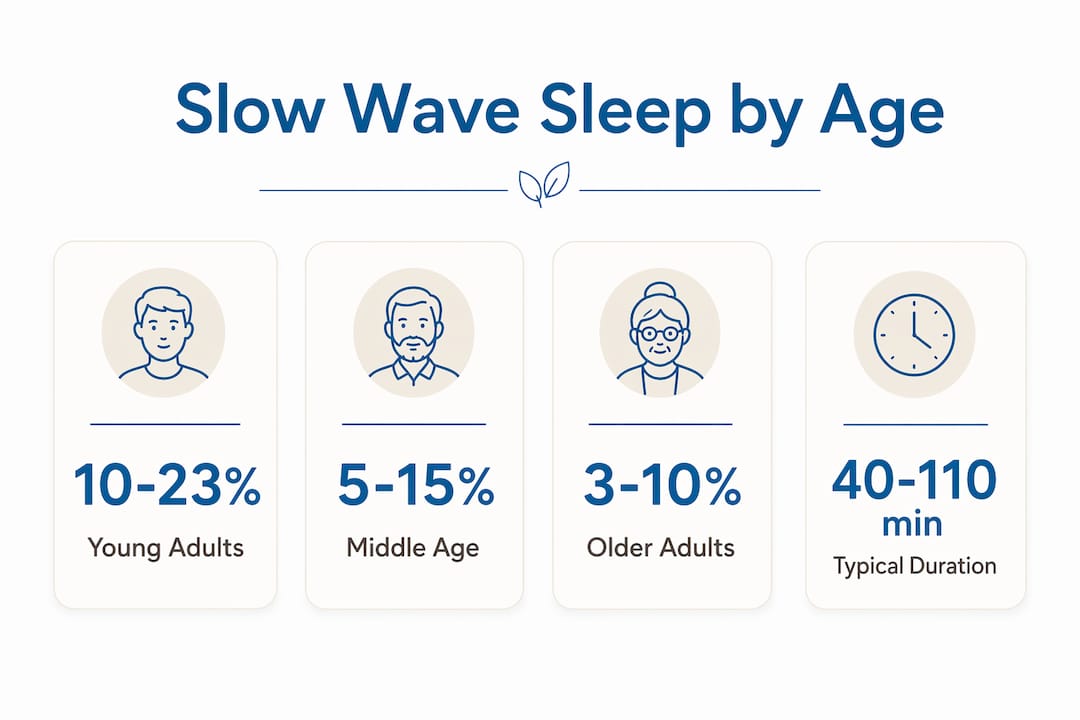
Healthy young adults spend 10–23% of their total sleep time in slow wave sleep, which translates to roughly 40–110 minutes across a 7–9 hour night. That range is wide because individual variation is real. By midlife, that figure drops to 3–10%. This decline is not a disorder. It is a normal biological shift tied to changes in cortical activity as the brain ages.
| Age group | Typical SWS percentage | Approximate minutes (8-hour night) |
|---|---|---|
| Young adults (18–25) | 10–23% | 48–110 minutes |
| Middle-aged adults (40–60) | 3–10% | 14–48 minutes |
| Older adults (60+) | Below 5% | Under 24 minutes |
Trying to hit young adult SWS levels in midlife is often unrealistic due to age-related cortical changes. Chasing a number on a sleep tracker creates anxiety, and anxiety is one of the fastest ways to wreck sleep quality. The better goal is optimizing the deep sleep you can realistically achieve at your current age.
SWS is heavily front-loaded in the first third of the night. This means cutting your sleep short by even 60–90 minutes in the early hours disproportionately reduces your total slow wave sleep time. Sleeping from 2 a.m. to 7 a.m. is not equivalent to sleeping from 11 p.m. to 4 a.m., even though both are five hours.
Pro Tip: Going to bed at a consistent time each night protects your early sleep cycles. Consistency matters more than total hours when it comes to maximizing slow wave sleep.
What disrupts slow wave sleep?
Sleep disruptors physically prevent the brain from generating the delta waves that define this stage. This is not just a matter of feeling less rested. The brain’s architecture for producing slow waves is actively suppressed by several common conditions and behaviors.
The most significant disruptors include:
- Obstructive sleep apnea (OSA). Repeated breathing interruptions fragment sleep and prevent the sustained delta wave activity that defines SWS. Untreated OSA is one of the most common causes of severely reduced deep sleep in adults.
- Chronic stress and anxiety. Elevated cortisol keeps the brain in a lighter, more alert state. Sleep disruptors like chronic stress can cut delta sleep time by over 50% in some cases. That is a dramatic loss of restorative capacity.
- Alcohol consumption. Many people believe alcohol helps them sleep. It does help them fall asleep faster, but it suppresses slow wave sleep in the second half of the night, fragmenting the sleep architecture that matters most.
- Chronic pain. Pain triggers micro-arousals throughout the night. These brief awakenings, often too short to remember, interrupt delta wave generation and reduce SWS duration significantly.
- Primary insomnia. Frequent micro-arousals in insomnia substantially reduce slow wave activity, impairing the restorative function of sleep even when total sleep time appears adequate.
Poor sleep hygiene compounds all of these. Irregular sleep schedules, excessive screen use before bed, and a warm sleep environment all suppress slow wave activity by keeping the nervous system in a higher arousal state. Addressing these factors is not optional if you want to improve deep sleep quality.
How can you improve slow wave sleep naturally?
Behavioral modifications are the foundation for improving deep sleep. Supplements can play a supporting role, but they do not replace the lifestyle conditions that allow slow wave sleep to occur naturally.
- Keep your bedroom cool. Core body temperature drops naturally as you enter slow wave sleep. A room temperature between 65–68°F supports this process. A warm room actively works against it.
- Take a warm bath or shower before bed. This sounds counterintuitive, but warm baths before bedtime raise your core temperature temporarily. When you get out, your temperature drops quickly, which signals the brain to shift toward sleep and promotes SWS onset.
- Cut alcohol at least three hours before sleep. Alcohol’s sleep-disrupting effects on SWS peak in the second half of the night. Eliminating it earlier in the evening reduces this impact significantly.
- Treat underlying sleep disruptors. If you have untreated sleep apnea, no amount of sleep hygiene will fully restore your deep sleep. Addressing breathing during sleep is a prerequisite for improving SWS in people with OSA.
- Protect your early night sleep. Go to bed at a consistent time. Avoid late-night commitments that push your sleep window past midnight. The first two cycles of the night carry the most slow wave sleep.
Pro Tip: Review your sleep hygiene habits before adding any supplement. Melatonin and magnesium can support sleep onset, but they cannot compensate for a warm room, irregular bedtimes, or untreated apnea.
Key Takeaways
Slow wave sleep is the most restorative phase of the sleep cycle, and protecting it through consistent sleep timing, a cool environment, and addressing medical disruptors is the most direct path to better physical and cognitive recovery.
| Point | Details |
|---|---|
| SWS is stage N3 | Defined by delta waves at 0.5–2 Hz and amplitude above 75 microvolts, scored by polysomnography. |
| Front-loaded in the night | Most slow wave sleep occurs in the first two sleep cycles, so early bedtimes protect it most. |
| Declines naturally with age | Young adults get 10–23% SWS; by midlife this drops to 3–10%, which is normal, not a disorder. |
| Multiple disruptors reduce it | Sleep apnea, alcohol, stress, and insomnia all physically suppress delta wave generation. |
| Behavior beats supplements | Consistent sleep schedules, cool rooms, and treating medical conditions improve SWS more than any supplement. |
What I’ve learned from tracking deep sleep obsessively
Most people who start tracking their sleep with a wearable device make the same mistake. They fixate on the deep sleep number and panic when it looks low. I did the same thing for months. The problem is that chasing a specific SWS target creates the exact stress response that suppresses slow wave sleep in the first place.
What actually moved the needle for me was shifting focus to the conditions that allow deep sleep to happen, rather than the outcome itself. Going to bed before midnight consistently, keeping the room genuinely cool, and cutting alcohol entirely were the three changes that made the most measurable difference. None of them are exciting. None of them require a product. They just require consistency.
The other thing worth saying plainly: your deep sleep will decline as you age, and that is not a failure. A 55-year-old getting 5% SWS and waking up feeling rested is doing better than a 25-year-old getting 18% SWS and waking up exhausted from fragmented sleep. Quality of the overall sleep architecture matters more than any single metric. Stop optimizing for the number. Start optimizing for the conditions.
— Cadence
Sleep better with Evergreenbliss
Better slow wave sleep starts with the right environment and the right recovery habits. Evergreenbliss offers a curated range of sleep and relaxation aids designed to support the conditions your body needs to reach deep, restorative sleep. From stress-relief tools that lower cortisol before bed to recovery equipment that supports the physical restoration SWS drives, the collection is built around what actually works.
If stress is your biggest sleep disruptor, the mental wellness collection at Evergreenbliss includes targeted tools for winding down before bed. Explore the full range at Evergreenbliss and find what fits your routine.
FAQ
What is slow wave sleep in simple terms?
Slow wave sleep is the deepest stage of non-REM sleep, called stage N3, where the brain produces slow, high-amplitude delta waves. It is the phase where your body repairs tissue, releases growth hormone, and consolidates memories.
How do I know if I’m getting enough deep sleep?
Healthy adults typically spend 10–23% of their sleep time in slow wave sleep. Waking up feeling physically rested and mentally sharp is a reliable sign your deep sleep is adequate, even if a tracker shows a lower number.
Does alcohol help or hurt slow wave sleep?
Alcohol hurts slow wave sleep. It may speed up sleep onset, but it suppresses delta wave activity in the second half of the night, fragmenting the sleep architecture that drives physical and cognitive restoration.
Can you increase slow wave sleep after 50?
You can optimize the slow wave sleep your brain is capable of producing at your age. Consistent bedtimes, a cool sleep environment, and treating conditions like sleep apnea all help. Expecting young adult SWS levels is unrealistic due to normal age-related cortical changes.
What medical conditions reduce slow wave sleep?
Obstructive sleep apnea, primary insomnia, chronic pain, and anxiety disorders all reduce slow wave sleep by triggering micro-arousals or suppressing delta wave generation. Treating these conditions directly is the most effective way to restore deep sleep quality.