Non-REM sleep is the phase of your sleep cycle during which your body repairs tissues, consolidates memories, and clears toxic waste from the brain. Formally called NREM (non-rapid eye movement) sleep, it accounts for roughly 75% of your total nightly sleep and operates through three distinct stages, each with measurable physiological functions. What does non-REM sleep do beyond basic rest? It drives growth hormone release, strengthens immune defenses, and activates the brain’s glymphatic cleaning system. Sleep quality, not just total hours, determines how fully these processes complete each night.
What are the stages of non-REM sleep?
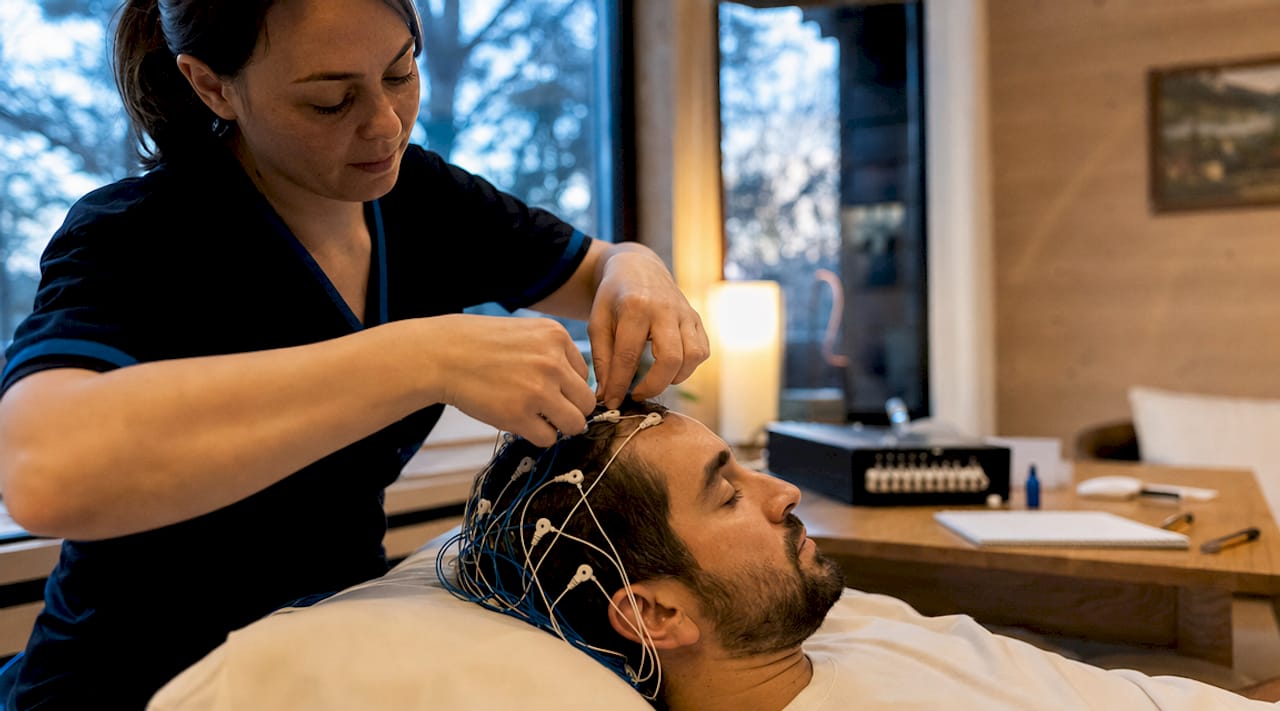
Non-REM sleep is scored by EEG into three stages, N1, N2, and N3, each with distinct electrophysiological markers that reflect progressively deeper physiological restoration. Understanding these stages explains why waking up after eight hours can still leave you feeling drained.
| Stage | Brain Wave Pattern | Key Features | Primary Function |
|---|---|---|---|
| N1 | Theta waves | Light sleep, easy arousal | Transition from wakefulness |
| N2 | K-complexes, sleep spindles | Core sleep, temperature drops | Memory encoding, heart rate slows |
| N3 | High-amplitude slow waves | Deep slow-wave sleep | Physical repair, growth hormone release |
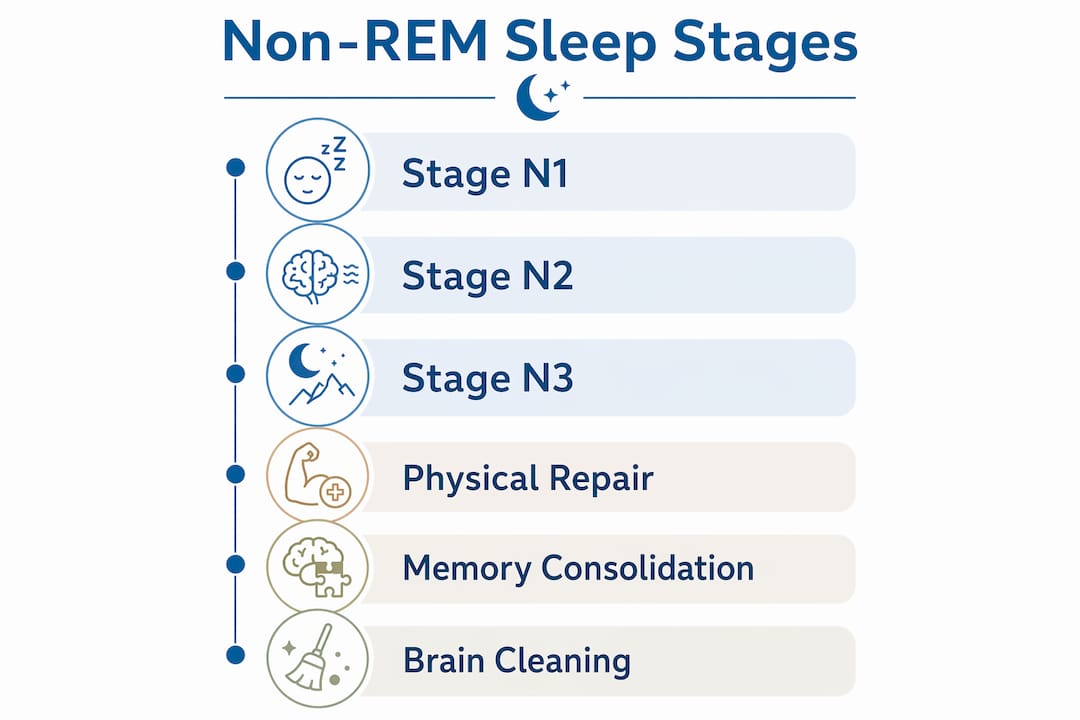
N1 is the entry point, lasting just one to seven minutes. Your muscles relax, eye movements slow, and you can be woken by a soft sound. It serves as a buffer between wakefulness and restorative sleep, not a destination.
N2 is where you spend the most time each night, roughly 45 to 55% of total sleep. The brain generates sleep spindles, which are brief bursts of neural activity, and K-complexes, which are large slow waves that appear to suppress arousal. These features are directly tied to memory consolidation, which is covered in detail below.
N3, also called slow-wave sleep or deep sleep, is the biological workhorse. Heart rate and breathing reach their lowest points, body temperature drops, and the brain produces the high-amplitude delta waves that signal peak restoration. This is the stage most people are deficient in without realizing it.
Pro Tip: If you wake up unrefreshed despite sleeping seven or eight hours, the problem is likely insufficient N3 sleep rather than total sleep time. Alcohol, late-night screen use, and irregular sleep schedules all suppress deep sleep specifically.
How does non-REM sleep support physical restoration?
Deep non-REM sleep is when the body shifts from maintenance mode into active repair. The pituitary gland releases growth hormone pulses almost exclusively during N3 sleep, driving muscle protein synthesis, bone strengthening, and cellular tissue recovery. This is why athletes who cut sleep short consistently underperform and take longer to recover from training loads.
The immune system also depends on this window. During deep NREM sleep, the body increases production of cytokines, the signaling proteins that coordinate immune responses to infection and inflammation. Restricting deep sleep reduces cytokine availability, which is one reason that sleep deprivation impairs both thinking and physical resilience simultaneously.
Key physical processes that occur specifically during N3 sleep include:
- Muscle repair and growth driven by growth hormone secretion
- Bone density maintenance through cellular regeneration cycles
- Cytokine production that primes immune defenses against pathogens
- Cardiovascular recovery as heart rate and blood pressure reach their nightly low points
- Metabolic regulation including glucose processing and insulin sensitivity
The concept of a “deep sleep rebound” is telling. When people are deprived of N3 sleep, the brain prioritizes recovering it on subsequent nights before other sleep stages. This rebound effect confirms that deep sleep restoration is not optional biology. The body treats it as a debt that must be repaid.
What role does non-REM sleep play in memory and learning?
Non-REM sleep consolidates declarative memory, the type that stores facts, events, and learned information you can consciously recall. The mechanism centers on sleep spindles and slow oscillations in N2 and N3 sleep, which coordinate the transfer of information from the hippocampus to the neocortex for long-term storage.
Studies show that interventions boosting slow-wave activity during sleep improve memory performance on recall tests the following day. This is not a marginal effect. Students who sleep after studying retain significantly more than those who stay awake, and the quality of their N2 and N3 sleep predicts how much they retain.
To get the most cognitive benefit from your non-REM sleep:
- Set a consistent sleep schedule. The brain produces more slow-wave sleep in the first half of the night. Going to bed at irregular times disrupts this architecture.
- Avoid alcohol before bed. Alcohol suppresses N3 sleep specifically, which fragments memory consolidation even when total sleep time looks normal.
- Exercise regularly, but not within two hours of bedtime. Physical activity increases slow-wave sleep depth on subsequent nights.
- Keep the bedroom cool. Core body temperature drop is a trigger for N3 sleep. A room temperature between 65 and 68 degrees Fahrenheit supports deeper sleep stages.
Pro Tip: Reviewing new material in the 30 minutes before sleep, rather than in the morning, takes advantage of the memory consolidation that happens during the first deep sleep cycle of the night.
REM sleep handles a different memory category: procedural memory and emotional processing. Non-REM and REM sleep are not competing systems. They are complementary, and both are required for full cognitive function.
How does non-REM sleep clean the brain?
The glymphatic system is the brain’s waste-clearance network, and it operates almost exclusively during deep non-REM sleep. During N3 sleep, brain cells shrink by approximately 60%, which opens channels between cells and allows cerebrospinal fluid to flush out metabolic waste products. The most significant of these waste products is amyloid-beta, a protein fragment associated with Alzheimer’s disease.
Glymphatic activity peaks during slow-wave sleep and drops sharply during wakefulness and lighter sleep stages. This means that fragmented sleep, even with adequate total hours, significantly reduces the brain’s nightly cleaning capacity.
| Sleep Condition | Glymphatic Activity Level | Implication |
|---|---|---|
| Deep N3 sleep | Peak activity | Maximum waste clearance |
| N1 and N2 sleep | Moderate activity | Partial clearance only |
| Wakefulness | Minimal activity | Waste accumulates |
| Sedative-induced sleep | Reduced activity | Cleaning impaired despite sleep |
The sedative finding is particularly important. Research from the University of Rochester found that zolpidem suppresses glymphatic activity in animal models, suggesting that drug-induced sleep does not replicate the biological cleaning of natural deep sleep. This has direct implications for anyone relying on sleep aids as a long-term solution.
The glymphatic system may explain why chronic poor sleep is consistently linked to higher dementia risk. It is not just about feeling tired. It is about whether your brain gets adequately cleaned each night.
For vocal recovery and tissue repair more broadly, the same principle applies: natural deep sleep produces biological outcomes that sedated or fragmented sleep cannot replicate.
Non-REM sleep vs REM sleep: what is the difference?
Non-REM and REM sleep serve distinct but interdependent functions. NREM supports body repair and declarative memory consolidation, while REM sleep drives emotional regulation, procedural memory, and the vivid dreaming most people associate with sleep.
| Feature | Non-REM Sleep | REM Sleep |
|---|---|---|
| Brain activity | Slow, synchronized waves | Fast, similar to wakefulness |
| Body state | Deeply relaxed, low heart rate | Muscle atonia, rapid eye movement |
| Primary memory type | Declarative (facts, events) | Procedural, emotional memory |
| Physical repair | High, especially in N3 | Minimal |
| Dreaming | Rare, non-vivid | Frequent, vivid |
| Glymphatic activity | Peak in N3 | Reduced |
A full sleep cycle runs approximately 90 minutes and includes both non-REM and REM phases. Adults complete four to six cycles per night, with deep N3 sleep concentrated in the first half of the night and REM sleep extending longer in the second half. This architecture is why cutting sleep short by even 90 minutes disproportionately reduces REM sleep, while going to bed late reduces N3 sleep.
The common misconception is that more total sleep automatically means better health outcomes. Sleep fragmentation disturbs the restorative effects even when total time appears normal. You can spend eight hours in bed and still miss the deep sleep your body needs if your sleep is repeatedly interrupted. Quality of architecture matters as much as quantity.
Key takeaways
Non-REM sleep drives physical repair, memory consolidation, and brain waste clearance through three distinct stages, and its quality determines health outcomes more than total sleep hours alone.
| Point | Details |
|---|---|
| Three NREM stages | N1, N2, and N3 each serve distinct functions, from sleep entry to deep physical restoration. |
| Physical repair in N3 | Growth hormone release and cytokine production peak during deep slow-wave sleep. |
| Memory consolidation | Sleep spindles in N2 and slow oscillations in N3 transfer memories to long-term storage. |
| Glymphatic brain cleaning | Deep NREM activates the brain’s waste-clearance system, reducing toxic protein buildup. |
| Quality over quantity | Fragmented sleep impairs NREM benefits even when total sleep time looks adequate. |
Why deep sleep deserves more attention than total hours
Most people track how long they sleep. Almost nobody tracks how deeply they sleep. That gap is where most sleep-related health problems actually live.
I have seen this pattern repeatedly: someone sleeps seven to nine hours every night, uses a sleep tracking app, and still wakes up exhausted. When you look at their sleep architecture, N3 sleep is minimal. They are cycling through N1 and N2 repeatedly, never reaching the slow-wave depth where real restoration happens. Total hours look fine. The biology is not.
The glymphatic research from the University of Rochester changed how I think about sleep entirely. The idea that your brain physically shrinks during deep sleep to let fluid flush out waste is not a metaphor. It is a mechanical process. And it only works when you reach genuine slow-wave sleep. That reframes the whole conversation from “am I sleeping enough?” to “am I sleeping deeply enough?”
The practical implication is that sleep hygiene is not about bedtime rituals for their own sake. Cooling your room, cutting alcohol, and keeping a consistent schedule all have one real target: protecting and extending your N3 sleep window. Everything else is secondary.
For anyone exploring better sleep strategies, the starting point is understanding that the depth of your sleep matters more than the clock on the wall.
— Cadence
Support your sleep with the right tools

Understanding the science of non-REM sleep is the first step. Supporting the conditions that produce deep, restorative sleep is the next. Evergreenbliss carries a curated selection of sleep and relaxation aids designed specifically to help you reach and sustain deeper sleep stages. From the Palm Sleep Massager that promotes pre-sleep relaxation to melatonin sleep supplements formulated to support natural sleep onset, every product in the collection is chosen with recovery and restoration in mind. Explore the full wellness and recovery range at Evergreenbliss and find what your sleep routine is missing.
FAQ
What does non-REM sleep do for the body?
Non-REM sleep drives physical restoration through growth hormone release, immune cytokine production, and cellular tissue repair, all of which peak during N3 deep sleep. It also consolidates declarative memories and activates the brain’s glymphatic waste-clearance system.
How many stages does non-REM sleep have?
Non-REM sleep has three stages: N1 (light transitional sleep), N2 (core sleep with spindles and K-complexes), and N3 (deep slow-wave sleep). Each stage has distinct brain wave patterns and serves different physiological functions.
How does non-REM sleep affect memory?
Sleep spindles in N2 and slow oscillations in N3 coordinate the transfer of newly learned information from the hippocampus to the neocortex for long-term storage. Interventions that increase slow-wave activity measurably improve next-day recall performance.
Is non-REM sleep more important than REM sleep?
Neither stage is more important. Non-REM sleep handles physical repair and declarative memory consolidation, while REM sleep supports emotional regulation and procedural memory. Both are required for full health, and a complete sleep cycle includes both.
Can sleep aids replace natural non-REM sleep?
Research from the University of Rochester found that common sedatives like zolpidem suppress glymphatic activity, meaning drug-induced sleep does not replicate the brain-cleaning function of natural deep non-REM sleep. Natural sleep architecture produces biological outcomes that sedated sleep cannot fully substitute.