Stress accumulates when the body’s two primary stress systems, the hypothalamic-pituitary-adrenal (HPA) axis and the sympathetic-adrenal-medullary (SAM) system, are activated more frequently or for longer than they can fully recover. The result is allostatic load: a measurable buildup of physiological wear-and-tear that links brain-driven stress signaling to systemic disease risk. According to the Mayo Clinic, chronic stress is defined specifically as prolonged HPA activation lasting weeks or months without returning to baseline. That distinction matters because it shifts stress from a temporary state into a biological condition with compounding consequences.
The three most clinically significant consequences of accumulated stress are:
- Cardiometabolic risk: sustained cortisol and catecholamine exposure drives hypertension, endothelial dysfunction, and features of metabolic syndrome
- Immune dysregulation: acute stress briefly enhances immunity, but chronic activation suppresses it and elevates inflammatory markers like C-reactive protein (CRP)
- Brain structural changes: prolonged glucocorticoid exposure remodels the hippocampus and prefrontal cortex, impairing memory and executive function
Table of Contents
- How Does the Stress Response Actually Work?
- How Does Stress Build Up Over Time?
- What Does Chronic Stress Do to Each Body System?
- What Are the Signs That Stress Has Been Building Up?
- What Are the Long-Term Health Risks of Accumulated Stress?
- Can Your Body Actually Recover from Accumulated Stress?
- How Do Clinicians Screen and Measure Accumulated Stress?
- What’s the Most Effective Way to Reduce Accumulated Stress?
- What Role Can Self-Care Devices Play in Recovery?
- Key Takeaways
- What Should You Actually Do This Week?
- Evergreenbliss Has Tools That Support Your Recovery Plan
- Useful Sources for Further Reading
How Does the Stress Response Actually Work?
The body runs two parallel stress circuits, and understanding both explains why stress builds up the way it does.
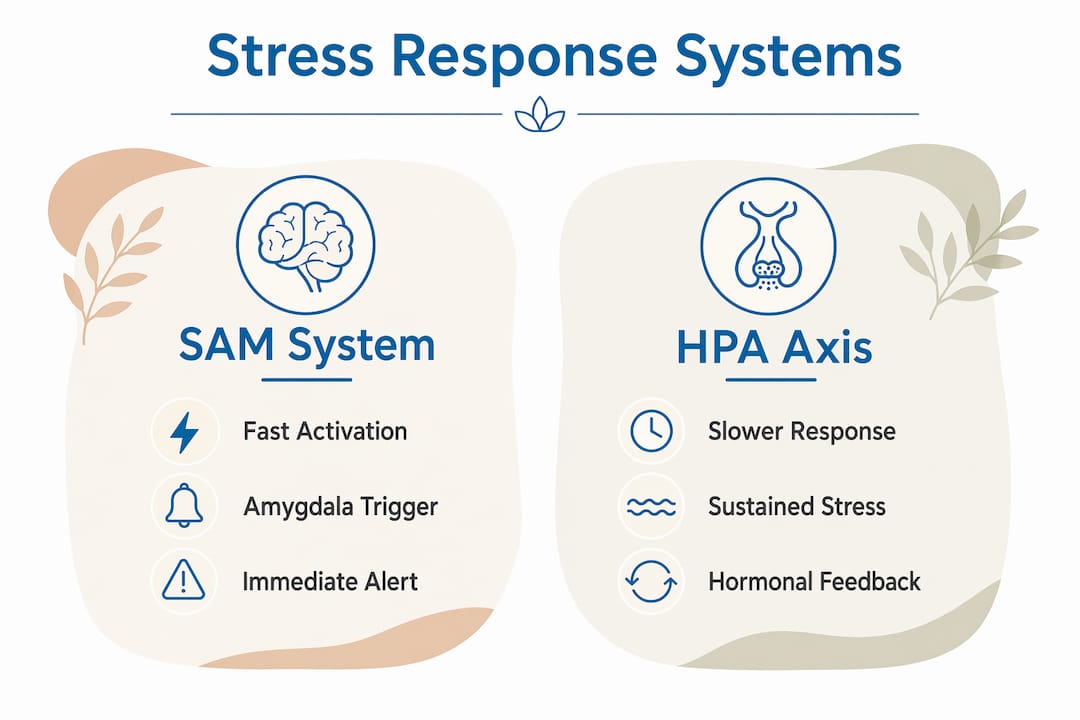
The SAM system is the fast lane. A perceived threat reaches the amygdala, which fires a distress signal to the hypothalamus. Within seconds, the hypothalamus activates the sympathetic nervous system, triggering the adrenal medulla to flood the bloodstream with epinephrine (adrenaline) and norepinephrine. Heart rate climbs, blood pressure rises, airways dilate, glucose pours into circulation, and blood is redirected to skeletal muscle. This is the classic fight-or-flight response, and it is designed to last minutes, not hours.
The HPA axis is the slower, more sustained circuit. If the brain continues reading the situation as dangerous, the hypothalamus releases corticotropin-releasing hormone (CRH), which signals the pituitary to secrete adrenocorticotropic hormone (ACTH). ACTH reaches the adrenal cortex and triggers cortisol release. Cortisol keeps the body on high alert: it mobilizes energy stores, suppresses non-urgent functions like digestion and reproduction, and modulates immune activity. According to StatPearls, the HPA axis and SAM axis together coordinate nervous, endocrine, and immune responses to any stressor, internal or external.
The off-switch is just as important as the on-switch. Cortisol itself feeds back to the hypothalamus and pituitary, suppressing further CRH and ACTH release once the threat has passed. Simultaneously, the parasympathetic nervous system, the “rest and digest” brake, dampens sympathetic tone. Harvard Health describes the parasympathetic system as the mechanism that calms the body after danger passes. When that brake fails to engage fully, or when new stressors arrive before recovery is complete, the system stays partially activated. That partial activation, repeated day after day, is where accumulation begins.
Pro Tip: If you notice your resting heart rate creeping up over several weeks without a change in fitness level, that is a physiological signal worth paying attention to. Elevated baseline heart rate is one of the earliest measurable signs that your sympathetic system is not fully recovering between stressors.
How Does Stress Build Up Over Time?
What allostatic load actually means
Allostasis is the body’s ability to maintain stability through change, adjusting cortisol, blood pressure, and immune activity in response to demands. Allostatic load is what accumulates when those adjustments are called on too often, too intensely, or without adequate recovery time. Think of it as the biological equivalent of running an engine at high RPM without ever letting it cool down. The PMC review on neurobiological effects of chronic stress describes allostatic load as the cumulative wear-and-tear from repeated activation of adaptive systems, linking brain-stress signaling to systemic pathophysiology.
Three mechanisms convert episodic stress into accumulation:
- Repeated activation without full recovery between episodes sensitizes the HPA axis, so subsequent stressors produce larger or more prolonged cortisol responses.
- Insufficient recovery from sleep deprivation, poor nutrition, or lack of parasympathetic rebound prevents the system from resetting overnight.
- Physiologic sensitization at the cellular level, where prolonged stress drives mitochondrial dysfunction, increased reactive oxygen species (ROS), and endoplasmic reticulum (ER) stress, as documented in molecular research on cellular stress adaptation.
A practical timeline of stress accumulation
-
Hours: A single acute stressor activates SAM and HPA fully. Cortisol peaks shortly after activation, then declines. Heart rate, blood pressure, and glucose normalize relatively quickly after the stressor ceases. No lasting damage if recovery is complete.
-
Days: Back-to-back stressors without recovery nights begin to blunt the cortisol feedback loop. Sleep quality deteriorates. Muscle tension persists. Mood becomes more reactive. This is the stage most people recognize as “a bad week.”
-
Weeks: Sustained activation starts shifting baseline physiology. Blood pressure may remain elevated even at rest. Inflammatory markers begin to rise. Cognitive performance, particularly working memory and attention, starts to slip. A caregiver managing a family member’s illness, or someone in a high-conflict work environment, often reaches this stage without recognizing it as a medical concern.
-
Months: Structural changes become measurable. Cortisol dysregulation, visceral fat accumulation, immune suppression, and early signs of metabolic disruption emerge. At this stage, the body has entered the exhaustion stage described in the General Adaptation Syndrome, characterized by burnout, fatigue, reduced stress tolerance, and heightened disease vulnerability.
Several factors accelerate this timeline: chronic sleep loss, poor diet (particularly high glycemic load and low omega-3 intake), preexisting conditions like hypertension or diabetes, and socioeconomic stressors that offer no clear resolution point.
What Does Chronic Stress Do to Each Body System?
Chronic stress affects virtually every organ system through neuroendocrine, autonomic, immune, and metabolic pathways. The table below maps each system to its primary mechanism and typical clinical signs.
| Body System | Primary Mechanism | Typical Signs and Markers |
|---|---|---|
| Cardiovascular | Sustained catecholamines raise blood pressure; cortisol promotes endothelial dysfunction and dyslipidemia | Hypertension, palpitations, elevated LDL, atherosclerotic changes |
| Immune/Inflammation | Acute enhancement followed by chronic suppression; elevated CRP and pro-inflammatory cytokines | Frequent infections, slow wound healing, elevated CRP |
| Metabolic/Endocrine | Cortisol drives visceral adiposity, insulin resistance, and sarcopenia | Weight gain (central), elevated fasting glucose, metabolic syndrome features |
| Nervous System/Brain | Glucocorticoid-driven dendritic remodeling in hippocampus and prefrontal cortex | Memory lapses, poor concentration, anxiety, depression risk |
| Musculoskeletal | Elevated cortisol inhibits osteoblasts, promotes osteoclasts; sympathetic tone increases muscle tension | Tension headaches, jaw pain, low back pain, reduced bone density |
| Gastrointestinal | CRH receptors in the gut wall alter motility; microbiome disruption | Irritable bowel symptoms, nausea, bloating, appetite changes |
| Reproductive | HPA activation suppresses GnRH, reducing sex hormone output | Irregular menstrual cycles, reduced libido, fertility difficulties |
| Skin | Cortisol impairs skin barrier function; neurogenic inflammation via neuropeptides | Acne flares, eczema, psoriasis exacerbation, delayed wound healing |
| Sleep | Elevated evening cortisol disrupts circadian rhythm and suppresses slow-wave sleep | Difficulty falling asleep, frequent waking, non-restorative sleep |
A few systems deserve closer attention.
Cardiovascular: StatPearls notes that chronic stress induces sustained sympathetic and HPA activation, promoting oxidative stress, endothelial dysfunction, and inflammation that accelerates atherosclerosis. Stress-related lipid metabolism changes compound this by worsening dyslipidemia.

Brain: Chronic glucocorticoid exposure increases extracellular glutamate and drives dendritic shrinkage in the hippocampus and prefrontal cortex, while the amygdala can become hyperreactive. The result is a brain that is simultaneously worse at rational planning and more prone to threat detection, a combination that perpetuates the stress cycle.
Immune: The biphasic pattern is clinically important. Research on neurobiological stress effects confirms that acute stress can temporarily boost immune responses, while chronic stress typically suppresses immune function and elevates inflammatory markers. This explains why people under prolonged stress catch more colds and also experience more inflammatory flares.

Musculoskeletal: Prolonged cortisol exposure inhibits osteoblast activity and promotes osteoclast function, reducing bone density over time. Sympathetic-driven muscle tension contributes to tension headaches, temporomandibular joint disorders, and conditions like fibromyalgia.
What Are the Signs That Stress Has Been Building Up?
The most common cluster of stress buildup symptoms is sleep disturbance combined with cognitive difficulties, somatic complaints, and mood changes. Recognizing this cluster early is the difference between a manageable problem and a clinical one.
Physical signs:
- Persistent headaches or jaw tension
- Muscle tightness, especially in the neck, shoulders, and lower back
- Digestive upset: bloating, nausea, or irregular bowel habits
- Fatigue that does not resolve with rest
- Frequent minor illnesses
Cognitive signs:
- Difficulty concentrating or finishing tasks
- Memory lapses, especially for recent events
- Slowed decision-making or mental fog
Emotional signs:
- Irritability or short temper disproportionate to the trigger
- Low mood, emotional numbness, or persistent worry
- Feeling detached from people or activities you normally enjoy
Behavioral signs:
- Withdrawing from social contact
- Increased use of alcohol, caffeine, or food for comfort
- Neglecting exercise, sleep routines, or medical appointments
Recognizing chronic stress signs early gives you a meaningful window to intervene before physiological changes become harder to reverse.
5 red-flag signs that need prompt clinical attention
- Chest pain or pressure, especially with exertion
- Thoughts of self-harm or suicide
- Sudden neurological symptoms: numbness, vision changes, severe headache
- Severe unintentional weight loss
- Inability to perform basic daily tasks for more than a few days
Pro Tip: A useful self-check: if you have had three or more of the physical or cognitive symptoms above for longer than two weeks, bring that list to your next medical appointment. Clinicians often see these symptoms in isolation; presenting them together changes the clinical picture.
What Are the Long-Term Health Risks of Accumulated Stress?
The major downstream conditions tied to chronic stress accumulation are cardiometabolic disease, mood disorders, immune suppression and autoimmune fluctuation, and accelerated cellular aging. These are not speculative links. Systematic reviews connect chronic psychosocial stress to higher cardiometabolic risk, including hypertension, atherosclerosis, and metabolic syndrome.
The Endotext review on stress endocrinology documents how chronic HPA activation and high cortisol exposure produce visceral adiposity, insulin resistance, sarcopenia, and features of metabolic syndrome. At the cellular level, prolonged stress drives ER stress, mitochondrial dysfunction, and reactive oxygen species accumulation, molecular failures that underlie many links between chronic stress and non-communicable diseases.
Risk modifiers that raise long-term vulnerability:
- Older age and female sex (higher baseline HPA reactivity in some studies)
- Genetic variants affecting glucocorticoid receptor sensitivity
- Lower socioeconomic status, which compounds stressor frequency and limits recovery resources
- Preexisting conditions: hypertension, diabetes, autoimmune disorders
- Chronic sleep deprivation and sedentary behavior
Risk modifiers that lower long-term vulnerability:
- Strong social support networks
- Regular aerobic exercise
- High dietary quality (Mediterranean-pattern diets show protective associations)
- Access to mental health care
One clarification worth making: most of the evidence here is associational, not purely causal. Randomized controlled trials on chronic stress are ethically constrained. That said, stress is a modifiable risk factor, and the interventions that reduce it also independently improve cardiometabolic and mental health outcomes. The direction of benefit is consistent across study designs.
Can Your Body Actually Recover from Accumulated Stress?
Yes. Many physiological effects of accumulated stress are at least partially reversible with sustained interventions, though the timeline and completeness vary considerably by system.
Recovery trajectories by system:
- Sleep and mood: Often the fastest responders. Consistent sleep schedules and brief behavioral interventions can produce measurable improvements within two to four weeks.
- Cardiovascular markers: Blood pressure and resting heart rate can normalize within weeks of regular aerobic exercise and stress reduction, though atherosclerotic changes take longer.
- Metabolic changes: Visceral fat, insulin sensitivity, and cortisol diurnal patterns may take three to six months of consistent lifestyle change to show meaningful improvement.
- Brain structure: Dendritic remodeling in the hippocampus and prefrontal cortex can reverse with sustained therapy and lifestyle intervention, but structural changes may take months to years. Research on neurobiological stress effects confirms that these brain changes are linked to chronic glucocorticoid exposure and are not permanent with appropriate intervention.
- Immune function: Inflammatory markers like CRP tend to decline with exercise and stress reduction, though the timeline depends on baseline levels and comorbidities.
Behavioral interventions, particularly cognitive behavioral therapy (CBT) and exercise, often improve symptoms faster than structural biomarker changes, which lag behind symptom improvement. This means you may feel significantly better weeks before blood tests confirm it.
When to seek clinical help rather than self-managing:
- Symptoms persist despite four to eight weeks of consistent self-care
- Any of the five red-flag signs listed above appear
- Functional decline: inability to work, care for yourself, or maintain relationships
- Suicidal thoughts at any point
Building a daily stress-reduction routine is one of the most evidence-supported starting points for recovery, particularly for sleep and mood.
How Do Clinicians Screen and Measure Accumulated Stress?
The most widely used screening tools are the Perceived Stress Scale (PSS), the GAD-7, and the PHQ-9. These capture perceived stress and related symptoms rather than an “objective” biological stress load, which is an important distinction.
Screening questionnaires:
- Perceived Stress Scale (PSS): A 10-item self-report measure assessing how uncontrollable and overwhelming life has felt in the past month. Certain score thresholds in the Perceived Stress Scale indicate moderate or high stress warranting clinical attention.
- GAD-7: A 7-item tool for generalized anxiety. Scores of 10 or above suggest moderate anxiety and referral consideration.
- PHQ-9: A 9-item depression screen. Scores of 10 or above indicate moderate depression; any score on item 9 (suicidal ideation) requires immediate evaluation.
These tools are validated, free, and widely available. Endotext notes their use alongside biomarker assessment in clinical stress evaluation.
Biomarker reference table:
| Biomarker | What It Suggests | Practical Limitation |
|---|---|---|
| Morning serum cortisol | Baseline HPA axis output | Highly variable; affected by sleep, time of draw, acute stress at collection |
| Diurnal cortisol slope | HPA rhythm integrity (should decline steeply from morning to evening) | Requires multiple samples; not routine in primary care |
| Salivary cortisol profile | Non-invasive HPA rhythm assessment | Lab variability; affected by food, smoking, oral health |
| Hair cortisol | Reflects average cortisol over 1–3 months | Research tool; not yet standard in clinical practice |
| CRP (C-reactive protein) | Systemic inflammation linked to chronic stress | Non-specific; elevated by many conditions beyond stress |
When to get tested:
- Persistent fatigue, weight gain, or mood changes lasting more than four weeks
- PSS score above 20 or PHQ-9 above 10
- Suspected metabolic syndrome or cardiovascular risk elevation
- Before and after a structured stress-reduction program, to track progress
A single biomarker result is rarely diagnostic on its own. Cortisol, in particular, is so context-sensitive that a one-time draw can be misleading. Clinicians use these markers alongside clinical history and validated questionnaires, not as standalone tests.
What’s the Most Effective Way to Reduce Accumulated Stress?
The most effective approach combines psychological treatments (CBT, mindfulness-based stress reduction), consistent sleep, regular exercise, social support, and targeted medical care when needed. The WHO identifies sleep and regular exercise as two of the most accessible population-level interventions for reducing stress-related harm.
A 30/60/90-day plan
-
Days 1–30: Stabilize the foundation
- Set a fixed sleep and wake time, seven days a week. Sleep consistency is the single fastest lever for cortisol normalization.
- Begin 20–30 minutes of moderate aerobic exercise daily (brisk walking counts). Exercise reduces catecholamine reactivity and improves mood within days.
- Practice a brief daily breathing exercise. Slow diaphragmatic breathing activates the parasympathetic system within minutes. Breathing techniques that take under two minutes can measurably reduce acute physiological arousal.
- Limit caffeine after noon and alcohol to no more than one drink per day.
- Track your PSS score at the start of this month as a baseline.
-
Days 31–60: Build structure and add therapy
- Begin structured CBT or MBSR. Both have strong evidence for reducing stress symptoms and improving HPA regulation. Many therapists offer telehealth, which removes the friction of scheduling. The PMC review cites CBT, MBSR, and exercise as the interventions with the strongest evidence for symptom reduction and physiologic improvement.
- Add resistance training two days per week. Resistance exercise improves insulin sensitivity and reduces cortisol reactivity over time.
- Introduce one social connection per week that is not work-related. Social support is a direct buffer against HPA reactivity.
- Reassess PSS score. A drop of five or more points suggests the plan is working.
-
Days 61–90: Evaluate and adjust
- If symptoms have improved substantially, continue the current plan and consider tapering to maintenance levels.
- If sleep, mood, or cognitive function have not improved, schedule a clinical evaluation. Bring your PSS, GAD-7, and PHQ-9 scores.
- Consider biomarker testing (morning cortisol, CRP, fasting glucose) to assess metabolic and inflammatory status.
- Explore evidence-ranked stress relief techniques to identify any high-value behaviors you have not yet tried.
Pro Tip: Starting therapy feels like a big step, but the first appointment is just a conversation. Bring your PSS score and a one-paragraph description of your main stressors. That gives a therapist enough to recommend a structured approach in the first session, rather than spending weeks on intake.
What Role Can Self-Care Devices Play in Recovery?
Devices can help manage specific symptoms, particularly muscle tension, sleep fragmentation, and stress tracking, but they are adjuncts to behavioral and clinical care, not substitutes for it. That framing matters: a wearable that tracks heart rate variability (HRV) does not reduce allostatic load on its own, but it can make the effects of your behavioral interventions visible and motivating.
Device categories and their symptom targets:
- Wearable HRV and biofeedback trackers: Monitor autonomic nervous system recovery in real time. Useful for identifying whether your recovery practices are actually shifting your physiology. Best used to guide, not replace, behavioral change.
- White noise and sleep sound devices: Address sleep fragmentation by masking environmental noise and supporting sleep onset. Relevant for the sleep recovery phase of the 30/60/90 plan. For deeper context on how stress disrupts sleep architecture, see how stress impacts sleep quality.
- Massage and pressure tools: Acupressure mats, foam rollers, and handheld massagers address musculoskeletal tension driven by sympathetic activation. Touch-based interventions have evidence for reducing perceived stress and muscle tension in the short term.
- Portable breath trainers: Devices that pace breathing to a target respiratory rate (typically 5–6 breaths per minute) support parasympathetic activation. These are particularly useful for people who find unguided breathing exercises hard to sustain.
Safety and usage notes:
- Devices are appropriate when symptoms are mild to moderate and you are already engaged in behavioral interventions.
- Stop using a device if it increases anxiety (some HRV trackers create performance anxiety around recovery scores).
- Do not substitute device use for clinical evaluation when red-flag symptoms are present.
Pro Tip: Integrate devices into your 30/60/90 plan at the 30-day mark, once sleep and exercise habits are established. Adding a device before behavioral foundations are in place tends to create distraction rather than benefit. The device should confirm progress, not replace the work.
Key Takeaways
Stress accumulates through repeated HPA and SAM activation without adequate recovery, producing allostatic load that affects every major organ system and raises long-term cardiometabolic, neurological, and immune disease risk.
| Point | Details |
|---|---|
| Two systems drive accumulation | The HPA axis and SAM system stay partially activated between stressors, preventing full physiological recovery. |
| Allostatic load is measurable | Repeated activation without recovery produces wear-and-tear across cardiovascular, metabolic, immune, and brain systems. |
| Symptoms cluster predictably | Sleep disturbance, cognitive difficulties, somatic complaints, and mood changes are the earliest reliable warning signs. |
| Recovery is real but takes time | Sleep and mood often improve in weeks; metabolic and brain changes may take months with consistent CBT, exercise, and sleep optimization. |
| Evergreenbliss supports recovery | Evergreenbliss offers adjunct tools, including massage devices, sleep aids, and acupressure products, that complement evidence-based stress-reduction plans. |
What Should You Actually Do This Week?
The clinical picture on stress recovery is genuinely optimistic. The physiological changes that accumulate over months can be meaningfully reversed, and the interventions that work are not complicated. They are just consistent.
For week one, the most impactful actions are also the most accessible:
- Set a fixed sleep window (same bedtime and wake time, even on weekends). This is the fastest single lever for cortisol normalization and mood stabilization.
- Move for 10–20 minutes daily. It does not need to be intense. A brisk walk reduces catecholamine reactivity and improves sleep quality within days.
- Practice one brief breathing exercise. Four counts in, hold four, out four. Do it for five minutes before bed. The parasympathetic activation is immediate and measurable.
- Have one honest conversation with someone you trust about how you have been feeling. Social support directly buffers HPA reactivity; this is not just emotional comfort, it is physiology.
If you have any of the red-flag symptoms described earlier, including chest pain, suicidal thoughts, or significant functional decline, skip self-management and contact a clinician this week. Bring your PSS score if you have taken it. Clinicians can act on that number immediately.
This article is general health information, not medical advice. Confirm any clinical concerns with a qualified healthcare provider.
Evergreenbliss Has Tools That Support Your Recovery Plan
Stress recovery is built on behavioral foundations: sleep, movement, therapy, and social connection. But when muscle tension, sleep fragmentation, or nervous system overactivation are making those foundations harder to build, targeted physical tools can help you get traction faster.

Evergreenbliss carries a curated range of adjunct recovery tools designed specifically for the physical symptoms that chronic stress produces. A neck massager with soothing heat addresses the muscle tension that builds from sustained sympathetic activation. An acupressure mat supports relaxation and pressure-point relief after a long day. Sleep aids in the sleep and relaxation collection target the sleep fragmentation that is often the first and most disruptive symptom of stress buildup.
These are adjuncts, not treatments. They work best when layered into the 30/60/90 plan above, not used in place of it. Browse the full mental wellness and stress-relief collection to find the tools that fit where you are in your recovery right now.
Useful Sources for Further Reading
-
Physiology, Stress Reaction — StatPearls, NCBI Bookshelf: The most comprehensive freely available clinical reference for HPA and SAM physiology, covering the full cascade from threat perception to systemic effects across every organ system.
-
Neurobiological and Systemic Effects of Chronic Stress — PMC: A peer-reviewed review covering allostatic load, brain structural changes, immune effects, and the evidence base for behavioral interventions including CBT and exercise.
-
Stress: Endocrine Physiology and Pathophysiology — Endotext/NCBI: Detailed endocrine reference on cortisol physiology, metabolic consequences of chronic HPA activation, and clinical screening tools including the PSS.
-
Biochemical Mechanisms of Cellular Stress Adaptation — MDPI: Molecular-level review of ER stress, mitochondrial dysfunction, and ROS accumulation as mechanisms linking chronic stress to non-communicable disease.
-
Understanding the Stress Response — Harvard Health: Accessible, authoritative lay summary of fight-or-flight physiology, HPA activation, and the long-term health consequences of chronic stress.
-
Stress Q&A — World Health Organization: WHO public health guidance on population-level stress effects, mental health risk, and evidence-based mitigation strategies including sleep and exercise.