Magnesium is a mineral that directly supports the nervous system’s shift from wakefulness to rest, making it one of the most studied natural sleep aids available. Understanding why magnesium improves sleep starts with its role in neurotransmitter regulation, muscle relaxation, and sleep hormone production. Clinical research confirms these effects are real, though modest, and most pronounced in people with low magnesium levels or older adults. This article breaks down the biology, the evidence, and the practical steps you can take to use magnesium for better sleep.
Why magnesium improves sleep: the biological mechanisms
Magnesium calms the nervous system through two distinct pathways. First, it potentiates GABA-A receptors, amplifying the brain’s primary inhibitory neurotransmitter. Second, it blocks excitatory NMDA receptor channels, reducing central nervous system hyperexcitability. Together, these actions lower the neural “noise” that keeps you awake.
Magnesium also plays a direct role in melatonin production. It supports the enzymatic conversion of serotonin to melatonin, the hormone that signals your body it is time to sleep. Without adequate magnesium, this conversion slows, and melatonin output drops.
Cortisol is the third piece of the puzzle. Magnesium suppresses hypothalamic-pituitary-adrenal (HPA) axis activity, which is the stress response system that floods your body with cortisol. Elevated cortisol at night is one of the most common reasons people lie awake. Magnesium directly attenuates that response.
Key biological roles magnesium plays in sleep:
- GABA potentiation: Strengthens the brain’s natural “off switch,” promoting relaxed neural states.
- NMDA blockade: Reduces excitatory signaling that causes mental restlessness at bedtime.
- Melatonin synthesis: Supports the serotonin-to-melatonin conversion pathway.
- Cortisol suppression: Lowers stress hormone levels that disrupt sleep onset.
- Muscle relaxation: Regulates calcium uptake in muscle cells, preventing tension and cramps.
Pro Tip: If you wake up with leg cramps at night, low magnesium is a likely contributor. Muscle cramps are one of the earliest physical signs of magnesium deficiency.
Sleep onset latency, meaning how long it takes you to fall asleep, is the most consistently improved metric in magnesium research. Changes to deeper sleep architecture, like slow-wave sleep percentages, are less reliably observed across studies.
What does the research actually show?
The clinical evidence for magnesium and sleep quality is real but requires honest interpretation. A 2021 meta-analysis of randomized trials found that oral magnesium supplementation at doses of 320–729 mg elemental magnesium per day reduced sleep-onset latency by about 17 minutes in older adults with insomnia. That is a meaningful reduction for someone who routinely takes 45 minutes or more to fall asleep.
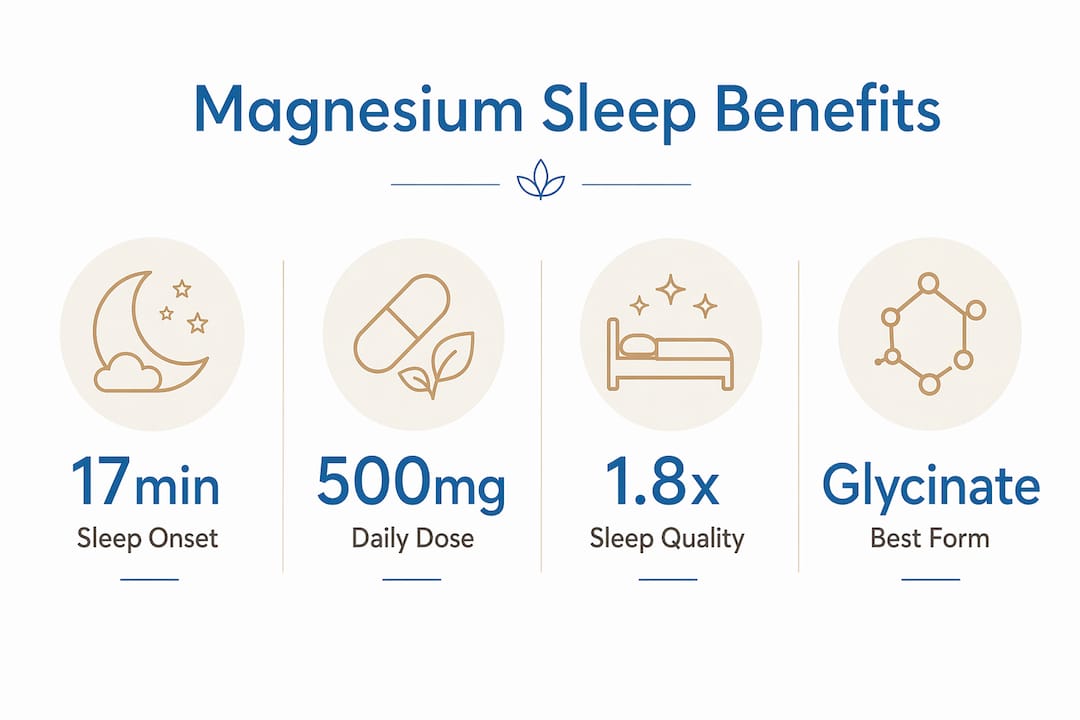
A landmark 2012 randomized controlled trial by Abbasi et al. tested 500 mg of magnesium oxide daily for 8 weeks in elderly participants with primary insomnia. The results showed improved insomnia severity alongside measurable changes in melatonin and cortisol biomarkers. This study is frequently cited because it connected subjective sleep improvements to objective hormonal changes.
Observational data adds another layer. A 2025 study of Saudi adults found that serum magnesium deficiency below 1.8 mg/dL was associated with 1.8-fold higher odds of poor sleep quality, measured using the Pittsburgh Sleep Quality Index. That association is strong enough to take seriously.
| Study | Population | Intervention | Key Finding |
|---|---|---|---|
| 2021 Meta-analysis | Older adults with insomnia | 320–729 mg/day elemental magnesium | Reduced sleep-onset latency by ~17 minutes |
| Abbasi et al. 2012 | Elderly with primary insomnia | 500 mg magnesium oxide, 8 weeks | Improved insomnia severity; melatonin and cortisol changes |
| 2025 Observational Study | Saudi adults | Serum magnesium measurement | Low magnesium linked to 1.8x higher odds of poor sleep |
The honest caveat: most studies are small, short in duration, and focused on older or magnesium-deficient populations. Younger, healthy adults with normal magnesium levels see more modest benefits. The science supports magnesium as a real sleep aid, not a guaranteed one.
Which magnesium form works best for sleep?
Not all magnesium supplements are equal. The form you choose affects how well your body absorbs it and how your gut tolerates it.
Magnesium glycinate is the most recommended form for sleep. It binds magnesium to glycine, an amino acid with its own calming properties. Glycinate is well tolerated and produces minimal gastrointestinal side effects, which is the main complaint with cheaper forms.
Magnesium threonate is newer and shows emerging evidence for both cognitive and sleep benefits. It crosses the blood-brain barrier more effectively than other forms, which may explain its growing interest among researchers. It is typically more expensive but worth considering if you also want cognitive support.
Magnesium oxide is the cheapest and most widely available form. It has poor absorption rates compared to glycinate or threonate, though the Abbasi et al. trial did use oxide successfully. It is not the first choice for sleep, but it is not useless.
Magnesium citrate absorbs reasonably well but has a laxative effect at higher doses. It works better for constipation than for sleep.
| Form | Absorption | GI Tolerance | Best Use Case |
|---|---|---|---|
| Glycinate | High | Excellent | Sleep and relaxation |
| Threonate | High (brain-targeted) | Good | Sleep and cognitive support |
| Citrate | Moderate | Moderate | General supplementation |
| Oxide | Low | Poor at high doses | Budget option; limited sleep use |
Dosage from clinical studies typically falls in the range of 320–500 mg elemental magnesium per day. Start at the lower end and adjust based on tolerance.
Pro Tip: Take magnesium 1–2 hours before bed. This evening timing aligns with most clinical trial protocols and fits naturally into a wind-down routine.
Potential side effects include loose stools, nausea, and stomach cramping, mostly with oxide and citrate at high doses. People with kidney disease should consult a doctor before supplementing, as impaired kidneys cannot clear excess magnesium efficiently.
What factors determine whether magnesium will help you sleep?
Magnesium works best when there is a clear deficiency or a stress-related sleep barrier to correct. Benefits are greater for older adults and those with low baseline magnesium levels. Younger adults with healthy diets and normal magnesium status will likely see smaller improvements.
The factors that most influence your results:
- Baseline magnesium status. If your diet is low in magnesium-rich foods like spinach, pumpkin seeds, and dark chocolate, supplementation will likely produce noticeable changes. If your levels are already adequate, the effect is smaller.
- Age. Older adults absorb less magnesium from food and excrete more through the kidneys. This population consistently shows the strongest response in clinical trials.
- Stress levels. Stress depletes magnesium, and low magnesium worsens the stress-sleep cycle. Addressing both together produces better outcomes than supplementation alone.
- Consistency. Magnesium is not a sedative. You will not feel it working the first night. Clinical trials show benefits emerging over weeks of consistent dosing.
- Underlying sleep disorders. Magnesium does not treat sleep apnea, restless leg syndrome, or circadian rhythm disorders. If a structural sleep disorder is present, magnesium provides limited benefit without addressing the root cause.
Magnesium works best as part of a broader sleep hygiene plan. Pairing it with reduced screen time, a consistent sleep schedule, and stress management practices produces results that supplementation alone cannot match. Selecting the right supplement form and dosing consistently over several weeks is what separates people who see results from those who give up after a few days.
Key Takeaways
Magnesium improves sleep by calming neural excitability through GABA potentiation and NMDA blockade, supporting melatonin production, and lowering cortisol, with the strongest benefits seen in magnesium-deficient or older adults.
| Point | Details |
|---|---|
| Core mechanism | Magnesium potentiates GABA and blocks NMDA receptors to reduce nervous system excitability. |
| Strongest evidence | A 2021 meta-analysis found magnesium reduced sleep-onset latency by about 17 minutes in older adults. |
| Best supplement form | Magnesium glycinate offers high absorption and low GI side effects, making it the top choice for sleep. |
| Timing matters | Take magnesium 1–2 hours before bed to align with clinical protocols and your wind-down routine. |
| Who benefits most | People with low magnesium levels, older adults, and those with stress-related sleep issues see the clearest results. |
Magnesium is a tool, not a cure
I have read enough clinical trials and talked to enough people about sleep to say this plainly: magnesium is one of the most underrated tools in natural sleep improvement, and also one of the most misunderstood. People either dismiss it entirely or expect it to knock them out like a prescription sedative. Neither view is accurate.
What I find compelling about magnesium is the mechanism. It does not sedate you. It removes obstacles to sleep by calming an overactive nervous system, lowering cortisol, and supporting melatonin. That is a fundamentally different action than a sleeping pill, and it is why the results feel more natural when they work.
The research is honest about limitations. The benefits are modest in healthy young adults. The trials are mostly short and small. But for someone who is stressed, older, or eating a magnesium-poor diet, the effect can be genuinely meaningful. A 17-minute reduction in sleep-onset latency is not trivial when you are lying awake for an hour every night.
My practical advice: choose glycinate, start at 300 mg, take it in the evening, and give it four weeks before judging the results. If you have a diagnosed sleep disorder, talk to your doctor before relying on any supplement. Magnesium is a support, not a solution in isolation.
— Cadence
Sleep better with Evergreenbliss
If you are ready to put the science into practice, Evergreenbliss has a curated selection of products built around natural sleep improvement and stress relief.

The sleep and relaxation aids collection includes well-tolerated magnesium supplement options alongside complementary tools like acupressure mats and relaxation devices. For those dealing with stress-driven sleep issues, the stress relief and mental wellness products collection pairs naturally with a magnesium routine. Evergreenbliss also offers free shipping and easy returns, so trying something new carries no risk. Browse the full wellness solutions range to find what fits your sleep goals.
FAQ
Does magnesium actually help you fall asleep faster?
Clinical research shows magnesium can reduce sleep-onset latency by roughly 17 minutes in older adults with insomnia. The effect is most reliable in people with low magnesium levels or high stress.
What is the best form of magnesium for sleep?
Magnesium glycinate is the most recommended form for sleep due to its high absorption and low gastrointestinal side effects. Magnesium threonate is a newer option with emerging evidence for both sleep and cognitive benefits.
How long does magnesium take to improve sleep?
Magnesium is not a sedative and does not produce immediate results. Most clinical trials show measurable improvements after several weeks of consistent daily dosing.
Can magnesium deficiency cause insomnia?
A 2025 observational study found that low serum magnesium was associated with 1.8-fold higher odds of poor sleep quality. Correcting a deficiency through diet or supplementation is one of the clearest paths to improvement.
Is it safe to take magnesium every night?
For most healthy adults, daily magnesium supplementation at clinically studied doses is safe. People with kidney disease should consult a doctor first, as impaired kidneys cannot clear excess magnesium efficiently.