A strong bedtime wellness routine comes down to a fixed sequence of calming habits that signal your brain and body to shift into sleep mode. The research is clear: consistency in timing and order matters more than any single activity you choose. Here are the core practices to build your routine around:
- Set a fixed bedtime and wake time every day, including weekends, to anchor your circadian rhythm.
- Limit screens 30 minutes before bed. Blue light suppresses melatonin and keeps your brain alert longer than you want.
- Take a warm bath 60–90 minutes before sleep to trigger the core temperature drop that signals sleep readiness.
- Do light stretching, deep breathing, or meditation to shift your nervous system from active to rest mode.
- Journal or write a to-do list on paper to offload unresolved thoughts and reduce cognitive arousal.
- Keep your bedroom cool (64°F–68°F), dark, and quiet. Reserve it strictly for sleep and intimacy.
- Avoid heavy meals, caffeine, alcohol, and nicotine close to bedtime.
- Try an evening skincare routine with self-massage as an emerging sensory ritual that research now links to measurable sleep gains.
- Keep the whole routine to about 30 minutes. Longer routines risk introducing stimulating activities that undo the wind-down.
Table of Contents
- Why a consistent sleep schedule is the foundation of good rest
- How screen use before bed quietly wrecks your sleep
- Relaxation techniques that actually prepare your body for sleep
- How journaling before bed reduces the time it takes to fall asleep
- Setting up your bedroom as a genuine sleep sanctuary
- What you eat and drink in the hours before bed matters more than you think
- Common barriers to sleep hygiene and how to get past them
- An evening skincare and self-massage ritual can measurably improve sleep
- Mindfulness and meditation as pre-sleep tools
- How long your bedtime routine should be, and when to start it
- When you exercise affects how well you sleep that night
- Managing light exposure in the hours before sleep
- Evergreenbliss has the tools to support your sleep routine
- Key Takeaways
Why a consistent sleep schedule is the foundation of good rest
Your body runs on a roughly 24-hour internal clock called the circadian rhythm, and it responds powerfully to regular sleep and wake times. When you go to bed and get up at the same time each day, your brain learns to ramp up melatonin production and lower core body temperature on schedule, making it easier to fall asleep and wake up without an alarm.
The flip side is equally true. Irregular schedules, sleeping in on weekends, or shifting your bedtime by more than an hour disrupts this rhythm and leaves you feeling groggy and off-balance during the day. Consistent sleep times are one of the most evidence-backed changes you can make.
Practical strategies to stay consistent:
- Set a single alarm for your wake time and resist hitting snooze, even after a poor night.
- If you need to shift your schedule, move it by no more than 15–30 minutes per day.
- Shift workers should maximize sleep blocks, minimize the number of shift rotations, and use blackout curtains to sleep during daylight hours.
- Parents with young children can anchor their own wind-down to the child’s bedtime routine rather than fighting it.
Building this habit takes about two to three weeks before it feels automatic. The payoff, deeper and more restorative sleep architecture, is worth the adjustment period.
How screen use before bed quietly wrecks your sleep
Blue light from phones, tablets, and laptops suppresses melatonin production and delays sleep onset. That is the part most people know. What gets less attention is the cognitive stimulation side: scrolling social media, reading news, or answering emails keeps your prefrontal cortex engaged at exactly the moment you need it to quiet down.
Bright overhead lighting over 800 lumens suppresses melatonin for up to 30 minutes after exposure. Dim warm lighting below 200 lumens, starting 30 minutes before bed, is the practical target.
Steps that actually work:
- Place your phone in another room at least 30 minutes before your target sleep time.
- Switch overhead lights for warm, dimmable lamps in the evening.
- Replace the last screen session with a physical book, light stretching, or conversation.
- Use your device’s night mode or blue-light-filtering glasses if you cannot avoid screens entirely, but treat these as damage control, not a solution.
Pro Tip: Set a hard device curfew using your phone’s built-in Screen Time or Digital Wellbeing feature. When your phone locks itself, you stop negotiating with yourself about “just five more minutes.”
Relaxation techniques that actually prepare your body for sleep
The goal of any pre-sleep relaxation practice is to shift your autonomic nervous system from sympathetic (alert, active) to parasympathetic (calm, ready for rest). Several techniques do this reliably.
Warm baths are one of the most effective. A 10-minute soak at 104°F–109°F taken 60–90 minutes before bed triggers peripheral vasodilation: blood rushes to the skin’s surface, and when you step out, your core body temperature drops by roughly 1°C. That drop is a direct biological cue for sleep onset, and studies show it can cut sleep onset latency by 8–10 minutes.

Progressive muscle relaxation (PMR) works by systematically tensing and releasing muscle groups from feet to face. Cognitive behavioral therapy for insomnia (CBT-I), the gold-standard treatment for chronic sleep problems, incorporates PMR and abdominal breathing as core components. You do not need a therapist to start: a guided PMR audio track takes about 15 minutes.
Calming music at a slow tempo (around 60 beats per minute) has been shown to reduce physiological arousal markers including heart rate and cortisol. Pair it with light stretching or simply lying still in dim light.
Pro Tip: Sequence your relaxation activities in the same order every night. The brain encodes that fixed order as a cue to begin sleep preparation, so the routine itself becomes the trigger, not just the individual activities.
How journaling before bed reduces the time it takes to fall asleep
Racing thoughts at bedtime are often unfinished business: tasks you forgot, worries you have not resolved, plans you have not made. Writing them down on paper externalizes them, closing the cognitive loop that keeps your brain on alert.
Research finding: A “brain dump” journaling practice before bed reduces sleep onset latency by about 9 minutes, a meaningful gain for anyone who regularly lies awake for 20–30 minutes.
Practical journaling tips for your pre-sleep routine:
- Write a to-do list for the next day rather than a reflection on what went wrong today. Forward-focused writing offloads planning anxiety more effectively.
- Keep it to five minutes. You are not writing a memoir; you are emptying your mental inbox.
- Use a physical notebook, not your phone’s notes app. The point is to avoid screen exposure and the temptation to check notifications.
- If anxiety is a recurring issue, a brief nighttime anxiety practice that combines journaling with slow breathing can compound the benefit.
The paper-versus-screen distinction matters more than it sounds. Even a few minutes on a bright screen after dimming your lights partially reverses the melatonin ramp-up you have been building.
Setting up your bedroom as a genuine sleep sanctuary
Your bedroom environment sends constant signals to your brain about what is expected of you in that space. Get the setup right and sleep comes faster and runs deeper.
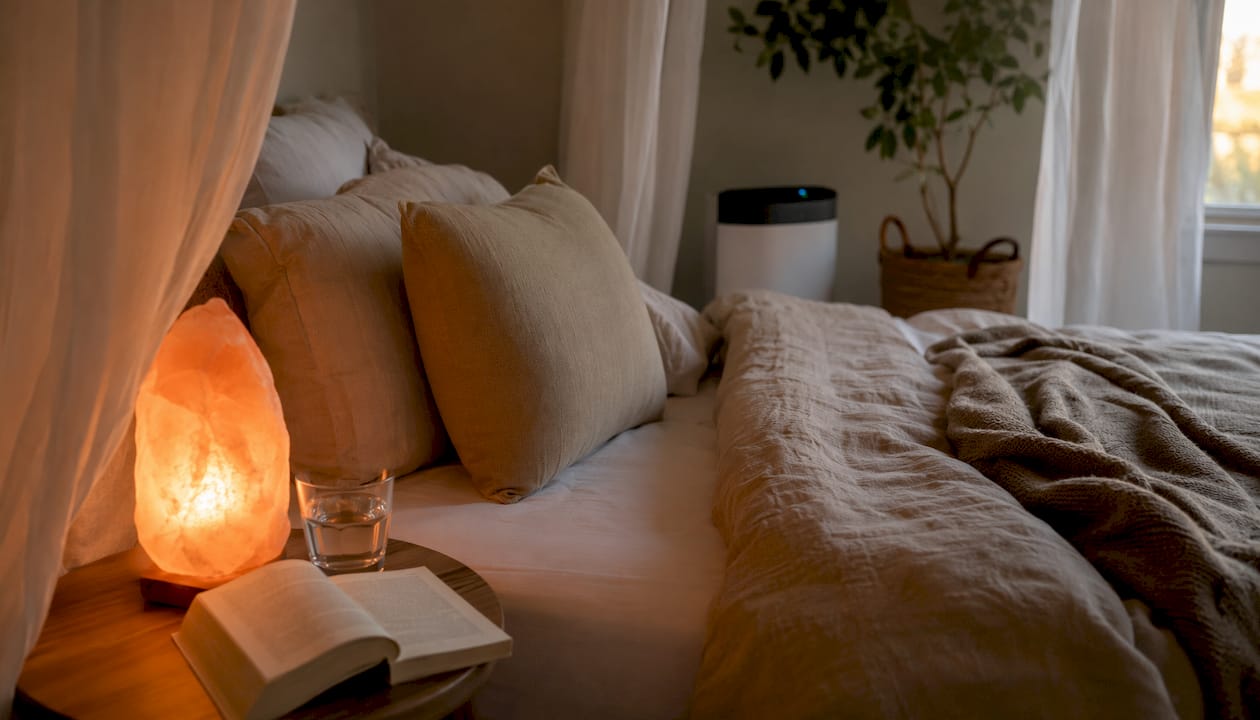
Temperature is the most underrated variable. A cool bedroom around 65°F supports the core body temperature drop that initiates and maintains sleep. Most people sleep in rooms that are 5–10 degrees too warm.
Key environment adjustments:
- Install blackout curtains or use a sleep mask to block ambient light from streetlamps and electronics.
- Use a white noise machine, earplugs, or a fan to mask irregular noise disturbances.
- Reserve the bedroom exclusively for sleep and intimacy. The stimulus control principle from CBT-I is clear: doing other activities in bed, reading, working, watching TV, weakens the brain’s learned association between bed and sleep.
- Replace a mattress older than 7–10 years and pillows that no longer hold their shape. Discomfort is a surprisingly common, easily fixed barrier.
- Remove work equipment, bright-LED electronics, and anything that signals daytime activity. For a deeper look at healthier sleep environment setup, the principles are consistent across research.
What you eat and drink in the hours before bed matters more than you think
Food, alcohol, caffeine, and nicotine all affect sleep architecture in ways that are well-documented and largely underestimated by people who consider themselves decent sleepers.
Caffeine is the biggest culprit. It has a half-life of roughly 5–6 hours in most adults, meaning a 3 PM coffee still has half its stimulant effect at 9 PM. Avoid caffeine at least 8 hours before bedtime to prevent interference with sleep latency and quality. For sensitive individuals, a 2 PM cutoff is safer.
Alcohol is widely misunderstood. It may help you fall asleep faster, but it fragments sleep in the second half of the night by suppressing REM sleep and causing early awakenings as it metabolizes. Finish any drinking at least three hours before bed.
Heavy meals trigger digestive activity that raises core body temperature and increases the likelihood of acid reflux in a horizontal position. Finish large meals at least three hours before sleep. A light snack, something with protein or complex carbohydrates, is fine if you are genuinely hungry.
Nicotine is a stimulant that causes lighter sleep overall and can trigger early-morning waking as blood levels drop. There is no safe window for nicotine close to bedtime.
Hydration is a balance: drink enough during the day so you are not thirsty at night, but taper off in the two hours before bed to avoid disruptive bathroom trips.
Common barriers to sleep hygiene and how to get past them
Most people know what good sleep habits look like. The gap is execution. These are the barriers that actually derail routines, and what to do about them.
- Inconsistent timing: The single most common problem. Use an alarm not just for waking up but for starting your wind-down routine. Treat it like a meeting you cannot skip.
- Going to bed before you are sleepy: This one is counterintuitive. Lying in bed awake for more than 20 minutes weakens the bed-sleep association. If you are not sleepy, stay up and do something calm until you are.
- Bright light too late: Overhead bathroom lights during your nighttime face-washing routine can reset your melatonin clock. Switch to a dim nightlight or use a warm-toned bulb in the bathroom after 9 PM.
- Partner or child schedule conflicts: Negotiate a shared wind-down signal, even if bedtimes differ. Earplugs, a sleep mask, and white noise can compensate for a partner who keeps different hours.
- Travel and shift work: Anchor your routine to your target sleep time in the new time zone, not your home time zone. Consistency in the sequence of activities helps even when the clock is off.
- Checking the clock during the night: Turn the clock face away. Watching the minutes pass amplifies anxiety and makes returning to sleep harder.
Building wellness habits that stick requires removing friction from the good behaviors and adding it to the disruptive ones.
An evening skincare and self-massage ritual can measurably improve sleep
This is one of the more surprising findings to emerge recently. A preliminary study published in Scientific Reports found that an evening cosmetic routine combined with self-massage increased total sleep time by 22.5 minutes and deep sleep time by 11.15 minutes in healthy adult women aged 25–45, while also reducing anxiety scores. Sleep quality was tracked using a connected ring, giving objective rather than self-reported measurements.
The mechanism is consistent with what we know about tactile stimulation: gentle, repetitive touch activates the parasympathetic nervous system and reduces cortisol. It is the same principle behind massage therapy, applied in a simpler, at-home format.
Statistic: Participants in the evening cosmetic self-massage study gained additional total sleep time and additional deep sleep per night, with measurable anxiety reduction.
How to integrate this into your existing routine:
- Apply a facial moisturizer or body lotion using slow, circular massage strokes for 5–10 minutes.
- Focus on the face, neck, and shoulders, areas where tension accumulates during the day.
- Pair it with dim lighting and calming music to stack the relaxation cues.
- The specific product matters less than the consistency and the tactile attention you bring to it.
While the study focused on women, the underlying physiology of tactile relaxation applies broadly. Anyone who finds physical touch calming is a candidate for this practice.
Mindfulness and meditation as pre-sleep tools
Mindfulness before bed works by redirecting attention away from ruminative thought and toward present-moment sensory experience, breaking the cycle of worry that delays sleep onset. Even a short practice of 10–15 minutes produces measurable reductions in physiological arousal.
The most accessible entry point is a body scan: lie in a comfortable position and move your attention slowly from your feet to the top of your head, noticing physical sensations without trying to change them. It is not about clearing your mind; it is about giving your mind something neutral to focus on.
Apps like Calm and Headspace offer guided sleep meditations, but a simple unguided practice works just as well once you know the format. The key is doing it in a dim, quiet space outside of bed, then moving to bed when you feel genuinely drowsy. Doing it in bed risks associating the bed with wakefulness if you do not fall asleep quickly.
Consistency amplifies the effect. A mindfulness practice done three to four nights per week builds a stronger sleep cue than an occasional session done perfectly.
How long your bedtime routine should be, and when to start it
About 30 minutes is the sweet spot for a bedtime routine. Shorter than 15 minutes and there is not enough time for physiological wind-down to take effect. Longer than 45 minutes and you risk introducing activities that are mildly stimulating, or simply staying up later than intended.
Start your routine roughly 30–45 minutes before your target sleep time, and begin dimming lights and reducing stimulation about 90 minutes before bed. The CDC’s NIOSH guidance suggests starting sleep preparation about 1.5 hours before bedtime for the full physiological transition to take effect.
The sequence matters as much as the duration. A sample order that works well:
- Dim lights and put devices away (T-minus 90 minutes)
- Warm bath or shower (T-minus 60–75 minutes)
- Light snack if needed, herbal tea (T-minus 45 minutes)
- Journaling or to-do list (T-minus 30 minutes)
- Skincare, self-massage, or stretching (T-minus 20 minutes)
- Meditation or reading a physical book (T-minus 10 minutes)
- Lights out
When you exercise affects how well you sleep that night
Exercise is one of the most reliable sleep-quality improvers available, but timing changes the equation. Vigorous exercise raises core body temperature, heart rate, and cortisol, all of which are the opposite of what you want in the two hours before bed.
Finish exercise at least 3 hours before your planned sleep time to allow these markers to return to baseline. Morning and early afternoon workouts are ideal: they reinforce circadian alertness during the day and make the evening wind-down more effective by contrast.
Light movement in the evening, a 10-minute walk, gentle yoga, or the stretching component of your bedtime routine, does not carry the same risk and can actively support relaxation. The distinction is intensity, not the act of moving.
Most adults need 7 or more hours of quality sleep, and regular daytime exercise is one of the few lifestyle factors with consistent evidence for improving both sleep duration and depth.
Managing light exposure in the hours before sleep
Light is the primary signal your brain uses to set its internal clock. Bright light in the evening tells your suprachiasmatic nucleus (the brain’s master clock) that it is still daytime, delaying melatonin release and pushing your sleep window later.
The practical protocol:
- Spend time in bright natural light during the morning. This strengthens the daytime alertness signal and makes the evening contrast more effective.
- After sunset, shift to warm-toned, low-intensity lighting throughout your home.
- Avoid bright overhead lights in the 90 minutes before bed. A single 60-watt equivalent warm bulb in a lamp is enough for most evening activities.
- Overhead lighting above 800 lumens suppresses melatonin for up to 30 minutes after exposure. Dim warm lighting below 200 lumens is the target for the pre-sleep window.
- If you use a bathroom with bright lighting at night, install a warm-toned nightlight as an alternative for your evening routine.
The morning bright light habit is as important as the evening dimming. Both ends of the light cycle work together to keep your circadian rhythm sharp and your sleep timing predictable.
Evergreenbliss has the tools to support your sleep routine
Knowing what a strong bedtime routine looks like is one thing. Having the right products to support it consistently is another.

Evergreenbliss curates a focused selection of personal care and wellness gadgets built specifically for the kind of pre-sleep rituals covered here: massage devices for the evening self-massage practice, sleep and relaxation aids that complement your wind-down sequence, acupressure mats for tension release, and stress-relief tools that fit naturally into a 30-minute routine. The personal care and hygiene gadgets collection covers the tactile, sensory side of sleep preparation that standard sleep advice tends to skip. Every order ships free, returns are easy, and checkout is secure. Browse the collection and pick one product to add to your routine tonight.
Key Takeaways
A bedtime wellness routine works best when it runs for about 30 minutes, follows a fixed sequence every night, and combines environmental controls with deliberate relaxation practices that lower core body temperature and reduce cognitive arousal.
| Point | Details |
|---|---|
| Consistent timing beats perfect habits | Going to bed and waking at the same time daily anchors your circadian rhythm more powerfully than any single activity. |
| 30-minute routine is the sweet spot | Routines shorter than 15 minutes lack wind-down time; longer than 45 minutes risk introducing stimulating activities. |
| Journaling cuts sleep onset latency | A pre-bed brain dump on paper reduces the time it takes to fall asleep by about 9 minutes. |
| Evening self-massage adds measurable gains | A preliminary study found a cosmetic self-massage routine increased total sleep time by 22.5 minutes and deep sleep by 11.15 minutes per night in healthy adult women aged 25–45. |
| Evergreenbliss supports the sensory side | Evergreenbliss offers massage devices, sleep aids, and stress-relief tools designed to fit directly into evidence-based bedtime routines. |